
Introduction
Vertigo can be a disorientating and disruptive experience. The person may feel that the room is spinning, or they may have trouble keeping their balance, or feel dizzy. They may not always know what is causing the symptoms. The importance of selecting the right care provider cannot be underestimated, as balance-related issues can be presented differently from a clinical perspective. Soft Hear is the choice for those seeking a more complete and clinically integrated approach to vertigo care that extends beyond the test and report.
One of the reasons people choose Soft Hear is because it is a philosophy of treating the patient, not just treating the test. The clinic works with an integrated approach, combining assessment, testing, interpretation, management and follow-up. Soft Hear doesn’t treat each test result as an isolated finding, but attempts to understand how the findings relate to the individual patient’s symptoms and clinical history. This is evidenced by its vertigo pathway of assess, correlate, diagnose, treat and reassess.
Expert Vertigo Assessment
This distinction can be particularly important for the person with vertigo. A test is a useful tool, but a report by itself may not tell the whole clinical story. Soft Hear warns of the importance of knowing the patient’s history, symptoms and relevant clinical findings before interpreting test results. This means that the assessment does not follow a routine testing procedure for each individual. Rather the assessments selected are appropriate for the clinical presentation, findings and differential diagnosis of the patient.
People also like Soft Hear for its holistic and standard approach to vertigo assessment. The model of the clinic may include hearing assessment integrated with the vertigo evaluation, physical examination, neurological screening where clinically indicated, VNG or Videonystagmography and additional tests when required based on clinical findings. This broadens the scope of assessment rather than one test providing the complete answer.
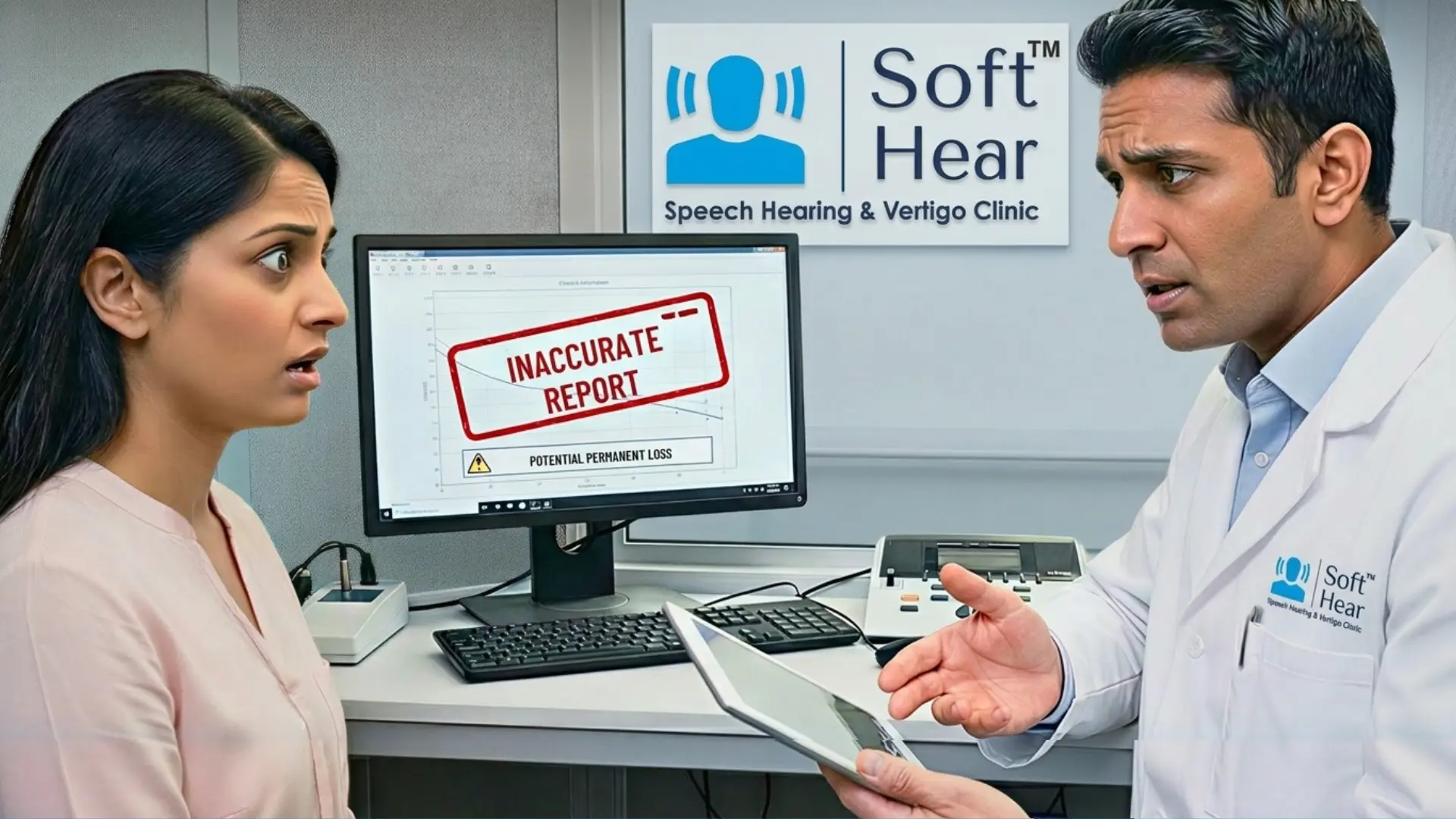
VNG is an important part of the vertigo evaluation at Soft Hear, but the clinic does not use VNG as the diagnosis itself. This approach uses VNG as a diagnostic tool rather than a diagnosis. The VNG information is clinically correlated with other relevant data before proper clinical understanding is reached. This difference is one of the key aspects of Soft Hear’s method, as test results can mean different things depending on the overall clinical view of the patient.
People may therefore choose Soft Hear because the focus is not only on whether a VNG has been performed but on how the findings are interpreted. VNG is correlated clinically with other findings and the audiologist does the clinical interpretation. At Soft Hear, This helps to put the test in context with the overall assessment process rather than treating the printout as the final answer. The focus is on understanding the consequences of the findings for the individual patient.
Another important facet of the Soft Hear approach is clinical correlation. Clinical correlation is simply piecing together multiple pieces of information to get a fuller picture of what is going on with the patient. In plain language, Soft Hear’s model ties together patient history, hearing findings, physical exam, VNG, and other pertinent findings. The clinic does not see these elements as disparate bits of information but seeks to grasp how they fit into the clinical picture of the patient.
This combined approach may be especially helpful for people who have both hearing and balance problems. The document describes Soft Hear as taking the approach that hearing tests can be combined with vertigo assessment where clinically relevant. Thus, ear and balance problems need not be regarded as entirely separate domains. Information from the different parts of the assessment can contribute to a more integrated view of the patient's presentation.
Another reason people choose Soft Hear is that the clinic does not subscribe to the philosophy of doing every test on every patient. Instead, choice of testing is guided by the clinical indication, the age, the presenting complaint and applicable professional standards. This patient centered strategy guarantees that assessments are used because they are relevant to that individual, rather than just because they are available. “It’s not about doing more tests, but doing the right tests that can add something meaningful to the assessment.”
Advanced Diagnostic Approach
Diagnosis-directed management is also emphasized by Soft Hear. The approach for management can be directed on the basis of clinical understanding of the patient’s condition once the findings available are assessed and correlated clinically. This is compared to generic or possibly inappropriate therapeutic maneuvers. At Soft Hear, therapeutic maneuvers are described as diagnosis-directed, this upholds the principle that assessment and clinical understanding should precede proper management and not the reverse.
The process does not always stop with the first intervention. The Soft Hear vertigo pathway also includes follow-up and reassessment. The clinic’s approach includes response-based
clinical follow-up to take into account the patient’s progress and response to management. This means vertigo management is not a single appointment where a test is done and a report handed over, but rather an ongoing clinical process.
This attention to re-evaluation can be particularly useful for those who want ongoing clinical guidance. The response of the patient to management may also give further information as to the next appropriate step. Soft Hear therefore sees the clinical journey as assess, correlate, diagnose, treat and reassess. This supports the notion that vertigo care should be individualized and not be limited to a single testing event.
Risk Management and Personalized Care
Another part of the approach described in the document is risk management. Soft Hear features red-flag screening and referral as needed. Why does this matter? Because not all balance concerns need to be handled in the same manner. Responsible clinical assessment includes recognition of findings that may warrant additional clinical attention and appropriate referral when indicated. Emphasis is therefore not on assuming that all patients can be managed in exactly the same way, but on recognizing when further clinical consideration may be appropriate.
Professional interpretation is also a key component of the Soft Hear model. A test can provide measurements and results but the clinical value is understanding the results in context. Soft Hear’s approach is not report or number-driven but rather focused on audiological and clinical interpretation. This is of particular importance when multiple findings need to be considered in an effort to determine an appropriate management pathway.
The patient-centered philosophy extends to counseling. Individuals with vertigo may have questions about what their test results mean, what the next step should be and whether additional management or reassessment is needed. Soft Hear’s counseling is described as a professional, patient-specific and evidence-based approach. Rather than giving the same general explanation to all patients, the approach links counseling to an individual’s assessment findings and clinical situation.
This continuity of care can be an important consideration for many people when selecting a vertigo care provider. Soft Hear believes the patient’s journey doesn’t stop at the first assessment or report. Re-evaluation can help assess the response of the patient to management as part of the wider care pathway and clinical guidance and follow up are elements of that pathway. This creates a more connected experience where the initial assessment can then progress to appropriate management and ongoing clinical review.
In the end, people opt for Soft Hear for vertigo because its methodology is holistic and not based on one test. The clinic provides comprehensive evaluation, clinical correlation, professional interpretation, diagnosis-directed management, follow-up and reassessment. The emphasis is on getting to know the individual and using the relevant clinical information to inform the next step.
Soft Hear offers more than just VNG testing. It puts VNG into the context of a broader clinical assessment and does not view a VNG report as the final diagnosis. The focus remains on integrating the history, hearing assessment, physical examination, neurological screening if clinically indicated, VNG, and other relevant findings to develop a more complete clinical picture.
This integrated philosophy is a clear difference in approach for those in need of vertigo care. Instead of asking what test can be performed, Soft Hear asks what the patient needs and which appropriate assessments are available to understand the clinical picture. This patient-centred thinking has implications for assessment, interpretation, management and follow-up.
The main difference can be put in one principle: Soft Hear treats the patient, not the test. Its vertigo care pathway is assessment, clinical correlation, diagnosis, targeted management and reassessment. Soft Hear aims to connect these stages to provide a more structured, personalized and outcome-focused experience for people seeking professional care for vertigo and balance-related concerns.