Hearing loss is not simply a problem with hearing. It can affect communication, confidence and daily life. Soft Hear offers a patient-first approach to hearing treatment combining professional assessment, clinical interpretation and personalized rehabilitation to help each individual move toward better hearing and better communication.
Hearing Treatment at Soft Hear: From Assessment to Personalised Rehabilitation
The treatment of hearing is not only the diagnosis of hearing loss and the prescription of a hearing aid. Effective hearing care begins with an understanding of the individual’s hearing profile, communication difficulties, listening environments and rehabilitation needs. Soft Hear provides a comprehensive approach, where assessment, clinical interpretation, hearing-aid prescription, technology selection, counselling and follow up are part of a connected hearing care journey.
Understanding the Patient Before Recommending Treatment
At Soft Hear, the hearing-care journey starts with understanding the patient, rather than immediately focusing on a device. Hearing-test results are best understood when considering a detailed case history and the patient’s concerns. This is helpful for the audiologist to understand how the hearing difficulties may affect communication and everyday listening.
Professional hearing assessment is an important part of this process. The Soft Hear pathway consists of qualified audiologists, a standardized testing environment, case history, otoscopy, pure tone audiometry, air and bone conduction, masking when clinically indicated, impedance audiometry, speech testing and other assessments as required.
Clinical Interpretation Instead of a Test-and-Report Approach
A hearing test gives good information, but the numbers alone don’t tell the whole hearing story. At Soft Hear, assessment outcomes are reviewed, cross-checked and clinically interpreted before being used to direct rehabilitation.
The pure-tone audiometry, impedance results, speech findings and relevant clinical observations can be integrated to provide a more complete picture of the individual's hearing profile. Reliability checks and consistency assessment. These are further supports to the interpretation of findings.
This approach helps to shift the focus of hearing care from just producing a test report to understanding what the results mean for the individual and what type of rehabilitation might be suitable.
Personalised Hearing-Aid Selection
Where hearing aids are appropriate, Soft Hear takes a clinical before technology approach to hearing aid selection. The audiological profile of the individual, and where applicable, speech-in-noise results can guide the choice of hearing-aid technology.
It’s not about what brand, feature or price point you start with, but finding technology that will meet the patient’s specific hearing and rehab needs. This implies that hearing-aid selection is part of a larger clinical rehabilitation process and not a stand-alone product.
Counselling as an Important Part of Hearing Treatment
The good hearing aid is only the first step in hearing treatment. Patients often benefit from clear guidance about their hearing condition, the rehabilitation options available and how the recommended solution can support communication in everyday life. Soft Hear’s hearing-care approach includes professional, patient-specific and evidence-based counseling.
Such personal counseling helps to link the assessment findings to the individual needs of the patient. Instead of recommending the same for all patients, the approach is based on the person’s hearing profile and clinical situation. This can aid patients in gaining a better understanding of their results and making more informed decisions about their hearing care journey.
Hearing Aids as Part of Rehabilitation
At Soft Hear, hearing aids are viewed not simply as products, but as part of the larger picture of hearing rehabilitation. Appropriate assessment can direct prescription of hearing aid and choice of technology, and continuing rehabilitation support can help the patient adjust to and benefit from the solution chosen.
The aim is to customize the hearing solution to the person’s needs. Audiological findings and speech-in-noise performance (if clinically relevant) may assist in decisions on appropriate hearing-aid technology. This changes the focus to the rehabilitation needs of the patient rather than choosing a device and then fitting the patient to it.
Support Beyond the Initial Treatment
Soft Hear’s continuing care after the initial assessment and recommendation is a big part of hearing treatment. Hearing rehabilitation may require guidance, verification and continued support as the patient moves through the process.
Follow-up gives you a chance to check progress and deal with problems or provide more direction if necessary. Hearing care is then a continuous clinical process, not a one-off event after the hearing test or fitting of the hearing aid.
Outcome-Focused Hearing Care
The overall approach at Soft Hear is one of accurate assessment and appropriate management with an emphasis on personalized, monitored and outcome focused care. The goal is not just to do a hearing test, or to give a device, but to understand the clinical needs of the patient and to use the results of the evaluation to guide appropriate rehabilitation.
Soft Hear follows an individual-centred, linked pathway from initial assessment through to interpretation, hearing aid selection, counselling, rehabilitation support and follow-up. This patient-centred approach helps to make hearing treatment a structured rehabilitation journey rather than a one-off service.
A Complete Hearing-Care Journey
Soft Hear hearing treatment is much more than testing and hearing aid selection. Assessment, interpretation, rehabilitation, counselling and follow-up are linked in such a way that each stage adds value to the patient’s overall hearing-care journey.
It starts with the assessment of the patient and appropriate assessments. Findings are then compared for consistency and considered together before clinical interpretation. These findings can guide individualized rehabilitation and technology selection where appropriate. The journey also takes in professional counseling and ongoing rehabilitation support.
Choosing the Right Treatment for Individual Needs
“Comprehensive” doesn’t mean doing every test that might be done, or providing a one-size-fits-all treatment. Soft Hear’s assessment process considers the patient’s clinical presentation, age, concerns and applicable professional standards in determining which assessments are appropriate.
This individualized approach helps to ensure that the treatment recommendations are linked to the findings of the assessment. For patients who may be candidates for hearing aids, the audiological profile and relevant speech-in-noise findings can assist in technology selection.
Continued Support and Follow-Up
Hearing rehabilitation may include adjustment and ongoing guidance. The approach taken by Soft Hear is therefore one of follow-up, clinical guidance, verification and rehabilitation support, rather than the first assessment being the end of care.
Follow-up allows for a review of the patient’s progress and an opportunity for continued guidance throughout rehabilitation. This supports a more outcome-focused approach, where the goal is not simply to do a test or to give someone a hearing device, but to meet that person’s hearing-health needs as an ongoing process.
Let’s understand in easy way through a table How is Soft Hear Different from Other Hearing-Loss Treatment Providers?
| Aspect | Soft Hear | Other / Limited Approaches |
|---|---|---|
| Overall Approach | Follows an integrated clinical pathway from assessment to interpretation, rehabilitation and follow-up. | May focus primarily on testing, reporting or device selection. |
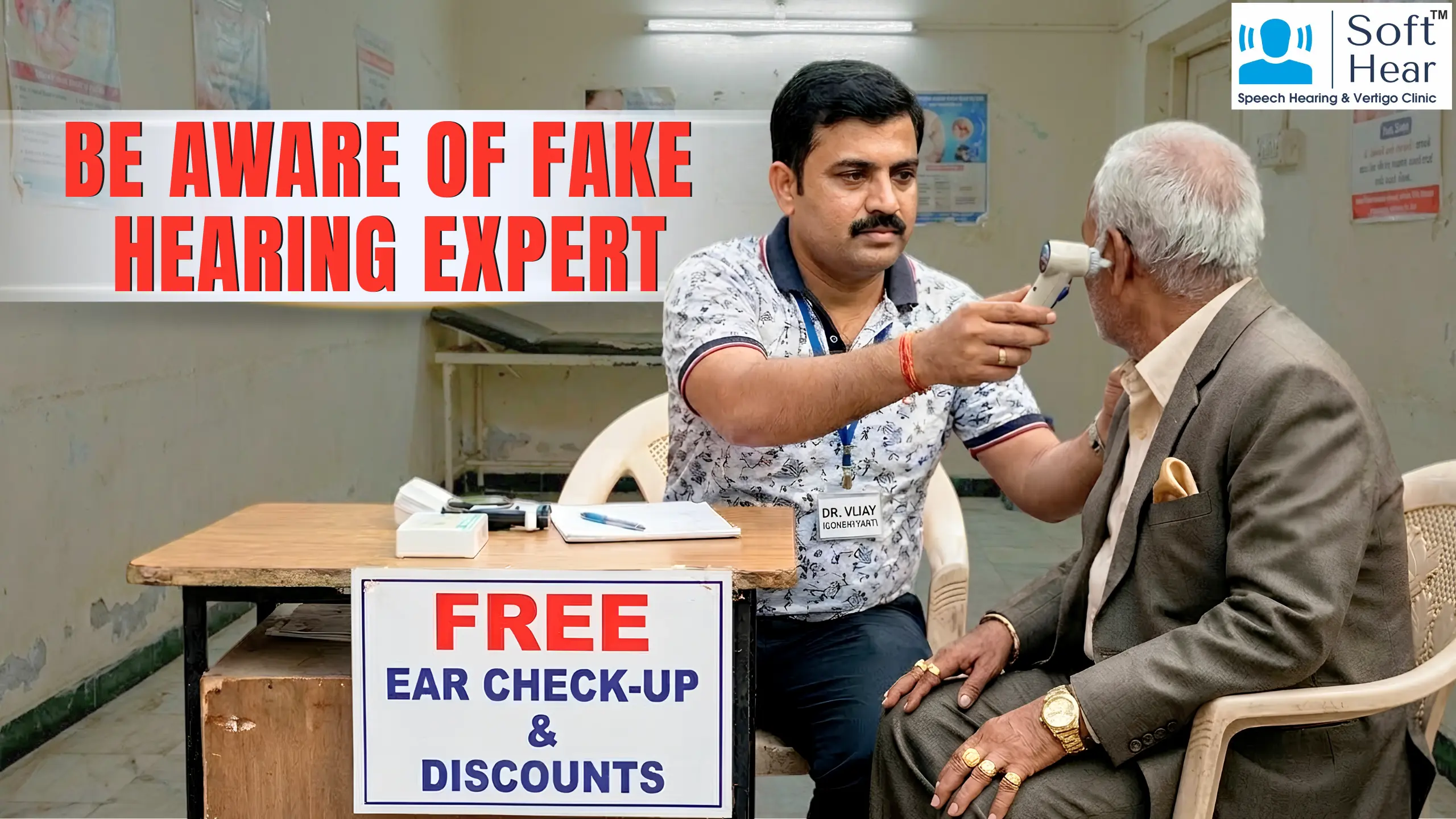
| Professional Expertise | Hearing assessments are conducted and interpreted by qualified audiologists. | Assessment may involve unqualified or unverified personnel. |
| Case History | Takes detailed clinical history and considers the patient’s concerns before assessment. | History-taking may be basic or limited. |
| Hearing Assessment | Uses a comprehensive assessment process including otoscopy, PTA, air and bone conduction, impedance and speech testing where appropriate. | Testing may be basic or limited and may focus on individual tests. |
| Clinical Test Selection | Tests are selected according to clinical indication, age, presenting complaint and applicable professional standards. | May follow a more routine or test-dependent approach. |
| Test Correlation | Connects PTA, impedance, speech findings and clinical observations to build a more complete hearing profile. | Results may be viewed as separate or fragmented findings. |
| Reliability Checks | Uses cross-checks, consistency assessment and clinical validation before using findings for rehabilitation planning. | Reliability checks may be limited. |
| Speech Assessment | Includes speech recognition and discrimination testing, with speech-in-noise assessment where clinically indicated. | Speech assessment may be limited or not routinely performed. |
| Hearing-Aid Selection | Uses the patient’s audiological profile and relevant speech-in-noise findings to help guide technology selection. | Selection may be more focused on brand, features or price. |
| Treatment Philosophy | Treats hearing aids as part of a broader rehabilitation process rather than as a stand-alone product. | May follow a more device- or test-based approach. |
| Counselling | Provides professional, patient-specific and evidence-based counselling. | Counselling may be basic or less personalised. |
| Rehabilitation | Assessment findings are used to guide individualised hearing rehabilitation. | Management may focus mainly on providing a device or test report. |
| Follow-Up | Includes clinical guidance, verification and rehabilitation support after the initial assessment. | Follow-up may be limited or inconsistent. |
| Treatment Goal | Focuses on accurate assessment, personalised management and monitored, outcome-focused rehabilitation. | May focus primarily on completing the test or providing a hearing solution. |
Why Soft Hear’s Approach Matters?
At Soft Hear, hearing care is not simply about testing but about knowing, and treating, the person behind the results. Every hearing assessment is a starting point and its true value is in thoughtful clinical interpretation, understanding the individual’s communication needs and translating these into the right rehabilitation pathway.
With one connected approach, Soft Hear combines all aspects of hearing care from choosing state-of-the-art technology and professional assessment, to clinical interpretation, tailored rehabilitation, counselling and continuous follow-up. Every recommendation is tailored to the patient’s hearing profile, lifestyle, communication challenges, listening environments and long-term goals.