Your Hearing Deserves Right Test and Treatment
Hearing is beyond merely detecting sounds. It includes our ability to connect, feel assured and acquire knowledge in our lives. In the rapidly expanding audiology field, having an accurate hearing evaluation is the essential first step toward receiving right treatment.This is the first initial step to understand your specific problem and knowing your actual requirement. Among the different ways to check for hearing loss, audiometry stands out as an important tool. It helps in finding out if there is a hearing problem or not and if yes, then what is the best way to treat it.
What if the Audiometry Result is Incorrect?
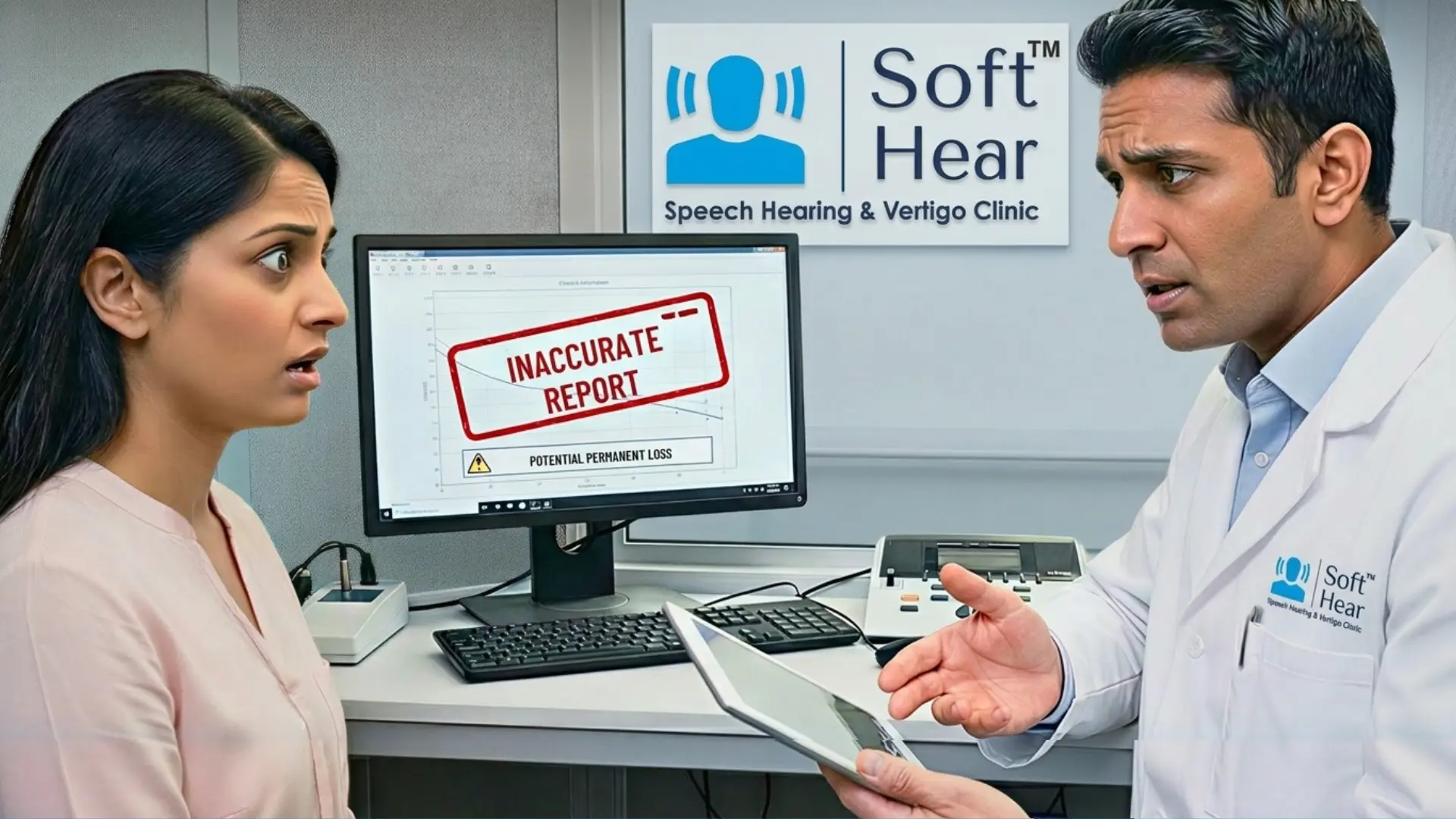
When a hearing test is not carried out by a qualified audiologist or the results are misinterpreted then, it can lead to incorrect evaluation. Individuals may end up receiving the wrong treatment and wrong hearing aids, which they don't actually need.
What is Audiometry?
Audiometry refers to a hearing assessment that examines your ability to perceive various sounds at different volumes and frequencies. It is different from a simple routine evaluation.
This assessment reveals precisely:
- The degree of hearing impairment
- The type of hearing loss
- Which sound frequencies or ear are impacted
- How effectively you understand speech
- Whether you require medical interventions or rehabilitative support
This hearing assessment acts as a roadmap for your treatment. A single report can determine if you will need medication, surgery, hearing aids, a referral for cochlear implants, ongoing monitoring, or even an evaluation for neurological concerns.
Potential Issues in Audiometry
You might think that something so important is always precise, but mistakes happen more often than many realize. Here’s how errors can occur:
1. Insufficient Training of the Examiner
Audiometry is not just about pressing buttons and interpreting data. If the examiner is inexperienced or lacks skill, results could be considerably wrong.
2. Poor Communication with the Patient
If the explanation is rushed or unclear, the chances increase that the test won’t accurately reflect your true capabilities.
3. Defective or Poorly Calibrated Equipment
If the audiometer has not been properly calibrated and maintained, even a slight error can destroy the overall results.
4. Noisy Testing Environment
An environment with noise can disturb accuracy and lead to unreliable results. Testing should always be performed in a soundproof environment.
5. Rushing the Testing Process
Speeding up the process with children, older adults or individuals with cognitive challenges can lead to incorrect findings.
6. Incorrect Masking Procedures
If masking is not performed properly, it can lead to inaccurate results in assessing true hearing abilities.
7. Incorrect Report Interpretation
Reports may sometimes be inaccurately portrayed either by mistake or intentionally due to careless analysis or efforts to sell unnecessary devices.
Risks of an Inaccurate Audiometry Report
Delayed Diagnosis Underlying issues such as acoustic neuroma, sudden sensorineural hearing loss , Ménière’s disease, chronic infections, or neurological conditions can be ignored due to incorrect reports.Inaccurate results on your hearing test may allow these problems to go unnoticed until they cause permanent harm.
Incorrect Hearing Aid Fit
An inaccurate audiogram can lead to a poorly fitting hearing aid whether it's too loud, too quiet, difficult to understand speech, causing headaches, or making certain sounds intolerable. This may lead some individuals to stop using the devices entirely, as they prove ineffective. Never miss the golden window of treatment, specific hearing conditions such as sudden hearing loss need immediate medical attention within days or hours.
Emotional and Psychological Impact
An incorrect diagnosis can lead to unwanted stress, social withdrawal, low self-esteem, depression, or children lagging in their education. Overlooked diagnoses cause individuals to face challenges for extended periods. And the most painful thing when children receive improper diagnoses, they may undergo unnecessary treatments that can disrupt their overall growth. If issues are not correctly identified on time then they miss important learning benchmarks and speech.
If issues are not correctly identified on time, children may miss important learning benchmarks and speech development milestones.
How to Understand Whether the Audiometry Report is Correct or Not?
You should go for a second opinion if:
- The results are not similar to your true hearing experience.
- You are feeling uncomfortable with hearing aids.
- You feel a decrease in hearing ability while using hearing aids .
- Test results fluctuate considerably over several days or weeks.
- The assessment seemed rushed or unclear.
- The test was not carried out in a soundproof room.
The Significance of Experienced Professional Qualified Audiologists
A precise diagnosis is largely dependent on the audiologist and the quality of the tools used. A professional qualified audiologist must have complete knowledge of hearing science and follow established procedures.
They should prioritize patient comfort, verify results and analyze data accurately. This field combines scientific understanding with a creative touch and requires a high degree of responsibility.
Best Practices for Accurate Audiometry
Points to consider for accurate results:
- Choose a trustworthy clinic and professional qualified audiologist.
- Ensure the equipment is properly evaluated and calibrated.
- Confirm that the testing environment is genuinely soundproof.
- Counselling should be honest and clear.
Always Feel free to ask (your audiologist):
- Do you inspect the audiometer frequently?
- What type of hearing loss do I have?
- Should I repeat the test if results seem inconsistent?
- Should I consult a doctor as well?
- Should I repeat evaluation if reports and symptoms do not match?
Avoid Quick “Camp Style” Testing
Mass screening setups that lack adequate acoustic management may occasionally yield inconsistent outcomes.
Hearing health care demands sincerity and responsibility
Hearing test actually influences an individual's future communication skills and overall quality of life. Inaccurate audiometry may result in lasting hearing impairment, psychological stress, financial burden, wrong treatment, and delayed medical interventions.
Conclusion
Audiometry testing is essential for identifying hearing issues. An accurate assessment can transform lives and enable individuals to receive the right treatment.Audiometry test is essential for identifying hearing issues. An accurate assessment can transform lives,enabling individuals to have the right treatment so that, they can easily connect and communicate. And one error could lead to years of stress, frustration, and irreversible loss. In the realm of hearing care, the right evaluation and treatment is not a choice; it is mandatory. Always trust reputable clinics and qualified professional audiologists.