
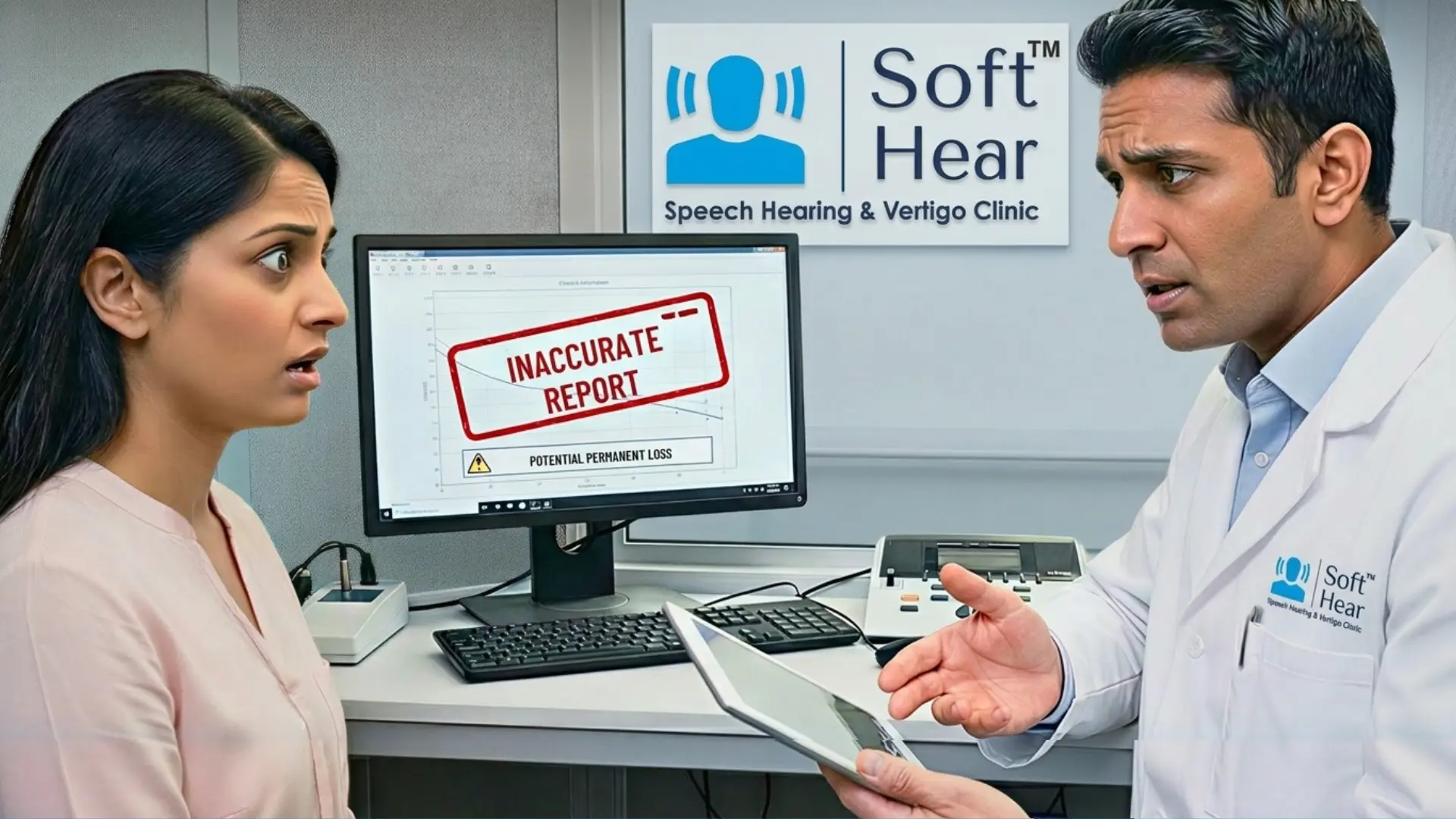
In my years as an audiologist, first at AIIMS New Delhi and now at Soft Hear, almost every week someone has sat across from me and said, "I think my hearing has been like this for a while." Sometimes it's a retired schoolteacher whose grandchildren have started teasing her for turning the TV up too loud. Sometimes it's a 34-year-old software professional who's realised he's been nodding along in meetings without catching half of what's said. The story is almost always the same: the change crept in slowly, and by the time they came in, they'd been compensating for years without realising it.
That's why I believe a hearing test should be as routine as an eye check-up or a dental visit. Here's why.
Hearing Loss Rarely Announces Itself
Unlike a toothache or blurred vision, hearing loss is usually painless and gradual. The brain is remarkably good at filling in gaps. You lip-read a little more, you ask people to repeat themselves, you avoid noisy restaurants, and you tell yourself people have started mumbling.
The first sounds to fade are often the high-pitched ones: consonants like "s", "f", "th" and "sh". This is why many people say, "I can hear, but I can't understand." Voices sound present but unclear, especially in background noise. Without a test, it's very easy to mistake this for inattention or fatigue.
The World Health Organization estimates that more than 1.5 billion people worldwide live with some degree of hearing loss, and that this number could rise to nearly 2.5 billion by 2050. A large share of these people are unaware of it or haven't sought help.
Early Detection Changes Outcomes
When hearing loss is identified early, we have more options and better results. The auditory system works on a "use it or lose it" principle. When the brain goes without certain sounds for years, it gradually becomes less efficient at processing them. People who start hearing care early tend to adapt to hearing aids faster and understand speech better than those who wait a decade.
Early testing also helps us catch problems that aren't permanent at all: wax impaction, middle-ear fluid, or infections that can often be treated medically. And in some cases, a sudden or one-sided change in hearing can point to a condition that needs urgent medical attention. A timely test can make a real difference there.
Your Hearing Is Connected to Your Overall Health
Hearing isn't just about the ears. Research over the past decade has made it clear that untreated hearing loss is linked to a range of broader health concerns.
Cognitive health. The Lancet Commission on dementia has identified hearing loss in midlife as one of the eight potentially modifiable risk factors for dementia. When the brain strains to decode sound all day, and when a person gradually withdraws from conversation, it takes a toll. Addressing hearing loss is one of the most practical steps we can take to protect long-term brain health.
Emotional wellbeing. Many of my patients describe feeling left out at family gatherings or exhausted after social events. Over time, this can lead to isolation, frustration and low mood, both for the person and for their family.
Balance and safety. The inner ear also plays a role in balance. Hearing difficulties and dizziness sometimes go hand in hand, and reduced awareness of sounds around you, like traffic or a doorbell, can affect everyday safety.
Other conditions. Diabetes, high blood pressure and cardiovascular problems have all been associated with hearing changes. For people managing these conditions, regular hearing checks are a sensible part of overall care.
Who Should Get Tested, and How Often?
As a general guide, here's what I recommend to patients and families:
Adults under 50 with no symptoms should consider a baseline hearing test, then a check every few years, or sooner if something changes.
Adults over 50 should have their hearing checked every one to two years, since age-related hearing change becomes much more common.
People exposed to noise, whether through work in factories, construction, traffic, or music, or through long hours on earphones, should be tested more regularly.
Children should have their hearing screened at birth and checked if there are concerns about speech development, school performance or attention. Hearing plays a central role in how children learn to speak.
Anyone with symptoms such as ringing in the ears (tinnitus), muffled sound, difficulty following conversations, frequent ear infections, or dizziness should book a test without waiting.
Existing hearing aid users should come in at least once a year so we can check that their devices are still matched to their hearing, which can change over time.
What Actually Happens During a Hearing Test?
Many people put off testing because they're unsure what to expect. The good news is that a hearing evaluation is quick, comfortable and completely non-invasive.
We usually begin with a conversation about your hearing concerns, lifestyle and medical history. Then we examine your ears to check for wax or visible issues. The main test involves listening to a series of tones and words through headphones in a quiet, sound-treated room, and simply responding when you hear them. Depending on your needs, we may also check how well your middle ear is functioning.
At the end, I sit down with you and explain the results using an audiogram, a simple chart that shows how you hear across different pitches. You leave knowing exactly where you stand, and whether anything needs to be done.
Why Choose Soft Hear Clinics?
At Soft Hear, our focus is on complete, long-term care rather than a one-time test. With 85+ clinics across 15+ cities in India, we've built a network designed to make professional hearing care accessible close to home.
Care from qualified professionals. Every evaluation is carried out by trained audiologists who take the time to explain results clearly and answer your questions.
Integrated services under one roof. Hearing, speech and balance are closely connected. That's why Soft Hear brings together hearing care, speech therapy, and vertigo and balance rehabilitation, so patients don't have to navigate multiple providers.
Personalised solutions. If you do need support, we recommend options based on your hearing profile, lifestyle and comfort, not a one-size-fits-all product.
Ongoing follow-up. Hearing care doesn't end after the first visit. We stay with our patients through fittings, adjustments and regular reviews, so their hearing keeps working well for them year after year.
Don't Wait for the Signs to Get Louder
If there's one thing I'd like every reader to take away, it's this: you don't need to be struggling to get your hearing tested. A routine check gives you a baseline, catches changes early, and protects not only your hearing but your relationships, confidence and long-term health.
If you've noticed even small changes, or if it's simply been a while since your last check, I'd encourage you to book an appointment at your nearest Soft Hear clinic. It takes very little time, and it can make a lasting difference.
Book your hearing test at Soft Hear today
Frequently Asked Questions
1. How often should you get your hearing tested?
Adults under 50 with no symptoms should have a baseline test and then a check every few years. Adults over 50 should test every 1-2 years. People with noise exposure, hearing aid users and anyone with symptoms should test more often, at least once a year for hearing aid users.
2. What are the early signs of hearing loss?
Early signs include asking people to repeat themselves, turning the TV volume up, and struggling to follow conversations in noisy places. Many people say "I can hear, but I can't understand," because high-pitched consonants like "s", "f", "th" and "sh" fade first. Tinnitus and muffled sound are also warning signs.
3. Is a hearing test painful or invasive?
No. A hearing test is quick, comfortable and non-invasive. You sit in a quiet room with headphones on and respond when you hear tones or words. No needles, no pain. The audiologist may also examine your ears and check how well your middle ear is working.
4. What happens during a hearing test?
First the audiologist will talk with you about your hearing concerns and medical history, and then look in your ears to see if there is any wax or other visible problems. Then there is a hearing test, with tones and words, and sometimes a middle ear test. Finally they will look at your audiogram, which is a graph of how well you hear at different pitches.
5. Can hearing loss be reversed or treated if detected early?
Some causes are treatable, such as wax impaction, middle-ear fluid and infections. Permanent hearing loss cannot be reversed, but early detection gives more options. People who start hearing care early generally adapt to hearing aids faster and understand speech better than those who wait years.
6. Is hearing loss linked to dementia?
Yes. The Lancet Commission on dementia identifies midlife hearing loss as one of the largest modifiable risk factors for dementia. Hearing loss makes the brain work harder to decode sound and can lead to social withdrawal. Treating it is a practical step toward protecting long-term brain health.
7. How many people have hearing loss worldwide?
According to the World Health Organization, more than 1.5 billion people around the world live with some form of hearing loss. That could increase to almost 2.5 billion by 2050. Many of them are unaware of the problem or have not sought help.
8. Should children get their hearing tested?
Yes. Screen children at birth, and again if there are concerns about speech development, school performance or attention. Detection delay can impact on language and learning as hearing is key to children’s development of speech.
9. When is hearing loss a medical emergency?
Sudden hearing loss, especially in one ear, can be a sign of an illness that needs emergency medical treatment. And it won’t get better by itself. Get your hearing checked and see an ENT specialist or audiologist as soon as possible.
10. Where can I get a hearing test in India?
Soft Hear offers hearing evaluations by trained audiologists at 85+ clinics across 15+ cities in India, including Delhi, Gurgaon, Panipat, Noida, Greater Noida, Pune, Nagpur and Mumbai. Clinics also offer speech therapy and vertigo and balance rehabilitation. You can book an appointment at your nearest Soft Hear clinic.