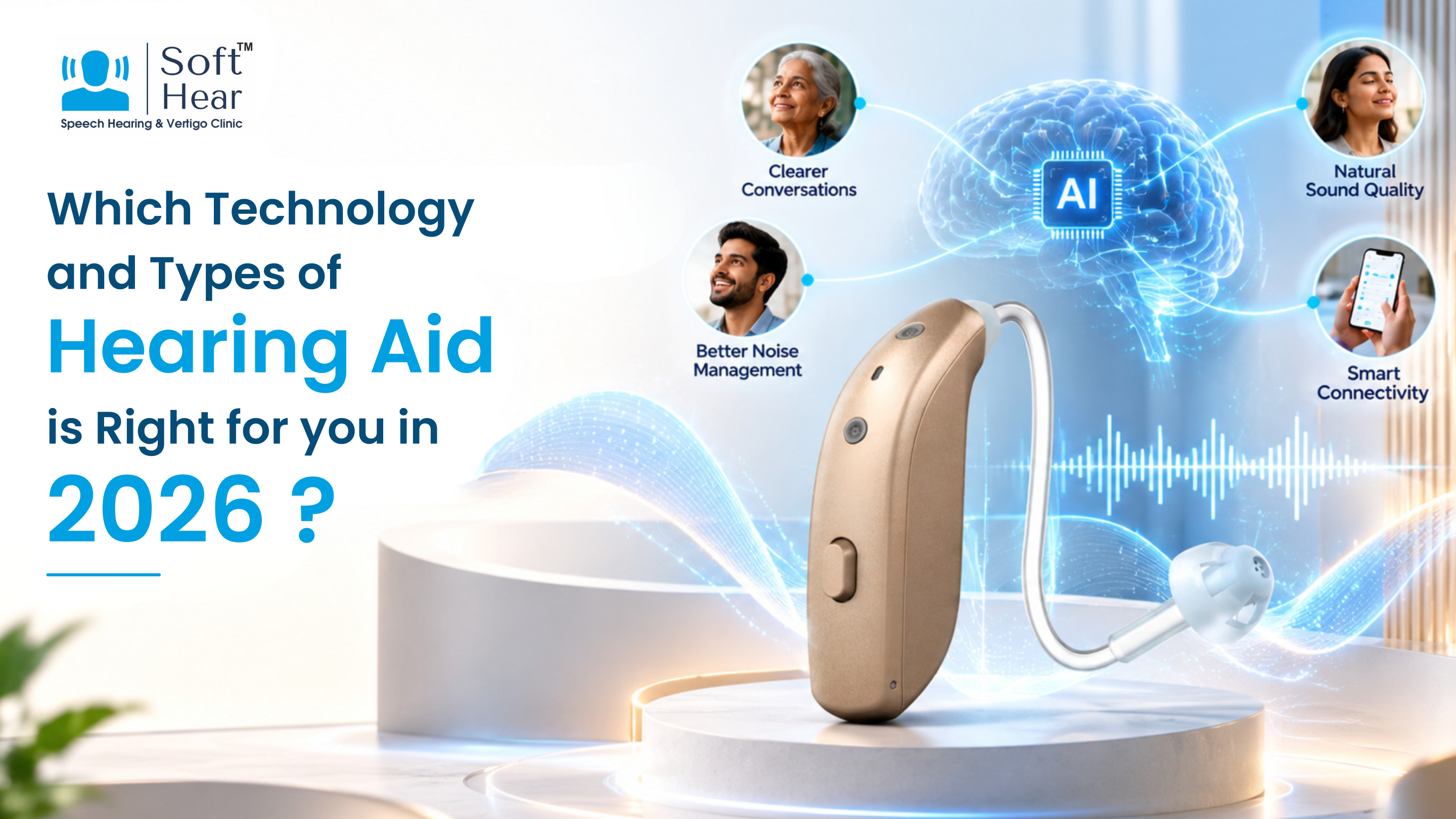
Choosing a hearing aid in 2026 is very different from simply choosing a device based on how severe your hearing loss is.
Today’s hearing aids can use advanced Artificial Intelligence (AI), Deep Neural Network (DNN) processing, adaptive noise management, directional microphone systems, Bluetooth connectivity, LE Audio and Auracast-ready technology.
But the most advanced hearing aid is not necessarily the right hearing aid for every person.
The right choice depends on your hearing loss, speech understanding, lifestyle, listening environments, communication needs, ear anatomy and how the hearing aid is fitted.
Start With Your Hearing, Not the Hearing Aid
The first step should always be a proper hearing assessment.
A standard pure-tone audiogram tells us the softest sounds you can hear at different frequencies, but it does not tell the entire story.
Two people with a similar audiogram can have very different difficulties.
One person may hear reasonably well in quiet but struggle significantly in restaurants and group conversations. Another may have reduced speech discrimination. Someone else may mainly struggle with soft speech or television.
Depending on the clinical requirement, an Audiologist may assess speech discrimination, speech understanding in noise, SNR loss, tympanometry, acoustic reflexes and other specialised auditory parameters in addition to routine hearing thresholds.
This information helps determine not only whether you need a hearing aid, but also what type of technology may be appropriate.
What Hearing Aid Technology Should You Choose in 2026?
Modern hearing aids can broadly be understood through their processing capabilities.
1. Basic Digital Hearing Aids
Basic technology can be suitable for people who spend much of their time in relatively predictable and quieter environments.
These devices generally provide essential amplification, feedback management and automatic adjustment of sound.
They may be appropriate when listening demands are relatively simple.
However, if you regularly participate in meetings, restaurants, family gatherings or other complex environments, more advanced processing may be worth considering.
2. Advanced Hearing Aid Technology
Advanced hearing aids provide more sophisticated environmental analysis, directional processing, noise management and automatic adaptation.
They are designed to handle a greater variety of listening situations.
This can be particularly useful for people who move between quiet and noisy environments throughout the day.
3. Premium and AI/DNN-Based Hearing Aids
The latest generation of hearing aids increasingly uses AI and Deep Neural Network (DNN)-based processing.
These systems are designed to analyse complex acoustic environments and distinguish different characteristics of sound.
Rather than simply amplifying everything or reducing noise, modern processing can analyse the acoustic environment and adjust the hearing aid's response dynamically.
Current flagship platforms from leading manufacturers are increasingly using this type of technology.
For people who spend significant time in complex listening environments, advanced AI/DNN technology can be particularly relevant.
But again, technology should be selected according to the individual—not simply because it is the newest feature.
Which Type of Hearing Aid Is Right for You?
Technology is only one part of the decision.
The physical style of the hearing aid is equally important.
Receiver-in-Canal (RIC)
RIC hearing aids are among the most popular modern hearing-aid designs.
The main device sits behind the ear while the receiver is positioned close to or inside the ear canal.
Advantages can include:
- Small and discreet design
- Rechargeable options
- Good connectivity
- Different receiver power options
- Suitable for a wide range of hearing losses
RIC devices are often a good option for people looking for a balance between appearance, performance and connectivity.
Behind-the-Ear (BTE)
BTE hearing aids are available in different power levels and can be suitable for moderate to severe or profound hearing losses, depending on the specific device.
They can provide greater power and flexibility in acoustic coupling.
For patients with more significant hearing loss, a BTE design may sometimes be more appropriate than a smaller hearing aid.
In-the-Ear (ITE)
ITE hearing aids are custom-made to fit within the ear.
They can be useful for people who prefer a more integrated design and may provide a good balance between discretion and functionality.
Completely-in-Canal (CIC) and Invisible-in-Canal Styles
These hearing aids are designed to sit deeper inside the ear canal.
They can be attractive to patients who prioritise discretion.
However, the smallest hearing aid is not automatically the best choice.
Ear anatomy, hearing-loss severity, dexterity, receiver requirements, battery/rechargeable options and connectivity requirements all need to be considered.
Power Hearing Aids
For severe to profound hearing loss, higher-power BTE or power hearing-aid solutions may be required.
In these cases, the priority is not simply size or appearance. Adequate output, acoustic coupling, feedback management and appropriate programming become particularly important.
Rechargeable or Battery-Powered?
Rechargeable hearing aids have become increasingly popular.
For many users, they offer convenience because the hearing aid can simply be placed on its charger at night.
They can be particularly useful for people who do not want to handle small batteries regularly.
However, battery-powered options can still have advantages for certain users, particularly those who travel extensively or want the ability to replace batteries immediately.
The choice should therefore depend on lifestyle and personal preference.
Bluetooth, LE Audio and Auracast
Connectivity has become an important part of hearing-aid technology.
Modern hearing aids may provide Bluetooth connectivity for smartphones, calls, music and other devices.
Newer platforms are also incorporating Bluetooth LE Audio and Auracast™ readiness, opening the possibility of more direct access to compatible public and personal audio broadcasts.
For someone who frequently uses a smartphone, watches television or attends meetings and public events, connectivity can be an important part of the overall hearing-aid experience.
What About Hearing Aids for Speech in Noise?
This is one of the most important questions patients ask.
Many people say:
“I can hear people talking, but I cannot understand what they are saying when there is noise.”
This is not always solved simply by increasing volume.
Speech understanding in noise can depend on hearing loss, speech discrimination, SNR loss, cognitive listening demands, microphone directionality, noise-management strategies and the patient's individual hearing-aid fitting.
This is where advanced technology—including AI/DNN-based processing—may have an important role.
But technology selection should ideally be supported by appropriate clinical testing rather than based only on a product demonstration.
The Importance of Receiver and Acoustic Configuration
The hearing-aid model is only part of the fitting.
The receiver power, dome or custom earmould, venting, coupling and other acoustic parameters can influence how sound is delivered to the ear.
For example, a person with a relatively mild hearing loss may need a different acoustic configuration from someone with a severe high-frequency hearing loss.
The receiver also needs to provide appropriate output without unnecessarily compromising comfort or acoustic performance.
This is why the same hearing aid can perform differently when fitted differently.
Why the Audiologist Matters
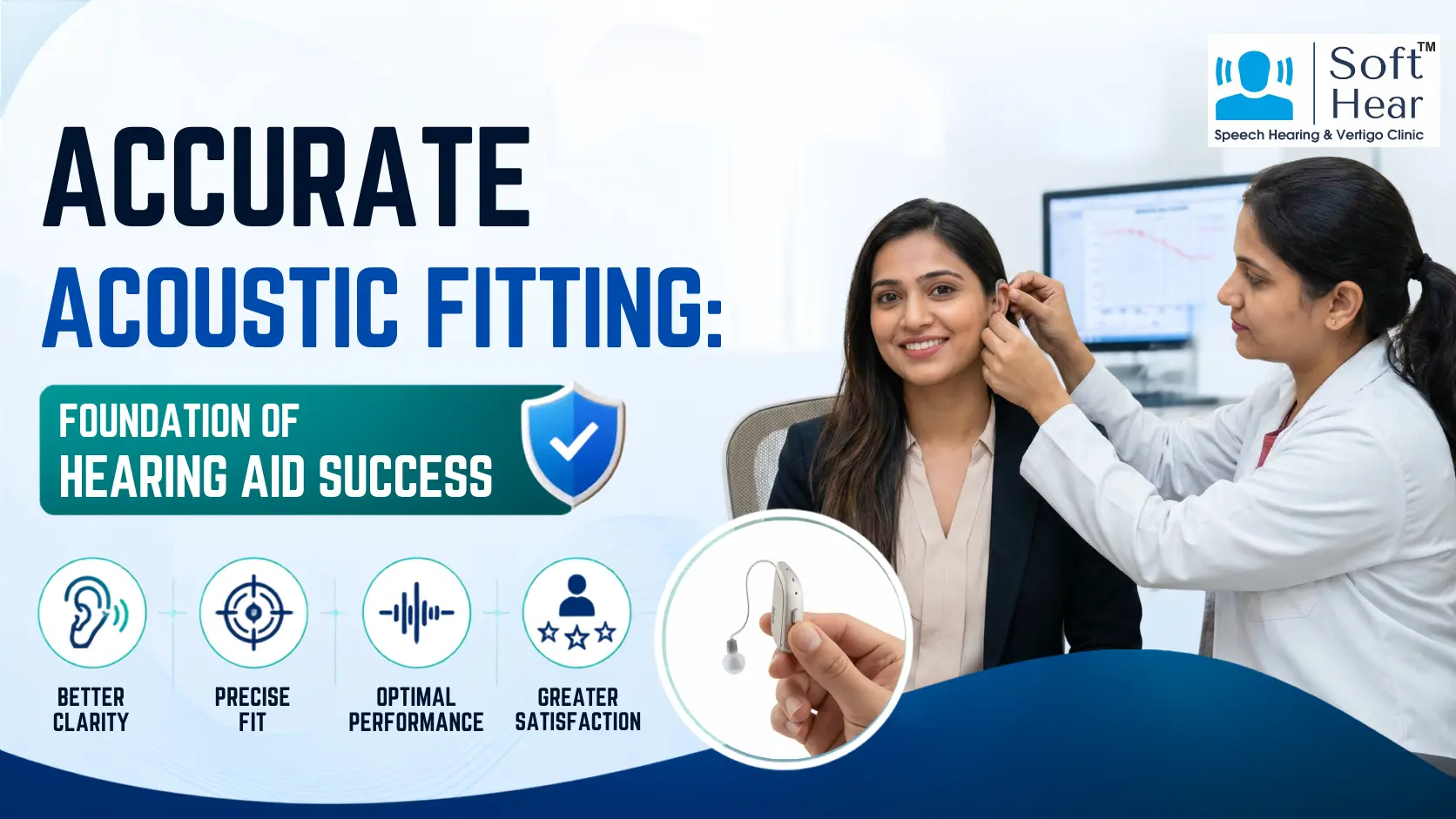
A hearing aid is a sophisticated digital system, but the clinical decision behind it is equally important.
A qualified Audiologist can bring together:
Hearing assessment + speech perception + listening needs + technology selection + acoustic configuration + programming + counselling + follow-up
This becomes even more important with modern AI and DNN-based hearing aids.
The Audiologist needs to understand what the technology is designed to do and how it relates to the patient's hearing profile.
The brain and auditory system also need time to adapt to amplified sound, particularly when a person has lived with hearing loss for many years.
Good fitting and appropriate follow-up can therefore be an important part of the rehabilitation process.
So, Which Hearing Aid Is Right for You?
There is no single hearing aid that is right for everyone.
A useful way to think about the decision is:
Your hearing loss
↓
Your speech understanding
↓
Your listening environments
↓
Your lifestyle and communication needs
↓
Appropriate technology level
↓
Appropriate hearing-aid style
↓
Receiver and acoustic configuration
↓
Professional fitting and follow-up
This approach is more meaningful than simply asking, “Which is the best hearing aid?”
Our Approach at Soft Hear
At Soft Hear, we believe hearing-aid selection should begin with clinical understanding rather than product selection.
Our Audiologists assess the patient's hearing and communication requirements and, where clinically indicated, use specialised tests such as speech discrimination, speech-in-noise assessment and SNR loss along with other relevant audiological tests.
We then consider the technology, hearing-aid style, receiver and acoustic configuration that may be appropriate for that individual.
Whether the right solution is an advanced AI/DNN hearing aid, a rechargeable RIC, a powerful BTE or a discreet custom hearing aid, the objective remains the same:
to match the right technology to the right patient and help the patient make meaningful use of it.
Final Word
The best hearing aid in 2026 is not necessarily the smallest, most expensive or most technologically advanced device.
It is the one that is appropriate for your hearing, your communication needs and your everyday listening environment—and professionally fitted to you.
Technology has moved rapidly, with AI, DNN processing, advanced noise management, wireless connectivity, LE Audio and Auracast becoming increasingly important.
But the foundation remains unchanged:
Accurate diagnosis. Right technology. Right acoustic configuration. Professional fitting. Ongoing support.
At Soft Hear, we believe that is the foundation of a successful hearing-aid journey.
FAQ
1. Which hearing aid is best for me in 2026?
There is no single best hearing aid for everyone. The right choice depends on your hearing loss, speech understanding, lifestyle, listening environments and ear anatomy. The most advanced or smallest device is not automatically the best. A hearing assessment by an audiologist is the right starting point.
2. What is the difference between basic, advanced and premium AI hearing aids?
Basic hearing aids give essential amplification, feedback control and automatic sound adjustment, suiting quieter, predictable settings. Advanced models add better environmental analysis, directional processing and noise management. Premium AI/DNN hearing aids analyse complex sound environments and adjust dynamically, which helps people who spend time in busy places.
3. Are AI and DNN hearing aids worth it?
They can be, especially if you often attend meetings, restaurants or family gatherings. Deep Neural Network (DNN) processing is designed to handle complex listening environments more intelligently. However, the technology should be matched to your hearing profile and tested clinically, not chosen simply because it is the newest.
4. What are the main types of hearing aids?
The main styles are Receiver-in-Canal (RIC), Behind-the-Ear (BTE), In-the-Ear (ITE), Completely-in-Canal (CIC) and Invisible-in-Canal (IIC). Power BTE devices are also available for severe to profound hearing loss. Each differs in size, power, comfort, connectivity and suitability.
5. Which is better: RIC or BTE hearing aids?
RIC aids are small, discreet, rechargeable, and suitable for many hearing losses. BTE aids can fit moderate to severe or profound hearing loss due to their power and flexibility. Which RIC or BTE hearing aid is best depends on your hearing loss and ear anatomy.
6. Why can I hear people talking but not understand them in noise?
This is common and is not always fixed by turning up the volume. Understanding speech in noise depends on hearing loss, speech discrimination, SNR loss, listening effort, microphone directionality and how the hearing aid is fitted. Tests such as speech-in-noise assessment help identify the problem and guide technology selection.
7. Are rechargeable hearing aids better than battery-powered ones?
Rechargeable aids are convenient because you simply place them on a charger overnight, with no small batteries to handle. Battery-powered aids can suit frequent travellers or anyone who wants to swap batteries instantly. The better option depends on your lifestyle and preference.
8. What are Bluetooth, LE Audio and Auracast in hearing aids?
Bluetooth lets hearing aids connect to smartphones, calls, music and TV. LE Audio is a newer Bluetooth standard, and Auracast lets compatible devices receive public or personal audio broadcasts directly, such as at events or public venues. Newer hearing aids are increasingly built to support them.
9. Is the smallest, most invisible hearing aid the best choice?
Not necessarily. Very small CIC and IIC aids are discreet, but ear anatomy, hearing loss severity, dexterity, battery or rechargeable options, receiver needs and connectivity all affect suitability. Performance and comfort matter as much as appearance.
10. Why do I need an audiologist to fit my hearing aid?
An audiologist combines your hearing assessment, speech perception results, listening needs, technology selection, receiver and acoustic configuration, programming and follow-up. The same hearing aid can perform very differently depending on how it is fitted. Your brain also needs time to adapt to amplified sound, so follow-up and care matters.