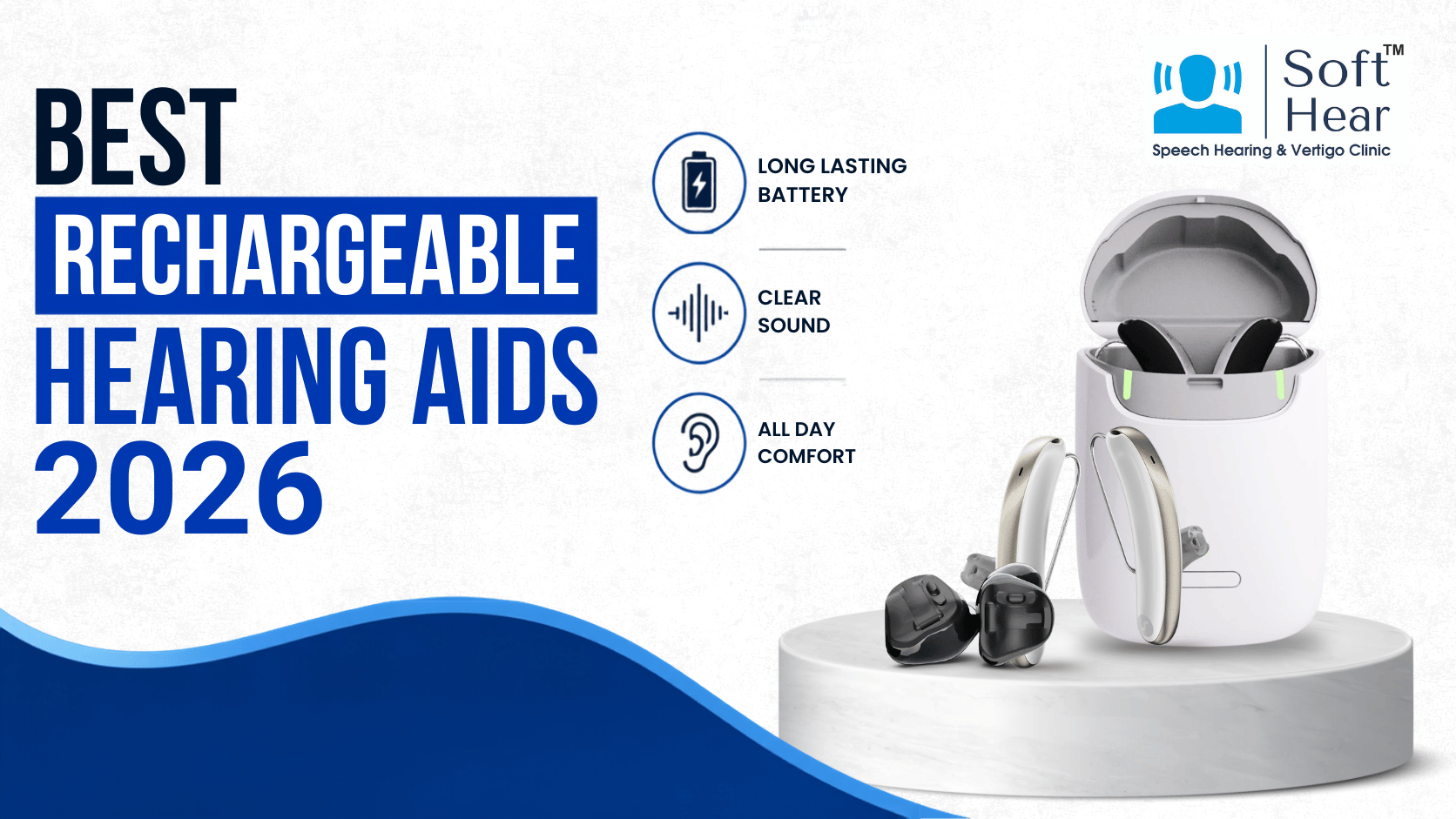
Rechargeable hearing aids revolutionized the face of today’s hearing care offering a convenient, reliable and eco-friendly alternative to conventional hearing devices powered by batteries. In the last few years, rechargeable technology has moved from a premium feature in just a few hearing aids to the preferred choice for millions of hearing aid users worldwide. By 2026, most of the major hearing aid makers have launched rechargeable hearing aids with artificial intelligence (AI), advanced sound processing, wireless connectivity and a full day of battery life on a single charge.
People with hearing loss find it annoying to change tiny disposable batteries every few days, particularly older adults, or those who have limited hand dexterity or vision problems. Rechargeable hearing aids take away this problem as the user has to put their hearing aids in a charging station at night. By morning the devices are fully charged and ready for uninterrupted hearing throughout the day.
Rechargeable hearing aids are so much more than easy today. They include sophisticated technology that automatically evaluates listening environments, removes background noise, enhances speech understanding, relieves listening fatigue and adjusts to changing sound conditions in real time. Many premium models also include Bluetooth streaming, smartphone applications, tinnitus management, remote programming by audiologists and health and wellness features, making them far more than simple sound amplifiers.
As the technology of rechargeable hearing aids continues to develop, many are asking themselves whether these hearing aids are worth the money, what brands have the best rechargeable options, how long the batteries last and whether they are suitable for every kind of hearing loss. This complete guide will answer these questions and more, and will discuss the best rechargeable hearing aids in 2026.
Rechargeable Hearing Devices
Rechargeable hearing aids are digital hearing devices that contain rechargeable batteries. Users do not need to change the batteries every few days but only need to charge the hearing aid in a specially designed charging unit. Most rechargeable hearing aids today are powered by advanced long-lasting lithium-ion battery technology, providing consistent performance and reliable energy efficiency.
With disposable batteries, the performance will decrease during the day. With the lithium- ion rechargeable batteries the performance is the same in the morning and at night.” This consistency leads to clear speech, good sound quality and a continuous wireless connection even after many hours of continuous use.
Types of hearing aids Rechargeable Receiver-in-Canal (RIC) Behind-the-Ear (BTE) In-the- Ear (ITE) and some custom hearing aids Invisible-in-the-Canal (IIC) hearing aids are still generally powered by disposable batteries due to their extremely small size. However, hearing aid manufacturers are increasing offering rechargeable hearing aids in other styles of hearing aids.
Increasingly, active professionals, senior citizens, students and those who wear their hearing aids for extended periods of time each day are gravitating towards rechargeable hearing aids. They are easy to use, one of the fastest growing segments of the hearing health care industry with the latest in digital technology.
How Do Rechargeable Hearing Aids Function?
Rechargeable hearing aids have lithium-ion batteries built in and they are not removable. Rather than having to open a battery compartment and insert disposable batteries, users simply place the hearing aids in a charging dock when not in use. The charger feeds the hearing aid with power through electrical contacts or wireless induction technology replenishing the battery for use the next day.
Most manufacturers recommend to charge the hearing aids overnight – just like you would a smartphone. A full charge cycle generally takes between two and four hours, depending on the model. Most newer rechargeable hearing aids can last approximately 20 to 30 hours of continuous use on a full charge, even if you use Bluetooth streaming, smartphone connectivity or advanced sound processing features for part of your day.
Today many premium hearing aid companies offer portable charging cases with integrated power banks. The charging cases provide additional electrical energy and enable users to recharge their hearing aids multiple times on the go, without the need to plug into a power outlet. This is a great feature for people who travel a lot for work, or like outdoor activities or are away from home for long periods of time.
The charging systems themselves have become smarter and smarter. Many charging units will automatically check the battery health, control the speed of charging and stop overcharging. This helps to maximize the battery life and keep consistent performance after several years of daily use.
Rechargeable Hearing Aid Types
Many styles of hearing aids today have rechargeable technology. This allows people with varying degrees of hearing loss to enjoy the convenience of cordless charging and the most advanced digital hearing technology. Your hearing needs and cosmetic desires, lifestyle and the advice of a qualified audiologist will all determine what style is best for you.
Rechargeable Receiver-in-Canal Hearing Aids
Receiver-in-Canal hearing aids are the most popular rechargeable hearing aid in 2026. The primary hearing aid is a light-weight device and sits comfortably behind the ear with a thin wire connecting it to a receiver in the ear canal. This configuration allows manufacturers to add larger rechargeable batteries, powerful processors, Bluetooth antennas and multiple microphones without increasing the size of the device.
RIC hearing aids offer great sound quality, natural speech clarity and outstanding comfort. Depending on the receiver selected, they are appropriate for those with mild, moderate, moderately severe and even severe hearing loss. Rechargeable RIC hearing aids have become the popular choice for many adults around the world, because they offer a good combination of high technology and an inconspicuous look.
Rechargeable Behind-the-Ear (BTE) Hearing Aids
Behind-the-Ear hearing aids rechargeable are intended for people who need more powerful hearing solutions or more amplification. The electronics in these hearing aids are behind the ear and the sound is transmitted to the ear canal by a custom earmold or a thin tube.
Increased size means the manufacturers can use high capacity rechargeable batteries which allow longer operating times. BTE hearing aids are often prescribed for patients with severe to profound hearing loss because they can deliver more amplification and are durable and battery efficient.
Today’s rechargeable BTE hearing aids are significantly smaller and more comfortable than older models and are ideal for adults and children requiring dependable, long-term hearing support.
Rechargeable In-the-Ear (ITE) Hearing Aids
Advances in battery technology have led several manufacturers to introduce rechargeable In-the-Ear hearing aids. These custom devices are snug in the outer ear, with rechargeable batteries and sophisticated digital processors crammed into a small shell.
Rechargeable ITE hearing aids may appeal to those who want a custom hearing solution that they don’t have to wear behind the ear. They are comfortable, provide good speech clarity and are relatively easy to insert and remove, particularly for users with limited finger dexterity.
Custom rechargeable hearing aids are still under development. The availability of rechargeable options will depend on the manufacturer's product line and the user’s ear anatomy.
Why Rechargeable Hearing Aids Are the Preferred Choice?
The increasing popularity of rechargeable hearing aids is a sign of changing expectations of hearing aid users today. Today's consumers expect hearing devices to offer the same convenience and reliability they get from smartphones, smartwatches and other rechargeable electronic devices. Rechargeable hearing aids do fulfill these expectations and improve the overall hearing experience.
One of the biggest plus points is convenience. Users will not have to buy new batteries on a regular basis or deal with small battery cells by eliminating disposable batteries. This makes it easier to use your hearing aid every day, and reduces interruptions from unexpected battery drain.
Rechargeable hearing aids are also far more dependable. Lithium-ion batteries deliver a constant power source throughout the day so that advanced sound processing systems, Bluetooth connectivity and artificial intelligence features perform at their best. Users report a consistent hearing quality from morning until bed-time, with no gradual loss in performance being perceived.
Another important consideration is that of environmental sustainability. Over the lifetime of a hearing aid, traditional hearing aid users could throw away hundreds of tiny batteries. Rechargeable technology is a great way to reduce battery waste which helps to make hearing care more environmentally responsible. Rechargeable hearing aids also save you money in the long term as you will not have to buy disposable batteries.
Plenty of users like the comfort of charging overnight, too. Just getting people to put their hearing aids in the charger when they go to bed, means those hearing aids are ready for the next day, and no need to carry spare batteries.
Disposable vs Rechargeable Hearing Aids
Rechargeable hearing aids are growing in popularity, and many people wonder if they are really better than traditional battery-powered hearing aids. The choice depends on your hearing requirements, lifestyle and personal preference but for many, rechargeable technology offers many practical advantages
| Feature | Hearing Aids Rechargeable | Disposable Battery Hearing Aids |
|---|---|---|
| Power Supply | Integrated rechargeable lithium battery | Zinc-Air rechargeable batteries |
| Daily Use | Charge over night, use all day | Change batteries every few days |
| Convenience | Very high, no battery replacement | You’ll need to buy and replace batteries regularly |
| Impact on the Environment | Generates much less battery waste | Leads to continuous disposal battery waste |
| Operating Expenses | Reduced long term costs for batteries | Replacement battery costs over time |
| Bluetooth & AI Capabilities | Optimized for next generation wireless | Many models are available but battery life varies |
| Handling ease | Great for arthritis or low vision users | Small batteries can be a bit of a pain to work with |
Rechargeable hearing aids are the preferred choice of most new hearing aid users due to their convenience, advanced technology and reliable performance in everyday life. Disposable battery hearing aids are still an excellent option for some users, especially those who want the convenience of easily replaceable power sources when on long trips.
Are Rechargeable Hearing Aids the Right Choice for You?
Rechargeable hearing aids are a fantastic option for lots of people. But selecting the right hearing device involves more than just choosing the latest technology. The best hearing aids for you will depend on your hearing profile, your daily routine, your communication needs, your occupational requirements and your personal preferences.
If you’re someone who regularly attends business meetings or travels a lot, or you’re highly dependent on connectivity with your smart phone, you might want to consider premium rechargeable hearing aids with artificial intelligence and Bluetooth streaming. In contrast, someone whose main objective is to have comfortable conversations with family members at home, can get good results with a mid-range rechargeable model with fewer advanced features.
It should also be taken into account the physical ability to use hearing aids. Rechargeable hearing aids remove the hassle of fiddling with tiny disposable batteries, which can be especially difficult for older adults or anyone with arthritis, tremors or compromised vision.
The best rechargeable hearing aid is the one that fits your hearing needs and works best for your daily life. A full hearing test by a qualified audiologist will help determine the best style of hearing aid and level of technology to provide long-term benefit.
Leading Rechargeable Hearing Aid Brands for 2026
We are now in a new era of the hearing aid industry where the rechargeable technology has become an essential feature for convenience in daily life and no longer a premium luxury. Top manufacturers are constantly adding features like artificial intelligence, machine learning, wireless connectivity, new developments in rechargeable batteries and personalised hearing experiences. Consequently, today’s rechargeable hearing aids can provide excellent sound quality, while adapting automatically to the listening environment of the wearer throughout the day.
Many brands offer rechargeable hearing aids, but there are big differences in the way they process sound, enhance speech, battery life, charging technology, smart phone connectivity and overall experience. Knowing the differences will help a person choose a hearing aid that will improve hearing, and also suit the person’s lifestyle.
At Soft Hear we believe there is no one size that can be considered the “best” hearing aid. The right solution depends on the individual’s hearing loss, communication needs, work environment, daily activities, and personal preferences. Our audiologists don’t recommend one manufacturer. They assess each patient’s hearing profile and recommend the best technology from globally trusted brands.
Starkey Rechargeable Hearing Aid
In 2026, Starkey remained at the cutting edge of the hearing aid sector with innovation being the focus of its rechargeable hearing aids that continue to set new industry benchmarks. Starkey devices are powered by the most advanced Genesis AI platform designed to work like the way the human brain is naturally wired to process sound. They are much more than a simple amplifier of speech. They intelligently process thousands of acoustic signals every hour, automatically adjusting to the varying listening environment with amazing accuracy.
One of Starkey’s best qualities is the ability to provide excellent speech clarity, while minimizing unwanted background noise. Whether users are in a business meeting, talking to family, travelling or enjoying a meal in a busy restaurant, the hearing aids continuously optimise sound without the need for manual adjustment.
Starkey rechargeable hearing aids are also well known for their impressive battery efficiency. A full overnight charge typically offers all-day hearing performance, including a few hours of wireless streaming and smartphone connectivity. Their charging systems are designed to protect the health of the batteries, while ensuring reliable long-term performance.
The other difference is that Starkey emphasizes holistic wellness. Some of the higher-end models have health-related functions such as activity tracking, fall detection and wellness monitoring through linked mobile apps. That makes Starkey a good choice for those looking for hearing technology that supports communication and overall health.
Rechargeable Hearing Aid Signia
Signia has a reputation of hearing aids that give you a very natural listening experience. Its rechargeable hearing aids offer intelligent sound processing and advanced conversation enhancement technology for users to feel confident in engaging in conversations in quiet and noisy environments.
Signia’s most celebrated innovation is Integrated Xperience (IX) technology, which uses real-time conversational intelligence to improve speech understanding in environments with multiple people talking at the same time. The hearing aid is always listening to conversations, not every sound in the environment, and it adjusts the processing so that speech is always clear and easy to understand.
Rechargeable Signia hearing aids are especially popular for reducing the “own voice effect,” a common complaint of first-time hearing aid wearers. Sophisticated processing algorithms are needed for the user to perceive his own voice in a natural way, but at the same time being aware of the environment.
Another area where Signia excels is battery life. Many of the new rechargeable models can give a full days use on a single charge even with heavy use of Bluetooth streaming, phone calls and mobile app connectivity.
Signia is the perfect blend of discreet design, reliable battery life and intelligent conversation enhancement for professionals, educators, business executives and socially active people.
Phonak Rechargeable Hearing Aids
Phonak has established a worldwide reputation for developing hearing instruments that reliably perform for a wide range of hearing loss. Its rechargeable hearing aids provide powerful amplification with the latest in automatic sound adaptation, making them suitable for people with mild, moderate, severe and profound hearing loss.
Universal connectivity is one of Phonak’s hallmark strengths. Many of Phonak’s rechargeable hearing aids can directly connect to your smartphones, televisions, computers and many other Bluetooth enabled devices without any additional accessories. This smooth integration allows users to enjoy better clarity on phone calls, video meetings, music and television.
Phonak’s intelligent sound processing automatically identifies different listening situations and adjusts the volume accordingly. Whether listening outdoors, at conference, in family gatherings or through airports, users enjoy seamless transitions between listening environments without the need to constantly change programmes.
The Phonak rechargeable hearing aid also has tough lithium-ion batteries that keep working day after day. Their versatile convenient charging options are great for frequent travelers and those who are away from home for long periods of time.
Phonak remains a top choice in 2026 for those who want versatility, connectivity and reliable hearing performance.
Widex Rechargeable Hearing Aids
Widex has historically been known to produce hearing aids that sound incredibly natural. You don’t want things just louder. You want things to be as life-like as possible. Widex want to help you hear your conversations, music and environment as realistically as possible.
Musicians, music lovers, teachers, lecturers and professionals who value a balanced sound reproduction find the rechargeable Widex hearing aids particularly attractive. Their advanced processing technology preserves the subtle sound details and at the same time reduces the distracting background noise.
Widex also employs artificial intelligence in its sound processing systems, so that its hearing aids can learn the user’s preferences over time and adjust the listening experience to the different environments. This customisation reduces the listening fatigue and increases the comfort during prolonged daily use.
Battery life is also impressive with today’s Widex rechargeable hearing aids providing robust all-day use after a full overnight charge. Convenience of portable charging cases will be further upgraded for the regular travelers.
Widex is often considered to be one of the best rechargeable hearing aid brands on the market today for people who prioritize sound quality above all else.
ReSound Rechargeable Hearing Aids
ReSound is a pioneer in the area of natural hearing technology, and produces hearing aids that increase speech understanding without sacrificing awareness of the surroundings. Instead of creating a totally isolated listening experience, ReSound’s intelligent processing creates a well-balanced listening experience which helps users remain aware of their environment.
ReSound rechargeable hearing aids include advanced directional microphone technology, sophisticated noise management and automatic environmental adaptation. These features enable users to converse comfortably in a range of everyday situations, from quiet conversations at home, to busy shopping centres and outdoor gatherings.
Wireless ecosystem is yet another great strength of ReSound. The company’s rechargeable hearing aids also seamlessly connect to compatible smartphones and assistive listening devices, allowing users to stream phone calls, music, television audio and online meetings directly to their hearing aids.
ReSound rechargeable battery technology gives users the opportunity to wear their hearing aids throughout the day, while maintaining consistent sound quality even with extended listening periods. Its smart charging systems are designed to make life easier and to extend the battery’s lifespan.
ReSound is a good option for active people who move between different listening situations and want a good balance between natural hearing, wireless convenience and reliable battery life.
Beltone Rechargeable Hearing Aids
Beltone has been helping hearing aid users for decades with reliable, comfortable and easy-to-use hearing solutions. Its rechargeable hearing aids continue the tradition with a combination of reliable sound quality and everyday functionality.
The rechargeable Beltone hearing aids automatically adjust the amplification to each of the various listening environments, minimizing background noise but maintaining the clarity of speech. Their intuitive operation is particularly appealing to first-time hearing aid users and senior citizens looking for uncomplicated hearing technology.
Comfort is one of Beltone’s strengths. Its hearing aids are designed for long-term wear, and the rechargeable batteries mean you don’t have to fret about changing batteries.
The company’s smartphone apps also help make hearing aid management easier, allowing users to quickly adjust volume, customize listening programs and monitor battery status.
Beltone, in 2026, is still the respected choice for those that want dependable performance, simple operation and excellent long term reliability.
Comparison of the Best Rechargeable Hearing Aid Brands in 2026
| Brand | Flagship Technology Rechargeable | Core Strength | Ideal For | Approximate Battery Life |
|---|---|---|---|---|
| Starkey | Genesis AI | AI-enhanced sound processing and speech clarity | Professionals, active adults, first time users | Up to one day on one charge |
| Signia | Integrated Experience (IX) | Conversation improvement and natural voice | Business professionals and social users | Up to one day on one charge |
| Phonak | Infineon / Lumity Rechargeable Platform | Universal Bluetooth connectivity and versatile performance | Users with diverse hearing needs | Up to one day on one charge |
| Widex | SmartRIC / Moment Platform | Natural sound quality and music listening | Musicians, teachers, professionals | Up to one day on one charge |
| ReSound | Nexia Rechargeable Platform | Spatial awareness and wireless connectivity | Active lifestyle users | Up to one day on one charge |
| Beltone | Serene Rechargeable Platform | Simplicity, comfort and dependable performance | Seniors and first-time users | Up to one day on one charge |
Performance of the battery may vary depending on Bluetooth streaming, listening environment, age of battery and manufacturer specifications.
What Rechargeable Hearing Aid Technology Is Right for You?
The major hearing aid manufacturers have invested a lot of money in artificial intelligence and rechargeable battery technology, but they have very different design philosophies. Some brands emphasize speech understanding in noisy environments, others natural sound quality, seamless connectivity, personalized listening experiences or health features.
People who attend meetings, conferences or social events often find hearing aids with advanced conversational intelligence that can separate speech from surrounding noise to be very helpful. If you rely on smartphones and video conferencing for your profession, you might want to consider hearing aids that have a strong Bluetooth connection and direct audio streaming. Music lovers and creative professionals generally prefer technologies that maintain natural sound fidelity, whereas older adults tend to prioritize ease of use, reliability and comfortable all-day wear.
It is also important to consider charging convenience as well as battery life. Today’s lithium-ion batteries are reliable for everyday use but vary from maker to maker on portable charging cases, fast-charging ability and battery life. Finding a hearing aid with charging options that fit your daily routine can help to increase overall satisfaction.
In the end, there’s no best brand. The best rechargeable hearing aid is the one that has been professionally selected, programmed and customized to fit your hearing profile and lifestyle.
Our audiologists at Soft Hear will undertake a full hearing assessment before advising the use of rechargeable hearing aids from world renowned manufacturers such as Starkey, Signia, Phonak, Widex, ReSound and Beltone. We recommend based on clinical evidence, patient expectations, communication needs and long term hearing outcomes, not on brand preference alone.
India’s Rechargeable Hearing Aid Price (2026)
The first question most people have about a rechargeable hearing aid is, “How much does it cost?” Price is an important consideration but should never be the only consideration when choosing a hearing aid. Rechargeable hearing aids are sophisticated medical devices that offer advanced digital sound processing, artificial intelligence, wireless communication, rechargeable battery technology and personalized programming. They are designed to improve communication, improve quality of life and support long-term hearing health and are therefore worth more than the device itself.
The price of rechargeable hearing aids in India depends on the brand, technology level, hearing aid style, sound processing features, connectivity features, and professional services offered in the package. Therefore, the investment should be considered as a total hearing care solution, not just the cost of the hearing aid.
The entry level rechargeable hearing aids generally start from Rs 40,000 to Rs 70,000 per ear. They are designed for those with mild hearing loss who primarily communicate in quiet environments. They tend to have digital amplification, feedback cancellation, simple noise reduction and reliable rechargeable batteries that last all day.
Mid range rechargeable hearing aids are generally priced between ₹70,000 to ₹1,50,000 per ear. With this level of technology users can enjoy better speech understanding, automatic adjustment to the environment, better reduction of background noise, compatibility with a smartphone and more personalized listening experiences. These hearing aids are generally recommended for professionals who work, teachers, business owners and social butterflies who find themselves in a variety of listening situations.
Generally, premium rechargeable hearing aids can cost anywhere between ₹1,50,000 and ₹4,00,000 or above per ear. They are the newest hearing technology devices which use artificial intelligence, machine learning, real time environmental analysis, direct Bluetooth streaming, tinnitus management programs, health tracking features, remote programming and highly sophisticated speech enhancement systems. Premium models are ideal for those who need the best hearing performance in difficult listening situations and want the latest innovations in hearing healthcare.
It’s just as important to know what’s not included in the total cost. Most leading hearing care centers provide a full range of services including full hearing assessments, hearing aid programming, personalized fitting, counseling, follow-up meetings, software updates, warranty support and ongoing maintenance. These professional services are vital for the proper functioning of the hearing aid over its service life.
What Influences the Cost of Rechargeable Hearing Aids?
There are many factors that affect the total cost of a rechargeable hearing aid, and knowing what they are can help people make informed buying decisions.
Technology platform is one of the most important price factors. Premium hearing aids use artificial intelligence and advanced digital signal processing to constantly analyze the environment around the user. They automatically separate speech from background noise, fine tune amplification depending on different listening situations and deliver a more natural hearing experience. The more processing power the higher the level of technology and cost involved.
Another important factor is the technology of rechargeable battery. Today’s lithium-ion batteries are made to perform throughout the day, and to maintain capacity after years of daily charging. Manufacturers have invested heavily in the safety of the batteries, the efficiency of the charging and the long-term durability, all of which adds to the value of rechargeable hearing aids.
Pricing also depends on wireless connectivity. Hearing aids use complex hardware and software integration to stream via Bluetooth directly from your smartphone, television, laptop or other connective device. These features are very convenient, but of course they add to the overall cost of the device.
The type of hearing aid also determines the price. Receiver-in-Canal (RIC) hearing aids are typically larger with more advanced features, and have larger rechargeable batteries than the smaller custom devices. Likewise, hearing aids for profound hearing loss tend to have more powerful amplifiers and specialized receivers and thus are more expensive to manufacture.
Professional expertise must also be taken into account. Successful hearing rehabilitation requires accurate hearing assessments, custom programming, real ear measurements, counseling, follow-up appointments and long-term after care. The cheapest hearing aid may not be the best long-term value, and a trusted hearing care provider can often help.
Choosing the Best Rechargeable Hearing Aid
Choosing the best rechargeable hearing aid is not simply a matter of comparing brands and prices. This is why personalized hearing care remains so important - everybody's hearing loss, lifestyle, communication needs and expectations are different.
But the first and most important step is to have a full hearing evaluation by a qualified audiologist. This assessment will determine the type and degree of hearing loss, assess speech perception, check the health of the ears and determine the style and amount of hearing aid that will be most beneficial.
Lifestyle also should be a factor in the decision process. A person who spends most of his time in the quiet surroundings of his home does not need the same level of technology as someone who attends meetings, travels frequently or is often at social events. For dynamic listening environments, advanced hearing aids with artificial intelligence work especially well as they automatically adjust to varying sound environments without the need for manual adjustments.
Another important consideration is connectivity requirements. Many users today expect their hearing aids to function as wireless communication devices that stream phone calls, online meetings, music and television audio from compatible electronics. A hearing aid with these features can be hugely beneficial to communication and general ease of use.
Comfort is equally important. Hearing aids are worn for many hours on a daily basis so they should fit securely and be comfortable for long periods of time. Professional fitting and individualized programming are important for ensuring excellent hearing performance and long-term wearing comfort for users.
And finally, don’t forget after sales support. The needs of hearing change over time and hearing aids are often adjusted to optimize performance as the needs of listening change. Choosing a hearing care center that provides ongoing support really helps with long-term happiness.
How Long Do Rechargeable Hearing Aids Last?
Battery life One of the biggest advantages of modern rechargeable hearing aids is battery life. Also, thanks to recent developments in lithium-ion technology, the latest hearing aids are far more efficient than older rechargeable ones, giving you much longer operating times without compromising consistent sound quality throughout the day.
Most premium rechargeable hearing aids are good for 20 to 30 hours of continuous use, after an overnight charge. This time is usually a combination of regular use of the hearing aid and some hours of Bluetooth streaming, phone calls or a connection to a smartphone. Performance of the battery depends on the technology, environment, how you stream and what you listen to.
The rechargeable battery is designed to last, too. A lithium-ion battery usually lasts four to six years in normal daily use, often the same as the expected life of the hearing aid itself. Unlike disposable batteries, you don’t have to carry spare batteries or change batteries every few days.
Many manufacturers offer rapid charging technology too. Depending on the model, a short charging session can give you several hours of use in your hearing aid, providing a valuable level of flexibility for people with busy schedules or unexpected travel needs.
2026 Charging Options
Rechargeable hearing aid technology has come a long way and today’s charging systems are made to accommodate different lifestyles. Standard desktop charging stations still prevail, and are best suited to overnight charging at home. Once you place the hearing aids inside, the chargers will start to charge them, making it convenient and easy to use them every day.
Many premium hearing aids come with portable charging cases with integrated power banks. These cases contain enough energy to recharge hearing aids several times without a power outlet. These are particularly useful for business travelers, holiday makers and people who spend long periods away from home.
Some manufacturers also have fast charging systems that can give you a few hours of hearing aid use after a short charge. The innovation provides greater flexibility for users who may forget to charge their devices overnight.
Smart charging systems can monitor the condition of the battery, prevent overcharging, regulate the rate of charge and keep charging temperatures optimal, all of which helps protect the health of the battery. This feature helps in better battery life and consistent performance over a longer period of time.
Rechargeable Hearing Aids Care?
Rechargeable hearing aids are easier to use than conventional batteries, but still require regular care to work properly and last a long time. Daily life for hearing aids means earwax, sweat, dust, humidity and environmental contaminants so maintenance remains important.
Clean your hearing aids each day with the cleaning tools recommended by your audiologist. Cleaning out built up ear wax and debris helps preserve sound quality and reduces the risk of a receiver being damaged or a microphone being blocked. Hearing aids should also be kept dry and stored in their charging unit or protective case when not being worn.
Avoid exposure to excessive moisture if possible. Many rechargeable hearing aids have impressive water and dust resistance ratings but are not intended for swimming or showering. Take your hearing aids out when you shower, swim or get wet in any other way, because the electronic parts are sensitive.
Routine servicing by a hearing care professional is also important. At follow-up appointments the audiologist will check the hearing aids, battery performance, update software as needed, clean internal parts and make adjustments for best hearing performance. Preventive maintenance often increases the life of the hearing aid, and reduces the need for costly repairs.
Why Fitting Matters?
No matter how advanced the rechargeable hearing aid, it is not effective without proper fitting and customization of programming. Hearing loss can vary greatly from one person to the next, so getting a professional assessment is an important part of successful hearing rehabilitation.
Audiologists perform detailed hearing assessments to determine your hearing abilities and speech understanding, identify any listening challenges you may face, and assess the health of your ears. They then recommend a hearing aid style, level of technology and programming settings that best match the person’s hearing profile.
Following the initial fitting, you will have follow-up appointments to optimize the hearing aid settings based on your actual listening experiences in the real world. These refinements can make a tremendous difference in speech understanding, comfort and overall satisfaction. The counseling also helps the users to adapt faster to the amplified sound and set realistic expectations about their hearing journey.
Why Soft Hear for Rechargeable Hearing Aids?
The decision to select a rechargeable hearing aid is an important one, with the potential to impact communication, confidence and quality of life for many years to come. At Soft Hear we think great hearing care begins with understanding the individual, not recommending a specific product.
Prior to recommending hearing aids from internationally recognized manufacturers such as Starkey, Signia, Phonak, Widex, ReSound and Beltone our experienced audiologists will conduct a full hearing assessment using the latest diagnostic equipment. All recommendations are customized to the individual's hearing loss, life style, communication needs, cosmetic preferences and budget.
Soft Hear provides more than just hearing aid selection, offering customized fitting, real ear verification, counseling, follow-up consultations, maintenance services and long term hearing support. Our vision is to provide evidence-based hearing healthcare that empowers every person to communicate with confidence and live a better life.
Whether you’re buying your first rechargeable hearing aid or upgrading to the latest AI-powered technology in 2026, we’re here to help you on your hearing journey every step of the way.
FAQs (Frequently Asked Questions)
1. What is a rechargeable hearing aid?
Rechargeable hearing aids are digital hearing devices that use a rechargeable battery rather than disposable zinc-air batteries. Most of the modern hearing aids are powered by complex lithium-ion batteries. This means that you can charge your device overnight and enjoy a full day of uninterrupted hearing. This eliminates the inconvenience of having to change batteries often and offers a more convenient and eco-friendly hearing solution.
2. Are rechargeable hearing aids better than battery-operated hearing aids?
Most people find rechargeable hearing aids easier to use, more reliable and less maintenance intensive over the long haul. They are particularly good for the elderly, those with arthritis and those who have trouble with small batteries because they don't need to be changed every often. Rechargeable hearing aids may offer a continuous power source throughout the day that could allow for better use of advanced features such as artificial intelligence, Bluetooth streaming and automatic sound processing.
However, disposable battery hearing aids may be a good option for people who travel to remote areas where they don’t have regular access to electricity, or who like the idea of being able to easily replace batteries on a long trip. The best choice will depend on lifestyle, hearing needs and personal preference.
3. What is the battery life of a single charge?
Most modern rechargeable hearing aids will last 20 to 30 hours of continuous use after an overnight charge. Actual battery life will vary depending on many factors including hearing aid model, technology level, volume settings, Bluetooth streaming, environmental conditions and listening habits. Many premium hearing aids will easily last all day, even with frequent streaming of music or phone calls over wireless.
4. What is the battery life of a rechargeable hearing aid?
The internal lithium ion battery typically lasts four to six years which is about the average lifespan for most hearing aids. But the goal of a lithium-ion battery is not to be disposable, but to provide consistent performance over thousands of charge cycles. If you charge it regularly, and take good care of it, you will be able to extend the battery life and ensure that it’s reliable for everyday use.
5. How long does it take to charge a rechargeable hearing aid?
Rechargeable hearing aids take about two to four hours to fully charge. (Charging times will vary slightly between manufacturers.) Some premium models also feature fast charging technology which enables users to get several hours of use from a short charging session. This is a very useful feature for those with busy schedules or last minute travel plans.
6. Can rechargeable hearing aids be used when traveling?
Yes. Rechargeable hearing aids are built to be very travel friendly. Today, many manufacturers offer portable charging cases with built-in power banks for multiple recharges of hearing aids without the need of an electrical outlet. These portable chargers make rechargeable hearing aids particularly handy for business travelers, holidaymakers and those who spend long periods away from home.
7. Best rechargeable technology on hearing aids in 2026?
Many world renowned manufacturers have produced excellent rechargeable hearing aids. Starkey is known for artificial intelligence and health innovations, Signia for conversation enhancement and natural sound processing, Phonak for superior Bluetooth connectivity and versatility, Widex for natural sound quality, ReSound for spatial awareness and wireless integration and Beltone for dependable performance and ease of use.
It is better to choose the one that best suits your hearing loss, daily routine, communication needs and lifestyle, rather than a popular hearing aid.
Conclusion
With the evolution of technology, rechargeable hearing aids have been introduced, changing modern hearing care with outstanding convenience. By 2026, millions of hearing aid users will adopt them for the convenience of no longer having to change disposable batteries and for the consistent hearing performance all day long. These hearing aids feature advanced lithium-ion batteries and smart digital processing, providing wearers the ability to enjoy more natural conversations, better speech understanding and greater confidence in their personal and professional lives.
Today’s rechargeable hearing aids do so much more than turn up the volume. Artificial intelligence constantly analyzes the listening environment, automatically adjusting the sound settings, reducing background noise, improving speech clarity and allowing for a smooth wireless connection with smartphones, televisions and other digital devices.
These innovations enable users to move easily from one listening situation to another without having to make constant adjustments to their hearing aids.
However, every individual experiences hearing loss differently, and factors such as lifestyle, work environment, communication needs, manual dexterity, and personal preferences all influence which hearing aid will deliver the greatest benefit. A comprehensive hearing evaluation, professional fitting, and ongoing follow-up care remain essential components of successful hearing rehabilitation.
At Soft Hear, we are committed to helping every individual experience better hearing through evidence-based, patient-centred care. Our experienced audiologists work with internationally trusted hearing aid manufacturers, including Starkey, Signia, Phonak, Widex, ReSound, and Beltone, to provide personalised hearing solutions that match each person's unique hearing profile and lifestyle. From advanced diagnostic testing and customised fitting to long-term maintenance and counselling, our goal is to ensure that every patient enjoys the full benefits of modern hearing technology.
If you are considering upgrading to a rechargeable hearing aid in 2026, modern hearing care is changing with rechargeable hearing aids and advanced technology, as well as unique convenience. In 2026, they will be the choice for millions of hearing aid users, eliminating the hassle of changing disposable batteries and providing reliable hearing performance all day long. These hearing aids are equipped with advanced lithium ion batteries and smart digital processing technology, which result in clearer conversations, improved speech understanding and greater confidence in both personal and professional settings.
Today’s rechargeable hearing aids do much more than simply amplify. Artificial intelligence constantly monitors the listening environment, automatically adjusts the sound settings, reduces background noise, enhances speech clarity and easily connects wirelessly to smartphones, TVs and other digital devices. These innovations enable users to move effortlessly between a wide range of listening environments without having to make frequent adjustments to their hearing aids.
But selecting the right rechargeable hearing aid is much more than just comparing prices or going for a popular brand. Everyone’s experience of hearing loss is unique. Your lifestyle, work environment, communication needs, manual dexterity and personal preferences all play a role in determining the hearing aid that will be most beneficial to you. Successful hearing rehabilitation requires a comprehensive hearing assessment, professional fitting and continued follow up.