
Making Every Festive Moment Safer, More Comfortable and More Joyful for All Ages
Festivals are among the most beautiful times of the year. Our homes come alive with colourful decorations, glowing lights, music, prayers, laughter, delicious food and conversations with the people we love. Families travel long distances to reunite, children look forward to meeting their cousins, and older family members cherish the opportunity to spend time with loved ones.
Festivals remind us to slow down, reconnect and celebrate together.
However, while we are busy preparing for celebrations, we sometimes overlook an important aspect of our well-being: our balance and overall comfort. For people who experience vertigo or dizziness, crowded gatherings, bright or flashing lights, long periods of standing, travel, lack of sleep and sudden changes in movement can make festive activities more challenging.
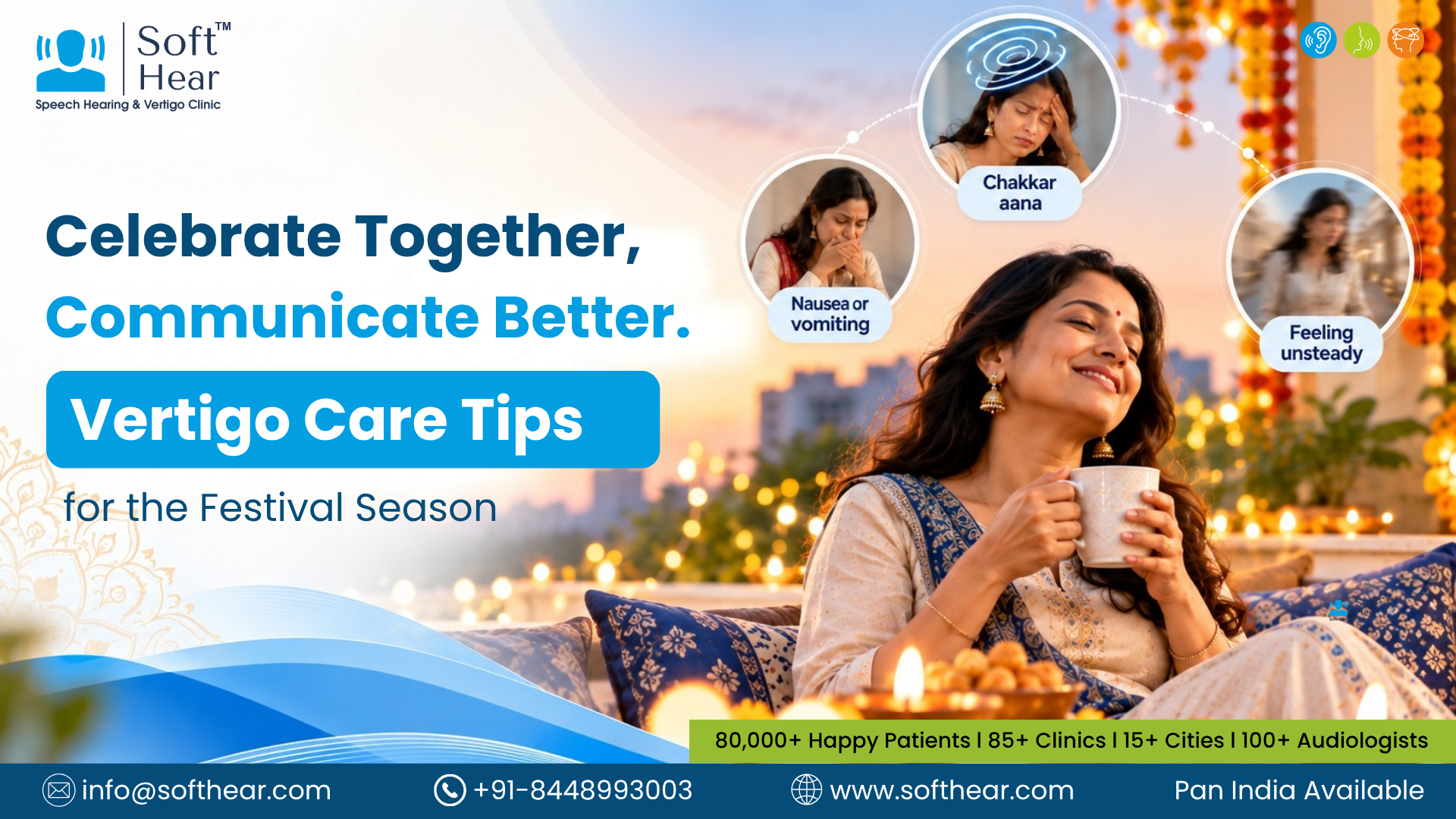
Vertigo can affect people of different ages, including young adults, working professionals and older people. Some may experience a spinning sensation, while others may feel unsteady, light-headed or as though the surroundings are moving. These experiences can make even simple activities, such as walking through a crowded room, climbing stairs, participating in prayers or enjoying a family dinner, feel uncomfortable.
The good news is that understanding vertigo, recognising its possible triggers and taking a few sensible precautions can help make festive celebrations more comfortable and safer.
This festive season, let us celebrate not only with happiness and enthusiasm but also with greater awareness, empathy and care for ourselves and our loved ones.
Understanding Vertigo: More Than Just Feeling Dizzy
Many people use the words dizziness and vertigo interchangeably, but they do not always mean the same thing.
Vertigo generally refers to a sensation that you or your surroundings are spinning or moving when there is no corresponding movement. Some people describe it as feeling as though the room is rotating, while others feel pulled to one side or become unsteady when walking or changing position.
Our sense of balance depends on information from several systems in the body, including the inner ear, eyes and sensory signals from muscles and joints. The brain processes these signals to help us understand our position and movement. When these systems do not work together properly, a person may experience dizziness, imbalance or vertigo.
Certain inner-ear conditions, including benign paroxysmal positional vertigo (BPPV), can cause brief episodes of spinning triggered by particular head movements. Other conditions, including migraine-related disorders, may also cause dizziness or balance difficulties. The underlying cause varies from person to person, which is why persistent or recurring symptoms should be assessed by a qualified healthcare professional.
Vertigo is not simply a normal part of ageing, and it should not automatically be dismissed as weakness, tiredness or a minor inconvenience.
For a child, dizziness may mean missing out on games and activities. For a young adult, it may interfere with travelling, working or attending celebrations. For an older person, it may create anxiety about walking independently or increase the risk of a fall.
Recognising these challenges is the first step towards providing the right support.
Why Can the Festive Season Be Challenging for People With Vertigo?
Festive celebrations are enjoyable, but they can sometimes involve changes to our usual routines. For people who are prone to dizziness or balance difficulties, certain situations may be uncomfortable.
1. Crowded places and busy surroundings
Festivals often bring together large groups of people. Busy markets, community celebrations, shopping centres and family gatherings may involve constant movement, noise and visual activity. Some people who experience dizziness or migraine-related symptoms may find these environments overwhelming.
Whenever possible, choose less crowded times, take regular breaks and move at a comfortable pace.
2. Bright or flashing lights
Decorative lights, rapidly changing displays and visually busy surroundings may trigger discomfort in some individuals, particularly those with certain migraine-related conditions. This does not mean that bright lights cause vertigo in everyone, but it is worth noticing whether specific environments make symptoms worse.
If you feel uncomfortable, move to a quieter area with softer lighting and allow yourself time to recover.
3. Long periods of standing or sudden movements
Standing for extended periods during prayers, changing direction quickly while greeting guests, bending repeatedly during preparations or getting up suddenly after sitting may be difficult for someone experiencing dizziness.
Take your time when changing positions. Use a stable support when needed and sit down if you begin to feel unsteady.
4. Travel and changes in routine
Festive travel can involve long car journeys, crowded public transport, unfamiliar surroundings and disrupted sleep schedules. Some people experience motion-related discomfort, while others may find that fatigue or changes in routine worsen their symptoms.
Plan journeys carefully, allow time for rest and avoid rushing between activities.
5. Dehydration, missed meals and inadequate sleep
Preparing food, shopping, travelling and attending celebrations can make it easy to forget meals, drink less water than usual or stay awake later than planned. These factors can contribute to feeling unwell or light-headed and may aggravate symptoms in some people.
Try to maintain regular meals, drink fluids appropriate for your individual health needs and prioritise adequate sleep.
Remember, these factors do not explain every episode of vertigo. The important thing is to understand your own symptoms rather than assume that every dizzy spell has the same cause.
Practical Vertigo Care Tips for a Happier Festive Season
A few thoughtful changes can help you participate in celebrations with greater confidence.
1. Listen to Your Body
You do not need to attend every event, stay until the end of every gathering or participate in every activity. If you begin to feel dizzy, unsteady or uncomfortable, pause and find a safe place to sit.
Give yourself permission to rest. Taking a break is not missing out; it is a sensible way to look after yourself.
2. Move Slowly and Deliberately
Avoid sudden head movements or rushing when you stand up, turn around or bend down, particularly if these movements have triggered symptoms before.
When getting out of bed or rising from a chair, take a moment to steady yourself before walking. Use handrails on stairs and ask for assistance if you feel unsafe.
If a particular movement repeatedly causes spinning sensations, seek professional assessment rather than repeatedly testing or provoking the movement yourself.
3. Create a Comfortable Space at Home
You can make festive gatherings more welcoming by ensuring that walkways are clear, floors are dry and frequently used areas are well lit.
Keep loose electrical wires, decorative materials and other trip hazards away from walking paths. Arrange seating where people can rest comfortably, especially near the areas where guests are gathering.
These small adjustments can make a meaningful difference to anyone who feels unsteady, including older adults and people recovering from an illness.
4. Stay Hydrated and Maintain Your Routine
Try not to skip meals while preparing for celebrations. Drink enough fluids for your needs, get adequate rest and avoid overexertion.
If you have a medical condition that requires you to restrict fluids or follow a specific diet, continue following your healthcare professional's advice.
Alcohol may worsen balance and increase fall risk, particularly in people who already experience dizziness. Be mindful of this during celebrations.
5. Be Extra Thoughtful About Children and Older Adults
Children may not always know how to explain dizziness. They may simply say they feel strange, want to sit down, feel sick or do not want to continue playing. Listen carefully and avoid pressuring them to participate when they feel unwell.
Older adults may minimise their symptoms because they do not want to worry the family or interrupt the celebration. Encourage them to speak openly about how they feel.
Offer a steady arm when appropriate, keep frequently used items within easy reach and avoid asking anyone who feels dizzy to walk alone on stairs or in crowded areas.
Vertigo can affect people of any age. The level of support needed should depend on the person's symptoms, mobility and individual circumstances, rather than age alone.
6. Avoid Self-Medication
It may be tempting to take a medicine recommended by a friend or repeat a previous prescription whenever dizziness returns. However, different causes of dizziness require different approaches, and some medicines can cause drowsiness or affect balance.
Do not start, stop or change medication without appropriate medical guidance. If symptoms recur, seek an assessment to identify the possible cause and discuss suitable treatment.
7. Know When to Seek Medical Help
If dizziness or vertigo is new, persistent, recurrent or interfering with daily activities, arrange a medical evaluation.
Seek emergency medical care if dizziness occurs with warning signs such as sudden difficulty speaking, facial drooping, weakness or numbness on one side, double vision, inability to walk, a severe sudden headache, chest pain or fainting. Sudden hearing loss also requires urgent medical assessment.
Do not assume that severe or sudden symptoms are caused by a routine vertigo episode.
How Family Members Can Make a Difference
Festivals are not only about decorations, gifts or elaborate meals. They are also about making the people around us feel seen, supported and included.
If a family member experiences vertigo, a little understanding can go a long way.
Instead of saying, “It is probably nothing,” try asking, “Are you feeling comfortable? Would you like to sit down for a while?”
Instead of insisting that an older relative join every activity, offer them a comfortable place to rest. Instead of rushing someone who feels unsteady, give them time to move safely.
You can also help by keeping the environment calm when someone feels dizzy, accompanying them when they need support and helping them arrange a medical consultation if symptoms persist.
Most importantly, avoid making anyone feel embarrassed about their condition. Vertigo is a health concern, not a personal weakness. People should be able to discuss their symptoms without worrying that they will spoil the celebration.
When families respond with patience and empathy, festive gatherings become more inclusive and reassuring for everyone.
How Soft Hear Can Help This Festive Season
At Soft Hear, we believe that better well-being begins with awareness, timely guidance and access to appropriate professional support.
As part of our festive-season social initiative, Soft Hear is offering a free vertigo consultation, helping individuals take an informed first step towards understanding their balance-related concerns.
If you or a loved one has been experiencing dizziness, spinning sensations or balance difficulties, consider reaching out to discuss your symptoms and the next appropriate steps.
A consultation can help determine whether further assessment is needed and whether a particular care pathway is suitable. Depending on the individual's symptoms and clinical findings, the healthcare professional may recommend additional evaluation, treatment or referral to another specialist.
It is important to remember that vertigo can have different causes. No single treatment is suitable for everyone, and a consultation does not guarantee that a specific therapy will be recommended.
Our aim is to encourage people not to ignore recurring symptoms and to seek appropriate guidance with confidence.
Take the first step towards a safer, more comfortable festive season.
📞 Call: +91 84489 93003
🌐 Website: www.softhear.com
📧Email: info@softhear.com
Soft Hear | Hear The Future, Live With Confidence.
T&C apply. Online consultation or therapy suitability, where applicable, will be determined after an appropriate consultation and assessment.
Celebrate With Care, Connect With Confidence
The true spirit of a festival lies in togetherness. It is found in the laughter shared around a dining table, the blessings exchanged across generations, the excitement of children playing and the comfort of knowing that someone cares.
Vertigo or dizziness may make certain activities more difficult, but people experiencing these symptoms deserve to feel included, respected and supported.
This festive season, take care of your balance, respect your body's limits, look out for older family members and listen when children or loved ones say they are not feeling well. Small precautions, thoughtful conversations and timely professional guidance can help make celebrations more comfortable.
Let us make room for everyone's needs, celebrate without unnecessary pressure and remember that well-being is an important part of every happy occasion.
Because the best celebrations are not just about coming together. They are about helping everyone feel safe, supported and connected.
Medical disclaimer: This article is intended for general health awareness and educational purposes only. It is not a substitute for professional medical advice, diagnosis or treatment. Vertigo and dizziness can have different causes. Consult a qualified healthcare professional for individual assessment, and seek urgent medical attention for sudden or severe symptoms or associated warning signs.