Hearing Loss can majorly affect confidence, communication, and quality of life.
Conductive Hearing Loss is one of the types of Hearing Loss. It happens when sound can’t efficiently travel through the middle or outer ear to reach the inner ear. The common causes are fluid in the middle ear, ear infections, otosclerosis, earwax blockage, a perforated eardrum, congenital ear abnormalities, and chronic middle ear conditions.
Conductive Hearing loss often has an identifiable physical cause, and in a few cases it can be treated surgically or medically. However, when treatment is impossible or fails to restore hearing fully, the most effective solution is a hearing aid.
Millions of people are affected by hearing loss globally, but the most significant point is hearing rehabilitation at the right time can improve social participation, communication, and overall well being of patients ( World Health Organization)
Now the question is: How are hearing aids helpful in Conductive Hearing Loss?
In conductive Hearing Loss, Hearing Aids help by increasing the intensity of sound so it can reach the inner ear more efficiently. In conductive hearing loss, as the cochlea is often healthy, many patients experience excellent outcomes with correctly fitted Hearing Aids.
The next question that comes to mind is, which hearing aid is right for Conductive Hearing Loss?
The right Hearing Aid depends on ear condition, Severity of Hearing Loss, Age of the Patient, presence of chronic ear discharge, lifestyle requirements, and audiological assessment findings
A professionally qualified audiologist always assesses hearing before recommending a hearing aid, as an incorrect device may lead to horrific results
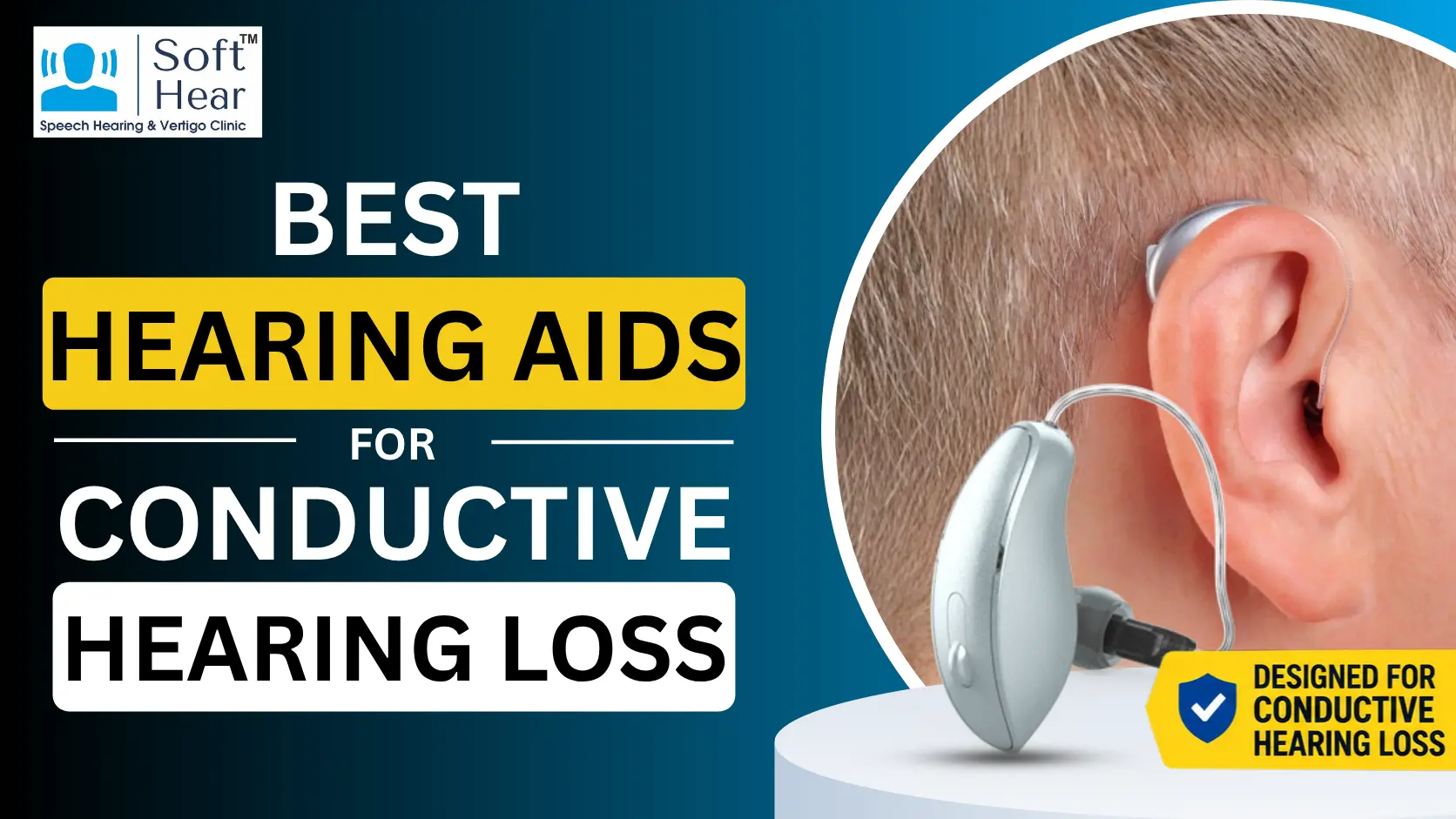
The Best Hearing Aids for Conductive Hearing Loss:
1. Bone Conduction Hearing Aids
One of the best and most recommended Hearing Aids is the Bone Conduction Hearing Aid because, instead of sending sound via the ear canal, these devices send sound vibrations via the skull bones directly to the inner ear, bypassing the damaged middle or outer ear. These hearing aids are beneficial for chronic ear infections, right for malformed ear canals, and are useful when conventional hearing aids cannot be worn.
It is suggested to patients with conductive and certain mixed hearing losses when the cochlea remains functional.
2. BAHA (Bone-Anchored Hearing Systems)
These are advanced bone conduction devices designed for patients with conductive hearing loss who require long-term hearing rehabilitation. These devices deliver sound directly to the cochlea via bone conduction technology. It is useful for Chronic middle ear disease, Recurrent ear discharge, congenital ear abnormalities, and when patients are unable to wear conventional hearing aids.
Conductive Hearing Loss is one of the types of Hearing Loss It is the most recommended solution for persistent conductive hearing loss.
3. BTE (Behind-the-Ear) Hearing Aids
These Hearing Aids work for mild to moderate conductive hearing loss.
These devices sit behind the ear and send amplified sound via custom tubing or an earmold. They are often suitable because they provide sufficient amplification and can accommodate changing hearing needs. It is beneficial for powerful amplification, convenient and easy to maintain, suitable for adults and children, and available at multiple technology levels.
4. RIC (Receiver-in-Canal) Hearing Aids
This Hearing Aid is suitable for patients with healthy ear canals and conductive hearing loss. This provides comfortable hearing support. These devices are small, lightweight and provide excellent sound quality.
Moreover, this is not right for patients with persistent ear discharge and chronic ear infections.
5. Implantable Bone Conduction Systems
When traditional hearing aids are not medically suitable and are ineffective, advanced implantable systems, such as modern bone conduction implants, may be recommended. These devices bypass damaged ear structures and transmit sound directly to the functioning cochlea.
Yes, now it is understood which hearing aid is suitable for whom, but the most crucial point that remains is that a professional hearing assessment still matters or not?
The Answer is "definitely yes". Nowadays, many patients search online for the " best hearing aid" and purchase devices without undergoing a complete hearing assessment or consulting a professional qualified audiologist.
A detailed examination of hearing loss is mandatory to understand the root cause and to determine which approach is more suitable for the patient whether it is surgery, medical treatment, hearing aids, or a combination of approaches.
At Soft Hear Private Limited, every hearing recommendation starts with a detailed hearing examination carried out by a professional, qualified audiologist.
Conclusion
The best hearing aids for conductive hearing loss depend on the severity and the cause of the condition. For many patients, bone-anchored hearing systems and bone conduction hearing aids provide excellent results because these transmit sound directly to the inner ear, bypassing the damaged outer or middle ear.
And when it comes to conventional options like RIC and BTE hearing aids, they can also be suitable if fitted appropriately.
The key factor is to seek personalized recommendations from a professional, qualified audiologist rather than just buying online after seeing the advertisement or buying to have heavy discounts.
FAQs
1. Which hearing aid is best for conductive hearing loss?
Bone conduction hearing aids & BAHA systems are often recommended to the patients.
2. Is there any chance that conductive hearing loss can be cured?
Yes, in many cases, conductive hearing loss can be cured by surgical or medical treatment, depending on the cause.
3. Hearing aids are efficient for conductive hearing loss or not?
Yes, Many patients with conductive hearing loss experience significant hearing improvement with accurately fitted hearing aids because the inner ear is often healthy (to achieve accuracy, it is mandatory to seek professional advice from a qualified audiologist).
4. Is BAHA better than a conventional hearing aid?
For patients with ear canal abnormalities, chronic ear infections, or persistent conductive hearing loss, BAHA may provide better results compared to conventional hearing aids.
5. Should I purchase hearing aids online without a hearing test?
No, definitely not. A detailed hearing evaluation is important for understanding the type and severity of hearing loss and identifying the most suitable treatment option.