"Should I get rechargeable hearing aids?" I'm asked this almost every time someone is choosing a device. A few years ago the question hardly existed. Today most major brands offer rechargeable models, and many patients assume rechargeable is simply better.
It often is. But not always, and not for everyone. Let me walk you through how I help people decide.
How each type works
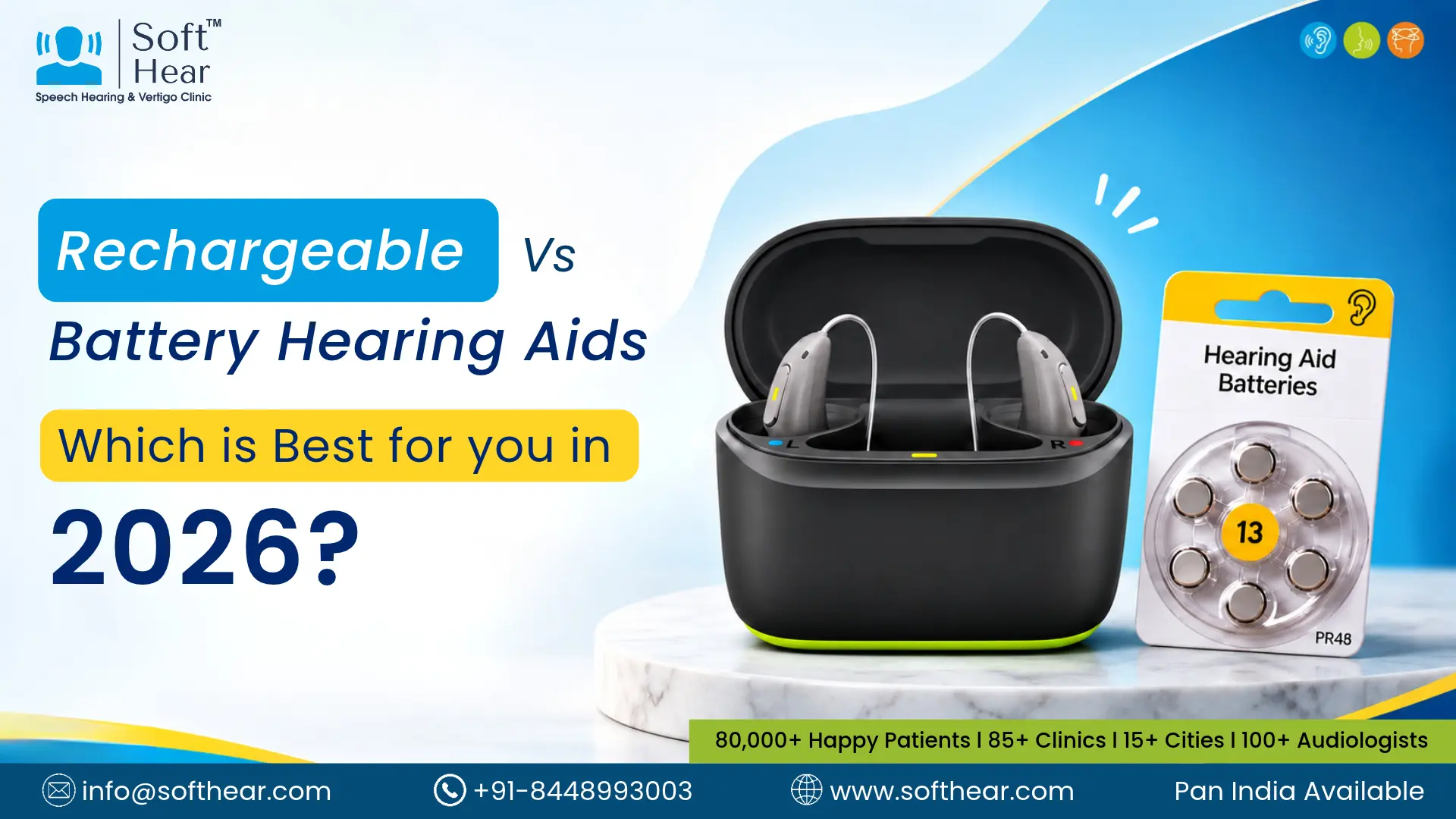
Battery hearing aids use small, disposable zinc-air batteries. You peel off a sticker, wait a minute for the battery to activate, and fit it in the device. When it runs out, you replace it. Depending on the battery size and how much you stream, a battery lasts from a few days to around two weeks.
Rechargeable hearing aids have a built-in battery, most often lithium-ion. You place them in a charger overnight, and most are designed to last a full day. Heavy use of Bluetooth streaming shortens that.
The comparison at a glance
| Factor | Rechargeable | Disposable battery |
|---|---|---|
| Daily routine | Drop in the charger at night | Replace a small battery every few days |
| Handling | No tiny batteries to fiddle with | Needs steady fingers and decent eyesight |
| Running out of power | Possible if you forget to charge or the power is cut | Spare batteries fit in a pocket and swap in a minute |
| Ongoing cost | No regular battery purchases | Packs of batteries bought regularly |
| Long-term | The built-in battery gradually loses capacity over several years and may need servicing or replacement | Batteries are replaced as needed, so the device itself isn't affected |
| Styles available | Wide range, though some very small or very powerful models still use batteries | Available in almost every style |
| Travel | Charger and cable to carry, with a travel charging case available for some models | Carry a few packs, with no charging needed |
Who tends to prefer rechargeable
- People who find small batteries fiddly, such as those with arthritis, tremor or reduced vision.
- Busy people who want a simple routine.
- People who stream a lot. Many rechargeable models are designed with heavy streaming in mind.
- Families concerned about small batteries around children or pets (more on this below).
Who tends to prefer disposable batteries
- People who are away from electricity for long stretches, including long trips, treks or rural travel.
- People who like to carry a spare and be able to swap it in a minute.
- People who need a style that doesn't come in a rechargeable version, such as some very small custom devices.
- People who like the certainty of a fresh battery and don't want to think about charging.
Practical points that matter in India
- Power cuts. If your area has frequent outages, ask about a portable charging case or power bank option. Some chargers can run from a USB power bank.
- Travel. A rechargeable system works well on flights, but you'll want to carry the charger, a cable and an adapter.
- Heat and humidity. Whichever type you choose, moisture is the enemy. Dry your hearing aids at night in a dehumidifier or drying box, and avoid leaving them in a hot car or on a sunny windowsill, especially rechargeable ones.
- Service access. If the built-in battery fails after several years, you'll need a clinic that can service or replace it. Ask what your warranty and service cover.
Safety points I always mention
- Disposable hearing aid batteries are dangerous if swallowed. Keep them out of reach of children and pets, and never leave them loose. If one is swallowed, seek emergency medical help immediately.
- Charge rechargeable hearing aids with the charger supplied or approved by the manufacturer, away from extreme heat.
- Don't try to open or repair the battery compartment yourself.
Can I switch later?
Sometimes. Some battery models can be converted with a rechargeable battery door, but only when the manufacturer offers that for your exact model. In most cases the type is built into the model, so it's best to decide before you buy.
So which is better?
If I had to give a general answer: for most people with ordinary daily routines, rechargeable is the more convenient choice. But convenience is personal. If you travel into remote areas, dislike charging, or need a specific style that is only available with batteries, a battery model can be a perfectly good decision.
The right question isn't "which is better?" It's "which fits my life?"
Questions people often ask me
How long do rechargeable hearing aids last in a day?
Most are designed to last a full day on a single charge, but this varies by model and by how much you stream audio.
How long do rechargeable batteries last overall?
The battery gradually loses capacity over time. Many people get several years of good use, after which the battery may need replacing. Ask the manufacturer or your clinic.
Do rechargeable hearing aids sound different?
No. The sound comes from the technology and the fitting, not the battery type.
What if I forget to charge them?
Many models give a full day from a short top-up charge. A portable charging case can also help when you're away from home.
Let's choose what fits your routine
Book a hearing assessment with one of our audiologists or call us on +91 84489 93003. We'll talk through your daily routine and help you decide between rechargeable and battery options.
This article is for general information and is not a substitute for a clinical assessment. Hearing, balance and communication needs are individual, so please consult a qualified audiologist, speech-language pathologist or doctor about your own situation.
Soft Hear | Hear The Future, Live With Confidence.
Phone: +91-8448993003 | Website: www.softhear.com | Email: info@softhear.com