A few months ago, a gentleman in his late sixties came to our clinic with his daughter. Halfway through the consultation, she said something that has stayed with me: "Papa has stopped joining us at the dinner table. He says he's tired, but I think he just can't follow what we're saying." Her father looked down and quietly nodded.
In my years as an audiologist, I've seen this pattern again and again. Hearing loss doesn't only affect the person who has it. It changes how families talk, how friends connect, and how colleagues work together. The good news is that small, thoughtful changes in the way we communicate can make an enormous difference, often long before or alongside any treatment.
Here is what I share with families every day.
First, Understand What Hearing Loss Actually Feels Like
Many people assume hearing loss simply makes everything quieter, so the natural response is to speak louder. But for most people, especially with age-related or noise-induced hearing loss, the problem isn't volume alone. It's clarity.
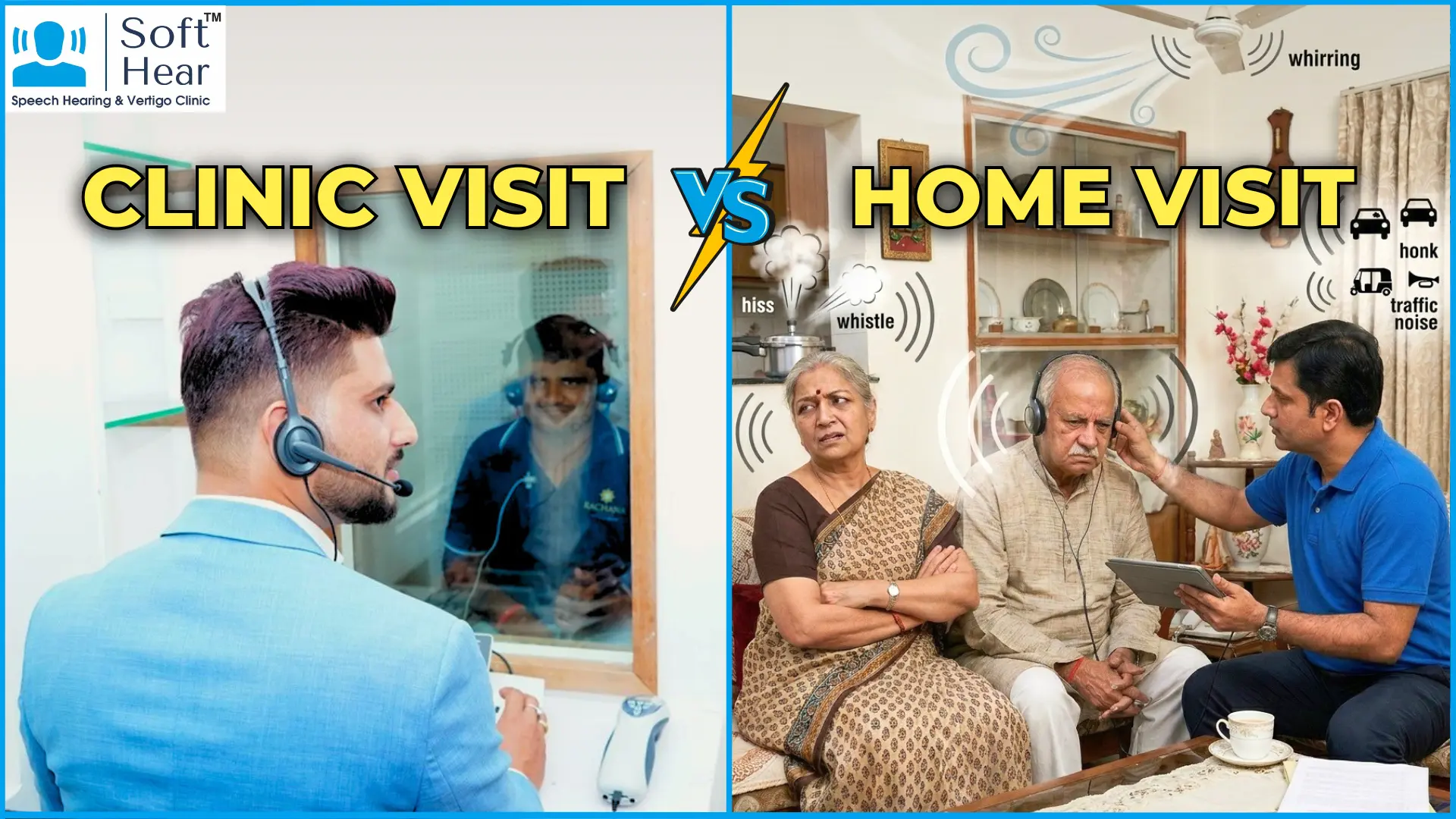
High-pitched sounds like "s", "f", "th" and "sh" tend to fade first. So a person may hear that you're speaking but miss the consonants that give words their meaning. "Fifteen" and "fifty" sound alike. "Shop" and "top" blur together. Add background noise, like a pressure cooker whistle, a ceiling fan or traffic outside, and conversation becomes genuinely exhausting.
Once you understand this, the tips below make a lot more sense.
Practical Ways to Communicate Better
Get their attention before you start. Say their name, make eye contact, or gently touch their arm. Starting a sentence from another room or from behind them almost guarantees the first few words will be lost, and those are often the words that carry the context.
Face the person and keep your face visible. Most people with hearing loss rely on lip movements and facial expressions more than they realise. Avoid covering your mouth, chewing while speaking, or turning away mid-sentence. Make sure light falls on your face rather than behind you; sitting with your back to a bright window puts your face in shadow.
Speak clearly, not loudly. Shouting distorts speech and can make it harder to understand, not easier. It can also come across as anger. Speak at a slightly slower, natural pace with clear pronunciation. There's no need to exaggerate lip movements, as that actually makes lip reading more difficult.
Rephrase instead of repeating. If someone doesn't catch what you said, repeating the same words at the same volume often fails again. Try saying it differently. "What time is the appointment?" might become "When do we need to leave for the doctor?" A different set of sounds gives them another chance to understand.
Reduce background noise. Turn down the TV, move away from the kitchen, or step outside a noisy room before starting an important conversation. In restaurants, choose a corner table and let the person with hearing loss sit with their back to the wall so the noise stays behind them.
Keep group conversations manageable. Family gatherings, weddings and festivals can be the hardest settings of all. Encourage one person to speak at a time, and let the person with hearing loss know when the topic changes. A quick "we're talking about Neha's college admission now" helps them follow along instead of feeling left behind.
Confirm important details. For anything that matters, such as dates, addresses, medicine instructions or phone numbers, write it down or send it as a text message. This removes guesswork and reduces anxiety for everyone.
Be patient and never say "never mind." Few phrases are more hurtful to someone with hearing loss. It tells them they're not worth the effort of repeating. If you feel frustrated, take a breath and try again. The person you're speaking with is usually working much harder than you are.
Phone and Video Calls
Phone calls remove all visual cues, which makes them especially difficult. Video calls are often a better option because the person can see your face. Many smartphones also offer live captions, which can be very helpful. If your family member uses hearing aids, ask their audiologist whether the devices can connect directly to their phone via Bluetooth, since streaming sound straight into the hearing aids can dramatically improve call clarity.
If You Have Hearing Loss Yourself
Communication is a two-way street, and people with hearing loss can do a great deal to help conversations go smoothly.
Tell people about your hearing loss. It's not a weakness, and most people are glad to adjust once they know. Be specific about what helps: "I hear you better when you face me" is far more useful than "Sorry, what?" Position yourself well in rooms, choose quieter places to meet, and don't hesitate to ask someone to rephrase. And if you already use hearing aids, wear them consistently. The brain adapts best when it gets regular, steady input.
A Note for Families of Children with Hearing Loss
For children, communication isn't only about conversation; it's about learning language itself. Get down to their eye level, narrate everyday activities, read together and keep background noise low at home. Stay closely connected with your child's audiologist and speech therapist, because early, consistent support has a major impact on speech and language development.
When Communication Tips Aren't Enough
These strategies make a real difference, but they work best alongside proper hearing care, not instead of it. If you find yourself constantly repeating things for a loved one, or if they've started avoiding conversations, calls or social events, it's a sign that a professional hearing evaluation is due.
Many families wait years before taking this step, often because the person with hearing loss feels embarrassed or believes nothing can be done. In my experience, the moment a person hears clearly again, especially the voices of their grandchildren, is one of the most rewarding parts of this profession.
How Soft Hear Can Help
At Soft Hear, we believe hearing care should support the whole family, not just the individual. With 85+ clinics across 15+ cities in India, our audiologists offer comprehensive hearing evaluations, personalised hearing solutions and ongoing follow-up care close to home.
Because hearing, speech and balance are so closely linked, we also bring together speech therapy and vertigo and balance rehabilitation under one roof, so patients and families don't have to navigate multiple providers.
We always encourage family members to come along to appointments. When the people closest to the patient understand the results and learn how to communicate better, progress is faster and far more lasting.
Book a hearing evaluation at your nearest Soft Hear clinic today.
About the Author
Chhabinav Dwivedi is the National Head of Audiology at Soft Hear, where he leads clinical standards and audiological care across the Soft Hear network. He holds a Master's in Audiology and Speech-Language Pathology (MASLP) and previously served as an Audiologist at the All India Institute of Medical Sciences (AIIMS), New Delhi. His work focuses on early detection of hearing loss, evidence-based hearing rehabilitation, and making quality hearing care accessible to patients across India.