Last updated: 2026
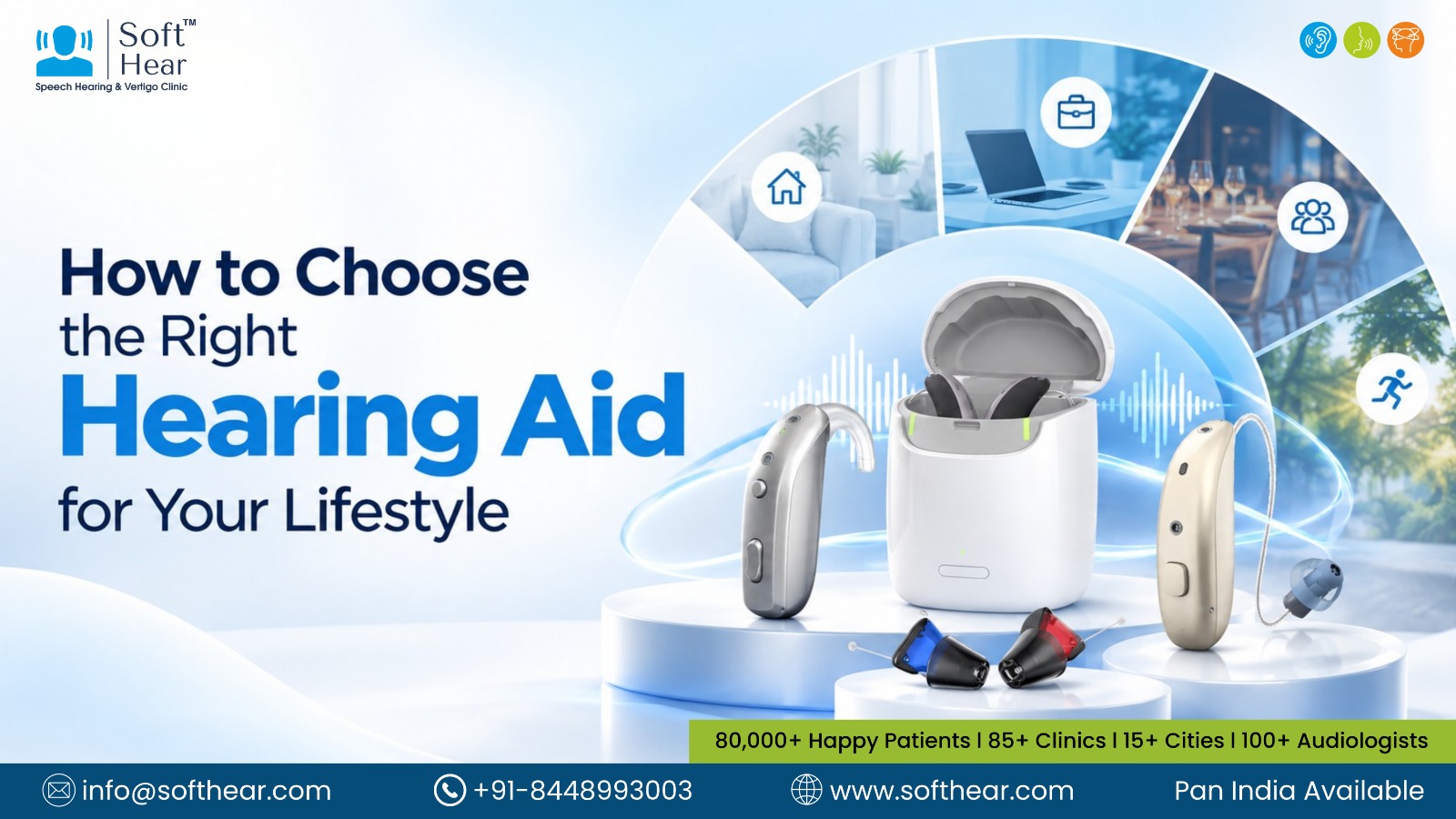
Choosing a hearing aid is not simply about finding a device that makes sounds louder. A good hearing aid recommendation should fit into your hearing needs, lifestyle, communication requirements and daily routine.
Someone who spends most of the day at home has very different requirements from a corporate professional who attends meetings every day. A frequent traveller may prioritise connectivity and battery life, while someone who enjoys family gatherings may need technology designed for challenging group conversations. This is why the right hearing aid should be chosen around the person — not just the audiogram.
Jump to: Hearing assessment · Office & meetings · Family life · Restaurants & social · Travel · Smartphone use · Speech in noise · Discreet styles · Significant hearing loss · Rechargeable vs battery · Premium AI/DNN · Receiver & acoustics · Brand vs price · Our approach · Five questions · FAQ
Start with your hearing assessment
Before choosing a hearing aid, it is important to understand what type and degree of hearing loss you have and, equally importantly, how well you understand speech.
A pure-tone hearing test provides important information, but it does not tell us everything about your real-world communication difficulties. Depending on the clinical requirement, an audiologist may also assess speech discrimination, speech understanding in noise, SNR loss, tympanometry, acoustic reflexes and other relevant parameters — you can read more about what a full hearing assessment at Soft Hear involves. These results help determine what type of amplification and technology may be appropriate.
Your lifestyle should influence your hearing-aid choice
Think about where you spend most of your time. Do you mainly:
- Work in an office or attend meetings?
- Talk to customers or patients?
- Spend time with family and grandchildren?
- Go to restaurants and social gatherings?
- Travel frequently?
- Watch television or use your smartphone throughout the day?
- Work in a noisy environment, or spend most of your time in quiet surroundings?
Your answers can be just as important as your hearing thresholds when selecting hearing-aid technology.
If you work in an office or attend meetings
Office environments can appear quiet but can actually be demanding for hearing. Meetings may involve several speakers, people sitting at different distances, background air-conditioning noise and conversations from different directions.
If you regularly attend meetings, presentations or video calls, consider hearing aids with advanced directional microphones, adaptive noise management, speech-enhancement features and Bluetooth connectivity. Modern AI and DNN-based hearing aids can also be useful for people who frequently move between different acoustic environments.
For a professional, good hearing is not only about hearing the person sitting next to you. It can be about following the entire conversation without constantly asking people to repeat themselves.
If you spend a lot of time with family
Family conversations can be surprisingly challenging. Several people may speak at the same time, children may speak from another room, and the television may be playing in the background.
For this lifestyle, hearing aids with good environmental analysis, speech-focused processing and adaptive noise management can be valuable. The goal is to remain part of the conversation rather than constantly trying to identify who is speaking.
If you frequently visit restaurants and social gatherings
Restaurants, weddings, parties and social gatherings are among the most challenging listening environments. There may be music, multiple conversations, dishes, traffic and other background sounds, all competing with speech.
If these situations are important in your daily or social life, advanced hearing-aid technology can be worth considering. Today's premium hearing aids increasingly use AI and Deep Neural Network (DNN) based processing to analyse complex sound environments and adjust their processing dynamically. The technology should still be selected and fitted according to your individual hearing profile.
If you travel frequently
Frequent travellers often need convenience as much as performance. You may want to consider rechargeable hearing aids, reliable battery performance, Bluetooth connectivity, easy charging, smartphone compatibility, telecoil where appropriate, LE Audio and Auracast™ readiness, and easy access to audiologist support while away from home.
A rechargeable hearing aid can be particularly convenient when travelling, since you don't need to carry and regularly replace small batteries. At the same time, battery-powered devices may still be appropriate for some people — the right choice depends on your travel habits and preferences.
If you use your smartphone a lot
For many people, hearing aids have become part of their digital lifestyle. Modern devices can connect directly or indirectly with smartphones for phone calls, music, videos, television, app-based hearing-aid control, and remote support and assistance.
If smartphone connectivity is important to you, Bluetooth capability should be considered when selecting the hearing aid. Newer technologies such as Bluetooth LE Audio and Auracast™ are also becoming increasingly relevant in the hearing-aid industry.
If you mainly struggle with speech in noise
This is one of the most common complaints we hear from patients:
"I can hear, but I cannot understand what people are saying when there is noise."
The solution is not necessarily to make the hearing aid louder. Speech understanding in noise depends on several factors, including your hearing loss, speech discrimination, SNR loss, listening environment and the way the hearing aid processes sound — this is where advanced technology and appropriate clinical fitting become particularly important. A premium hearing aid may provide sophisticated noise management and AI/DNN processing, but its performance still depends on whether the technology and acoustic configuration are appropriate for your hearing.
If you prefer a small and discreet hearing aid
For some people, appearance is an important part of the decision. Modern hearing aids are available in several discreet designs, including RIC, CIC and IIC-style devices, custom in-the-ear hearing aids, and slim rechargeable designs.
However, the smallest device is not always the best device. Hearing loss, ear anatomy, receiver requirements, dexterity, connectivity needs and desired power all need to be considered. A discreet hearing aid is useful only when it can also provide the amplification and features you actually need.
If you have more significant hearing loss
For moderate-to-severe, severe or profound hearing losses, power and acoustic output become increasingly important. A more powerful BTE or power hearing aid may be more appropriate than a very small device, and the receiver, earmould or coupling, venting and feedback management also become important considerations. The objective is to provide sufficient amplification while maintaining comfort and appropriate sound quality.
Rechargeable or battery-powered?
Rechargeable hearing aids have become extremely popular because of their convenience, particularly if you prefer to charge your hearing aids overnight and avoid handling small batteries. Battery-powered hearing aids can still be useful for people who prefer replaceable batteries, travel extensively or want an immediate backup option. Your routine, more than any general rule, should guide the decision.
What about premium AI and DNN hearing aids?
If you are frequently exposed to complex listening environments, premium AI/DNN technology may be worth considering. Modern flagship hearing aids use sophisticated processing to analyse changing acoustic environments and adapt their response.
But I would always advise patients not to purchase a premium hearing aid simply because it has more features. The important question is: will those features solve the listening problems you actually experience? That is where clinical assessment becomes important.
The importance of the receiver and acoustic configuration
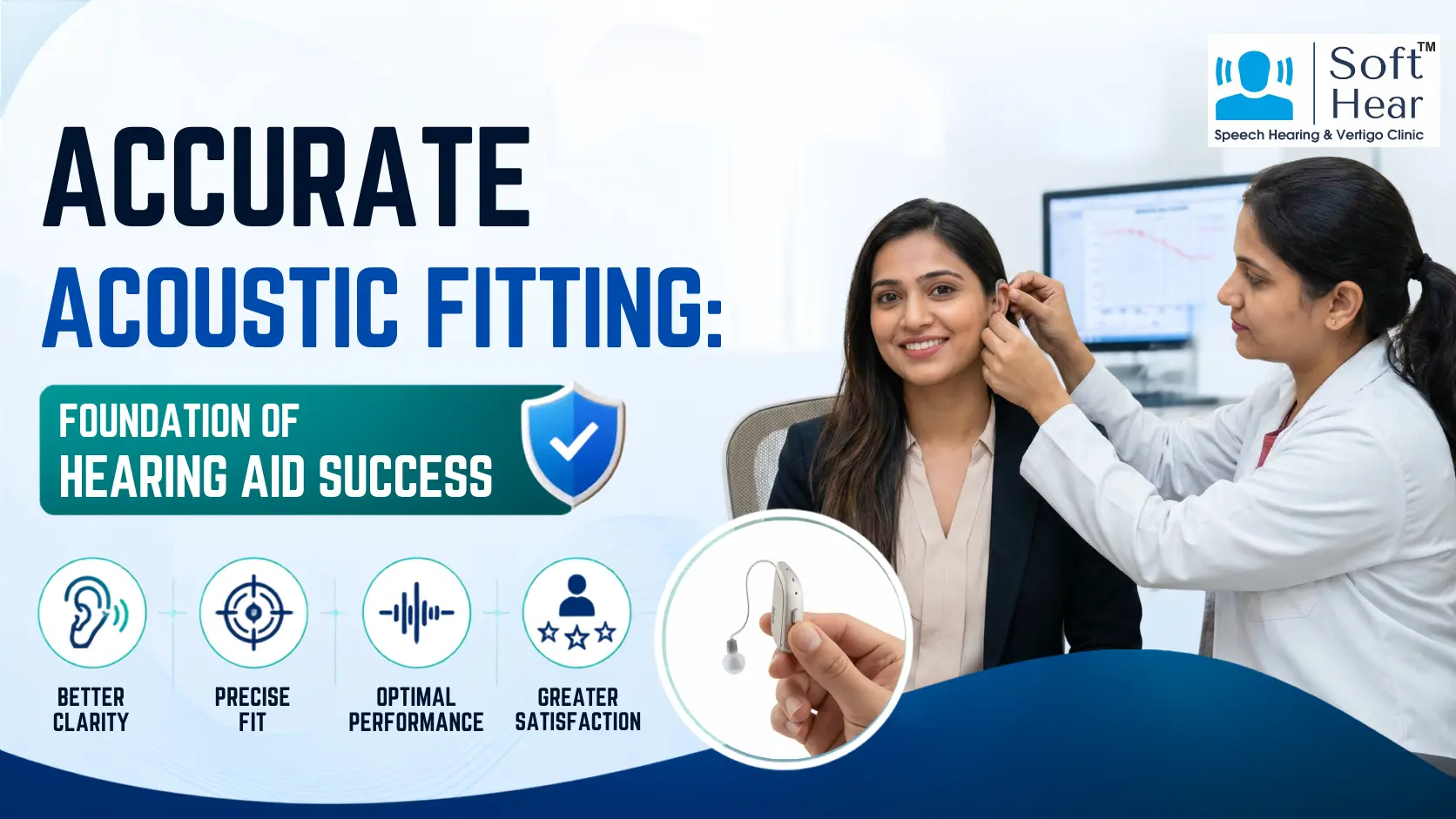
The hearing-aid model is only one part of the fitting. The receiver power, dome or earmould, venting, acoustic coupling and programming parameters can all influence the final listening experience.
For example, two patients using the same hearing-aid model may require different receiver strengths or acoustic configurations because their hearing losses and ear acoustics are different. This is one reason why professional hearing-aid fitting matters.
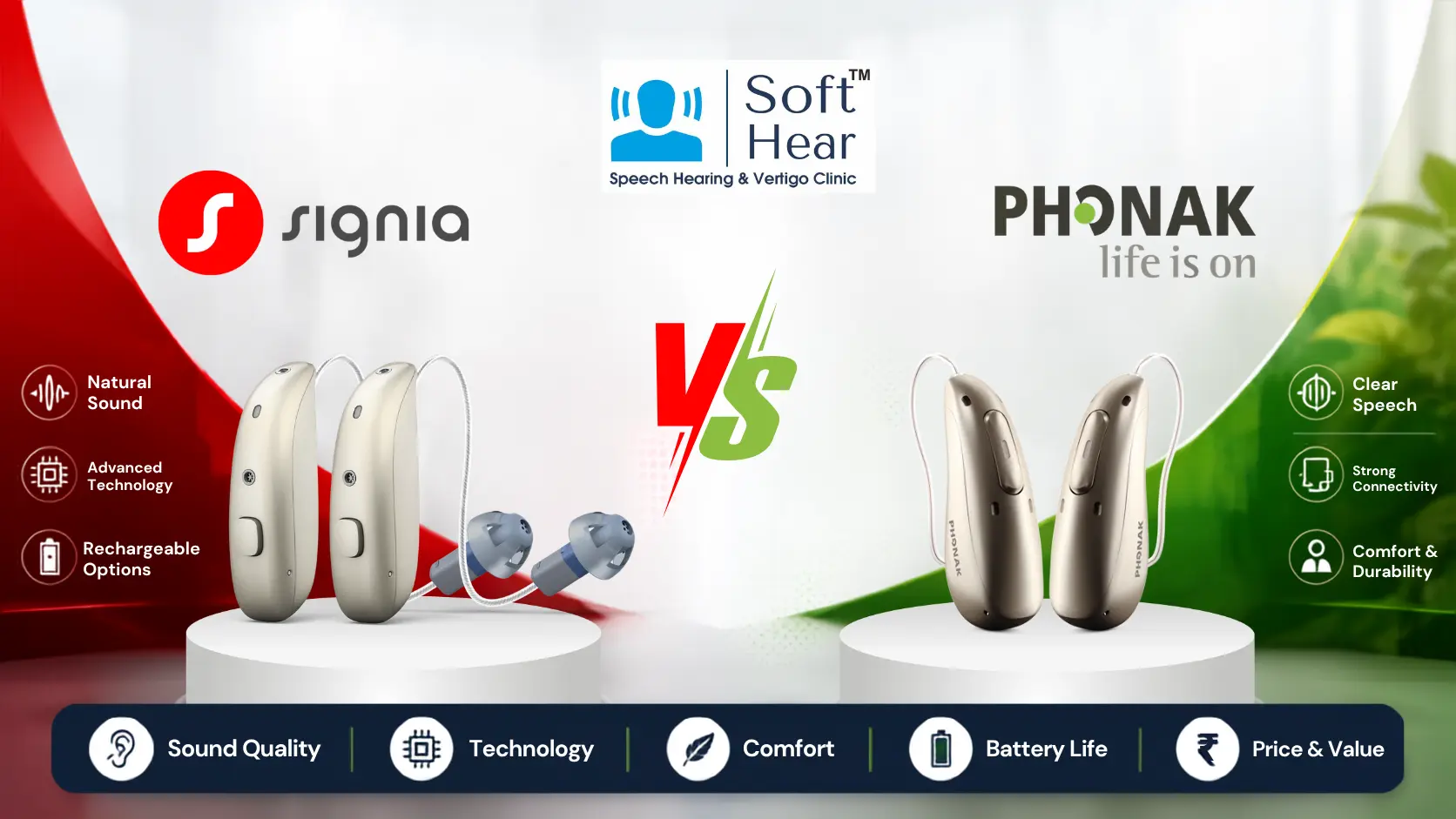
Don't choose only by brand or price
Patients often begin their search by asking "which brand is the best?" or "which hearing aid is the most expensive?" These are understandable questions, but they are not necessarily the most useful starting point.
A better place to start is: what do I need my hearing aid to help me do? Once that is clear, the audiologist can help identify the appropriate technology, style and configuration.
How we choose hearing aids at Soft Hear
At Soft Hear, we don't believe in starting with a hearing-aid catalogue. We start with the patient.
Our audiologists consider hearing profile, speech understanding, lifestyle, listening environments and communication needs first, and only then move to technology, hearing-aid style, receiver and acoustic configuration, professional fitting and follow-up.
For some patients, a reliable basic digital hearing aid may be sufficient. For others, an advanced rechargeable RIC may be appropriate. Someone with significant hearing loss may need a powerful BTE. And a patient who spends much of the day in complex acoustic environments may benefit from premium AI/DNN technology. The recommendation should be based on what the patient actually needs.
A simple way to think about it
Before choosing your hearing aid, ask yourself five questions:
- Where do I spend most of my time? Home, office, outdoors, meetings, restaurants or social environments?
- Who do I need to communicate with most? Family, colleagues, customers, children or groups?
- What is my biggest hearing difficulty? Soft speech, television, conversations in noise, group conversations or phone calls?
- What features matter to me? Discretion, rechargeability, Bluetooth connectivity, power or advanced AI?
- Have I had a proper clinical hearing assessment? Technology selection should follow diagnosis, not the other way round.
Your answers can make the hearing-aid selection process much clearer.
Frequently asked questions
Do I need the most expensive hearing aid to hear well in noise?
Not necessarily. Performance in noise depends on your specific hearing loss and the acoustic fitting as much as the technology tier. A mid range device, correctly fitted, can outperform a premium one that isn't.
Are rechargeable hearing aids reliable for all-day use?
For most people, yes. A full charge typically covers a full day of use, including streaming, though this varies by model and how much you stream audio.
Can I try a hearing aid before deciding?
Yes. Soft Hear lets you try a hearing aid in real-life settings before you commit.
What's the difference between a RIC and a BTE hearing aid?
RIC (receiver-in-canal) styles are smaller and more discreet, generally suited to mild-to-severe losses. BTE (behind-the-ear) styles are larger and more powerful, often better suited to more significant hearing loss.
How often should I get my hearing aid settings adjusted?
Most patients benefit from a follow-up within a few weeks of fitting, then periodic reviews after that, since hearing needs and environments change over time.
Final word
The right hearing aid is not simply the one with the highest technology level. It is the one that matches your hearing, your lifestyle, your communication needs and the environments in which you actually live and work.
In 2026, patients have access to remarkable technology, including AI, DNN-based processing, advanced noise management, rechargeable designs, Bluetooth, LE Audio and Auracast™. But technology works best when it is combined with the right clinical decision and professional fitting.
Understand the person. Understand the hearing. Then choose the technology.
Soft Hear — Hear the future. Live with confidence.