When someone is told they have "severe" hearing loss, the first reaction is often worry. Will a hearing aid even help? Will it be big and ugly? Will I hear properly again?
Here's the reassuring part: severe hearing loss is very often helped by modern hearing aids. The key is choosing the right kind of power and getting the fit right. Let me explain how I think about it.
What severe hearing loss means
On a hearing test, severe hearing loss usually means your quietest audible sounds are roughly 70 to 90 decibels, though classification systems differ slightly. In everyday life, you may miss most conversational speech unless the speaker is close and loud, and you may struggle badly in groups, on the phone, and in any background noise.
The audiogram is only the start. How well you understand speech, with and without amplification, matters just as much, and it shapes which device suits you.
Is a small hearing aid possible?
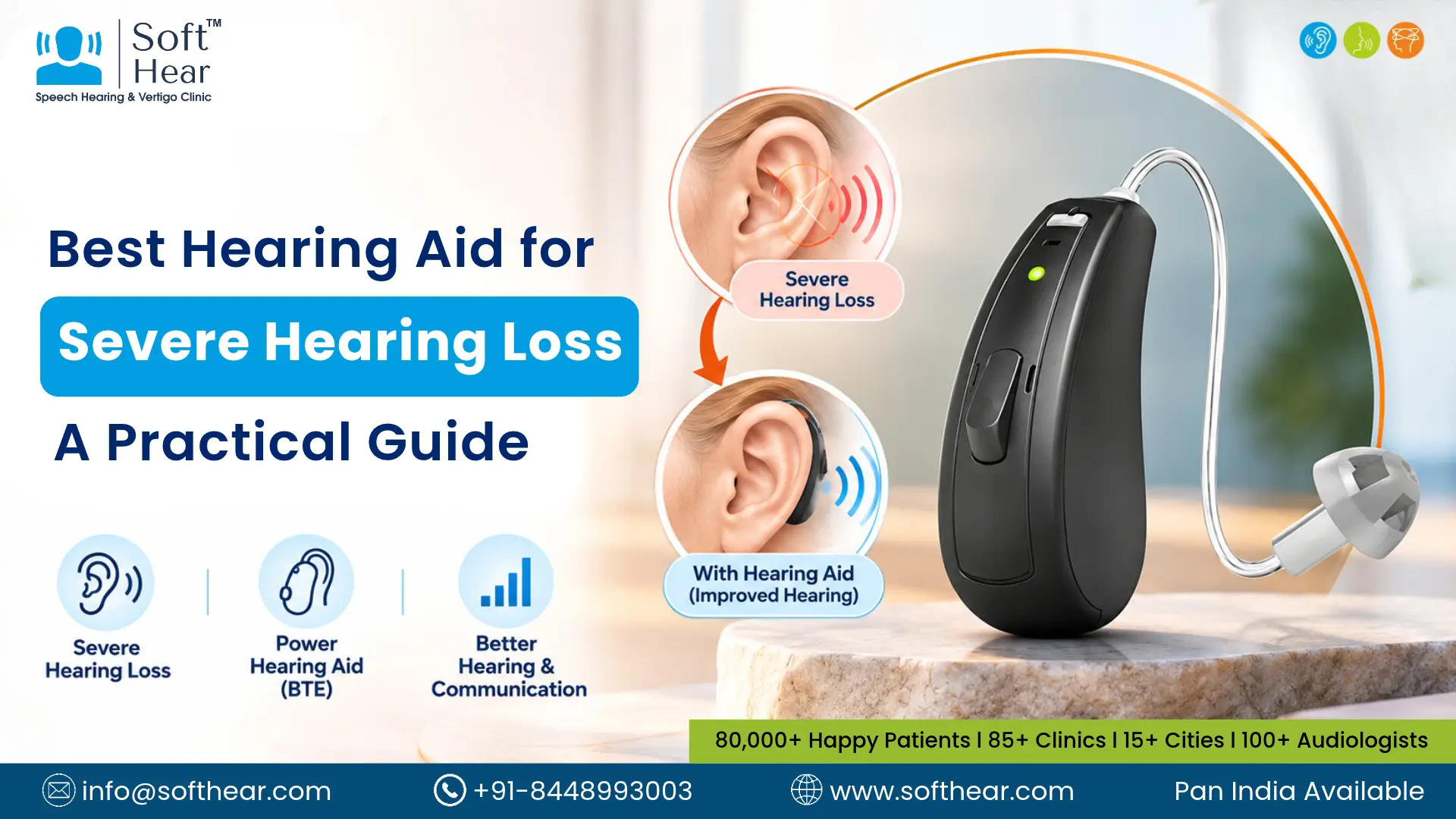
Many people with severe loss ask this, and the answer is: sometimes. Today's receiver-in-canal (RIC) hearing aids come with high-power receivers that can handle a wide range of significant hearing losses. For others, a behind-the-ear (BTE) power model is the better choice. It's not about looks. It's about delivering enough sound, clearly, without whistling.
| Style | Who it may suit | Things to know |
|---|---|---|
| Power RIC (with a high-power receiver) | Many people with severe loss who want a discreet device | Needs a good seal in the ear, and not every severe loss can be fitted well with a RIC |
| Power BTE | People with severe loss who need more output or a sturdier device | Larger and easier to handle, with strong output and more battery capacity |
| Ultra-power BTE | Severe-to-profound loss | Often used when severe loss is moving towards profound. See our guide on profound loss |
| Custom in-the-ear | Usually not suitable for severe loss | Very small devices tend to lack the output and room needed |
What to look for
- A custom earmould. For severe loss, a well-made earmould is usually better than a standard dome. It controls whistling and lets the hearing aid deliver its full power comfortably.
- Strong feedback management. More power means more risk of whistling. Good feedback control keeps sound clean.
- Good speech-in-noise features. Directional microphones and noise management help you follow conversation, but remember they work best when the hearing aid has enough amplification to begin with.
- Frequency-lowering options. For some people, moving high-pitched sounds into a range they can hear improves clarity of consonants. It helps some people and not others, and the settings need careful tuning.
- Telecoil and remote microphone support. These help in noisy rooms, on the phone, and at a distance.
- Battery type that suits you. Power devices use more energy. Ask about battery size or rechargeable options and realistic run time. Our guide on rechargeable versus battery hearing aids can help you decide.
- Bluetooth, if phone calls, TV or video matter to you.
Why the fitting matters so much
With severe loss, small details change the result. The receiver strength, the earmould's shape and venting, and how the hearing aid is programmed to your hearing and your comfort all shape what you hear. This is also where verification comes in: your audiologist should check what the hearing aid is actually delivering in your ear, not just rely on the screen settings.
And expect an adjustment period. Your brain needs weeks to get used to hearing sounds again. Follow-up visits and honest counselling in the first weeks make an enormous difference.
Set realistic expectations
A hearing aid helps you hear more, but it won't recreate normal hearing. With severe loss, you'll often still find noisy places difficult and may rely on lip-reading, good lighting and a quiet corner of the room. That's normal. Communication habits help as much as technology, such as facing the person, reducing background noise and asking family to speak clearly rather than shout.
When hearing aids aren't enough
If you wear well-fitted hearing aids consistently and still struggle to understand speech, it's time to ask about a cochlear implant evaluation. This isn't a failure of hearing aids, but a sign that you may benefit from another approach. Your audiologist and ENT specialist can guide you.
When to see a doctor first
Please see a doctor or ENT specialist promptly if you notice sudden hearing loss, hearing loss in only one ear, ear pain or discharge, or dizziness together with hearing changes.
Questions people often ask me
Is a RIC or a BTE better for severe hearing loss?
Neither is automatically better. Many people do well with a power RIC. Others need the output and sturdiness of a BTE. Your hearing, your ear and your handling ability decide.
Will my hearing aid whistle?
Poorly fitted ones can. A proper custom earmould, good feedback control and correct programming prevent most whistling.
Are rechargeable power hearing aids available?
Yes, in several ranges. Run time varies, so ask about real use and about a backup option.
How long until I get used to it?
Most people need several weeks of regular wearing with follow-up visits. Please don't give up in the first few days.
Let's find the right level of power for you
Book a hearing assessment with one of our audiologists or call us on +91 84489 93003. We'll test how you hear, explain what the results mean, and help you choose a device and a fitting plan that match your needs.
This article is for general information and is not a substitute for a clinical assessment. Hearing, balance and communication needs are individual, so please consult a qualified audiologist, speech-language pathologist or doctor about your own situation.
Soft Hear | Hear The Future, Live With Confidence.
Phone: +91-8448993003 | Website: www.softhear.com | Email: info@softhear.com