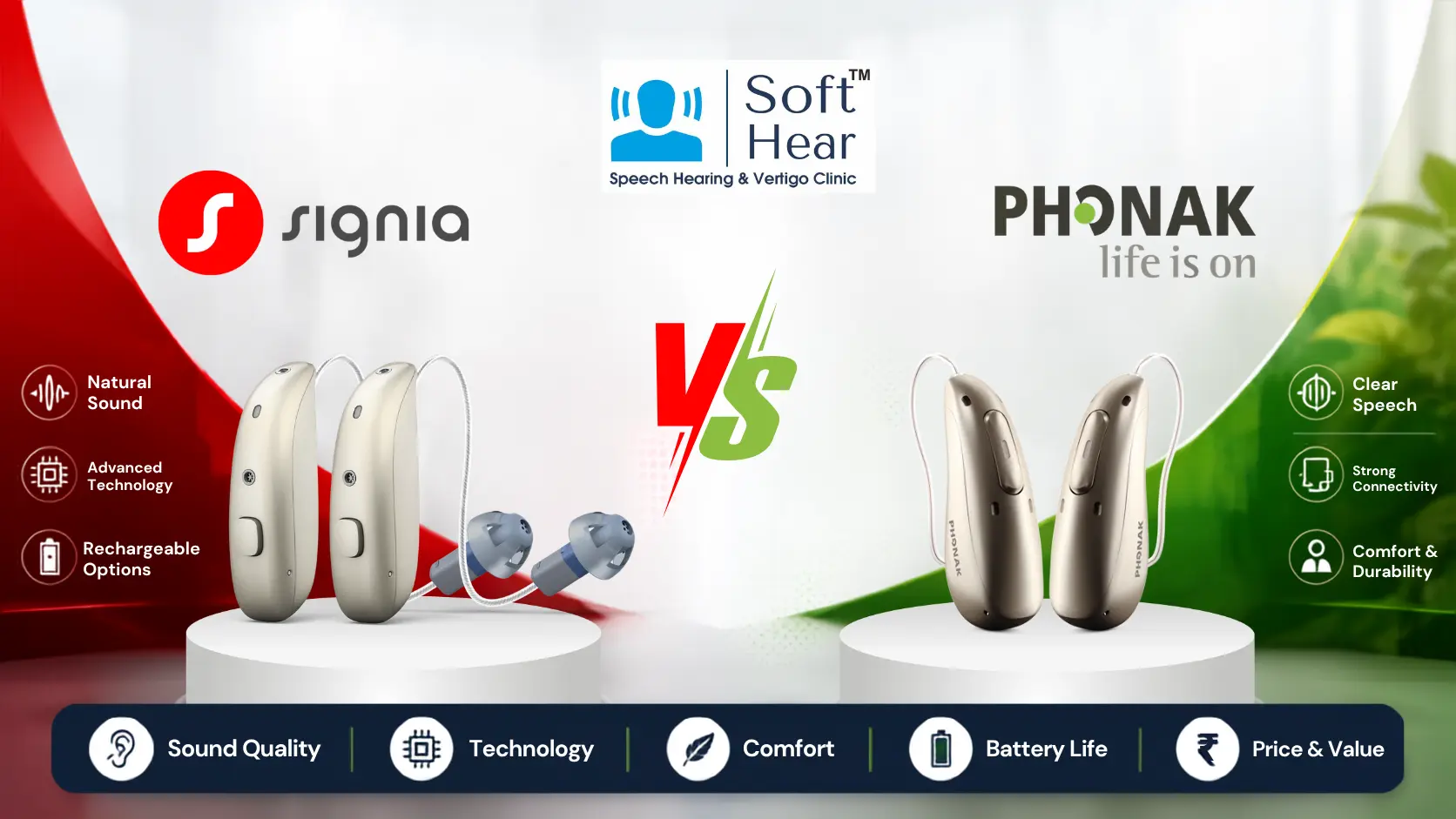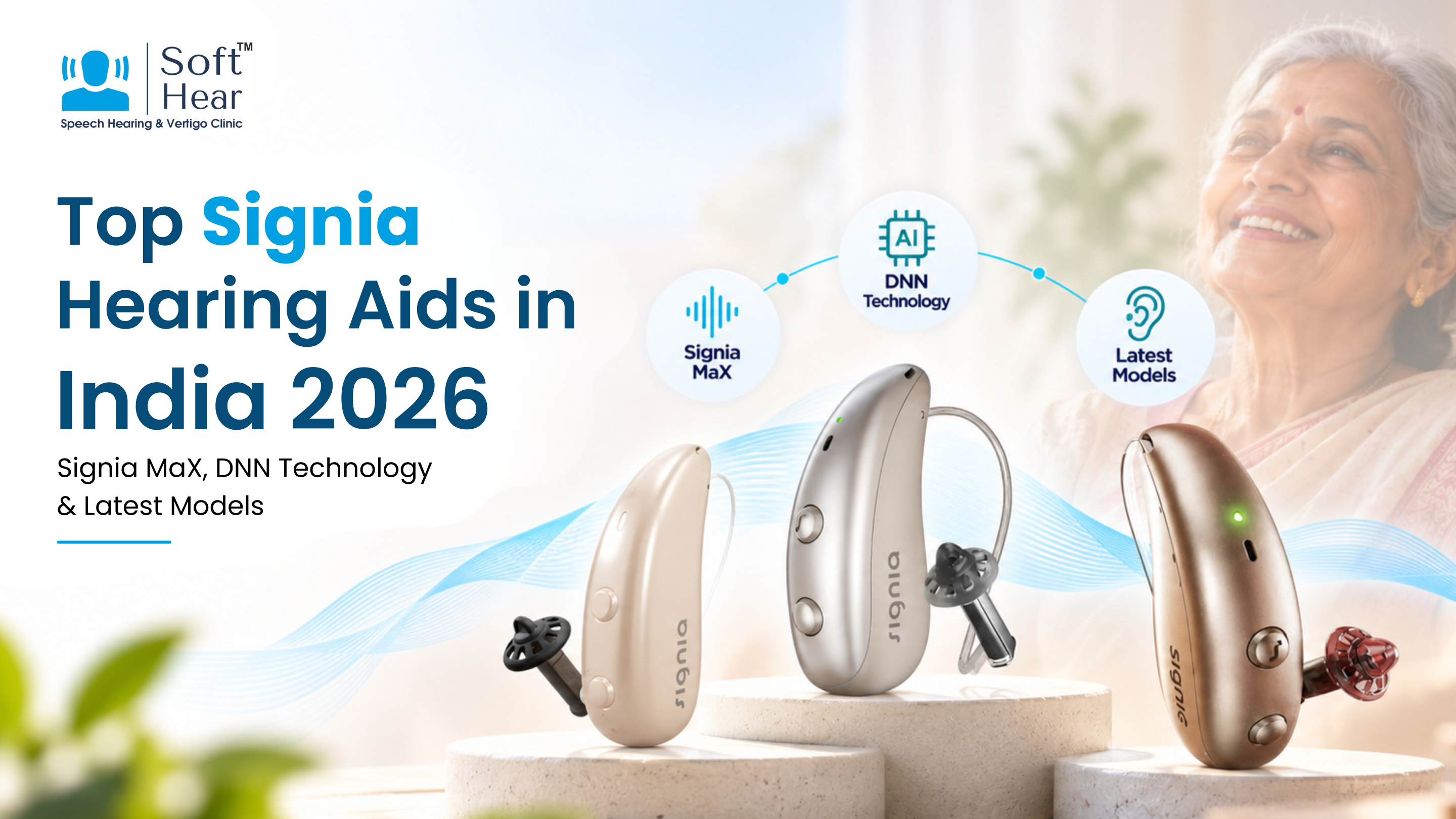
Signia remains one of the leading hearing-aid brands in India, offering a wide range of hearing solutions from discreet in-the-ear devices to advanced rechargeable hearing aids.
In 2026, Signia's newest flagship direction is Signia MaX, built around Acoustic Intelligence™ and advanced Deep Neural Network (DNN)-based processing.
For patients, however, an important point to understand is this: having the latest technology does not automatically mean getting the best hearing experience. The technology must be selected and configured to match the individual's hearing loss, speech perception, lifestyle, and listening environments.
Signia MaX: The New Generation of AI Hearing Technology
Signia MaX is designed around Acoustic Intelligence™, bringing multiple AI systems together to analyze the listening environment and adapt in real time.
A key part of this next-generation processing is Deep Neural Network (DNN) technology. DNN-based processing lets hearing aids analyze complex sound environments more sophisticatedly than traditional amplification and conventional noise-reduction approaches.
Instead of simply asking, “How much noise can we reduce?”, advanced AI processing is designed to analyze what is happening around the wearer—the conversation, surrounding sounds and the wearer's own voice—and respond accordingly.
This becomes particularly relevant in everyday situations such as restaurants, family gatherings, meetings and group conversations, where speech and background sounds constantly change.
The objective is not simply to make everything quieter. It helps the wearer stay connected to the conversation while staying aware of the surrounding acoustic environment.
Pure Charge&Go MaX
The Pure Charge&Go MaX is Signia's next-generation flagship rechargeable hearing-aid solution, built on the MaX platform.
Key features include:
- Acoustic Intelligence™ – multiple AI systems working together to analyse different dimensions of the listening environment.
- Deep Neural Network (DNN) processing – advanced sound analysis designed to handle complex and changing acoustic environments.
- Signia Assistant – personalised support through the Signia app.
- Bluetooth® Classic and Bluetooth® LE Audio for connectivity.
- Telecoil support.
- Auracast™ readiness for compatible broadcast experiences.
For people who regularly move between quiet conversations and challenging group environments, these technologies can be especially relevant.
Signia IX: An Established Advanced Platform
Alongside the new MaX platform, Signia Integrated Xperience (IX) continues to offer advanced hearing solutions across several hearing-aid styles.
Depending on the patient's hearing loss and lifestyle, options include:
- Pure Charge&Go IX
- Pure Charge&Go BCT IX
- Styletto IX
- Motion Charge&Go IX
- Silk Charge&Go IX
- Insio Charge&Go CIC IX
The advantage of having different styles is that technology can be matched not only to hearing loss but also to the patient's preferences, ear anatomy, lifestyle and communication requirements.
A discreet in-the-ear device may suit one patient, while another may benefit from a rechargeable RIC or a more powerful BTE-style solution.
DNN Technology Is Only One Part of the Result
As an Audiologist, I believe this is where the conversation about modern hearing aids needs to become more clinical.
A hearing aid may contain sophisticated DNN and AI technology, but the device still has to match the person wearing it.
Two patients can have similar pure-tone audiograms and yet have completely different communication difficulties.
One patient may hear sounds but struggle to understand speech in noise. Another may have reduced speech discrimination. Someone else may primarily struggle with soft speech or group conversations.
The hearing-aid recommendation should therefore begin with the patient's auditory profile—not with the product catalog.
The Soft Hear Approach
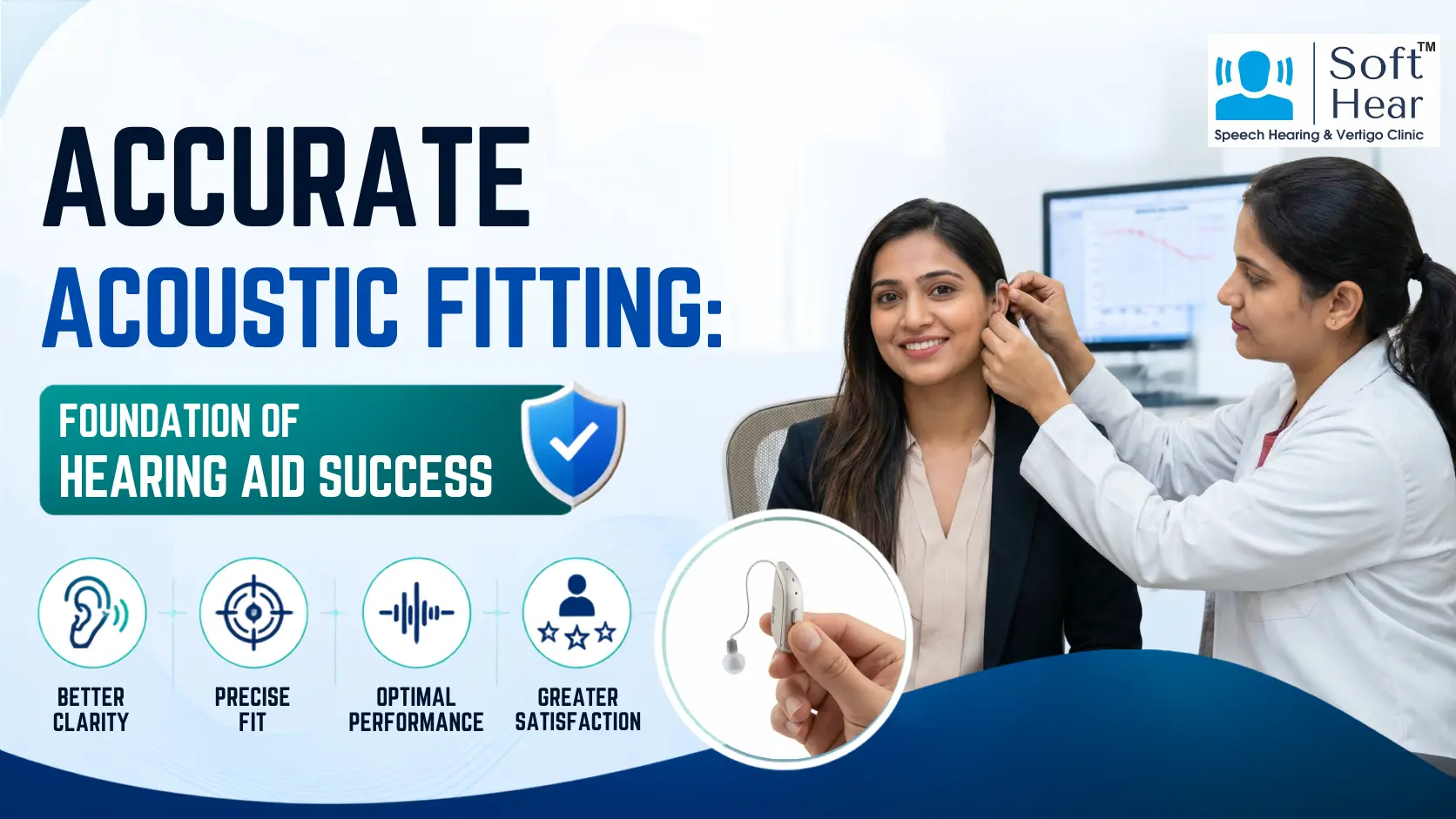
At Soft Hear Clinics, we start with a detailed clinical assessment in a properly sound-treated audiology room.
Depending on the patient's history and clinical requirements, the assessment may include:
- Pure-tone audiometry
- Speech discrimination testing
- Phoneme-level speech understanding in quiet and noise
- SNR loss assessment
- SISI testing
- TDT testing
- Tympanometry
- Acoustic reflex testing
- Otoscopy and other relevant clinical assessments
Not every patient requires every test. The goal is to understand the patient's hearing and communication difficulties well enough to make an informed clinical recommendation.
This is particularly important when considering advanced hearing aids.
Personalized Technology and Acoustic Parameters
Once we understand the hearing profile, the next step is deciding what level of technology is appropriate.
This involves much more than selecting a hearing-aid model.
Our Audiologists consider factors such as:
hearing loss → speech perception → listening environment → lifestyle → technology level → receiver power → acoustic coupling → individual programming requirements
The receiver, dome or custom coupling, venting, and other acoustic parameters can influence how the hearing aid delivers sound to the ear.
A carefully selected configuration can help the patient make better use of the technology rather than simply receiving a standard fitting.
Our approach is therefore simple:
We don’t start with the product. We start with the patient.
Why an Audiologist Matters With DNN and AI Hearing Aids
Modern DNN-based hearing aids are sophisticated systems. But AI does not replace the Audiologist.
The Audiologist understands the patient's hearing loss, speech perception, communication difficulties and listening requirements and can interpret how the technology should be applied to that individual.
This is particularly important because hearing rehabilitation is not only about sound processing.
When someone starts wearing hearing aids after living with reduced hearing for months or years, the brain and auditory system have to adapt to amplified sounds. Sounds that were previously soft, unclear or absent may suddenly become more noticeable.
Appropriate gain, frequency shaping, compression, acoustic configuration, counseling and follow-up can all contribute to a more comfortable adaptation process.
The goal is not simply to provide amplification. It is to help the patient's auditory system use the amplified information meaningfully.
The Same Signia Hearing Aid Can Feel Different for Different Patients
Two people can purchase the same Signia hearing aid and still experience it differently.
Their:
- degree and configuration of hearing loss
- speech discrimination
- tolerance to loudness
- listening environments
- lifestyle
- ear acoustics
- communication needs
- expectations
- adaptation to amplification
can all be different.
That is why no single Signia hearing aid is automatically the right choice for everyone.
The more useful question is:
“Which Signia technology is appropriate for my hearing, and how should it be fitted for me?”
Choosing the Right Signia Hearing Aid in India
For patients considering Signia Hearing Aids in India in 2026, the choice should be based on clinical requirements rather than simply choosing the newest or most expensive model.
A patient who spends most of the day in quiet environments may have different requirements from someone who attends meetings, works in restaurants, travels frequently or participates in large family gatherings.
Similarly, someone with relatively good speech discrimination may have different fitting priorities from a patient with significant difficulty understanding speech in noise.
This is why a professional hearing assessment should come before the final technology recommendation.
Signia Hearing Aids at Soft Hear
At Soft Hear, our objective is not simply to provide the latest Signia hearing aid.
Our objective is to help the patient experience the technology's potential through appropriate clinical assessment and personalized fitting.
Our approach can be summarised as:
Clinical Assessment → Diagnosis → Technology Selection → Personalised Acoustic Configuration → Professional Fitting → Adaptation & Follow-up
This is where the expertise of a qualified Audiologist becomes important.
Advanced DNN and AI technology can analyze and process sound at an impressive level, but the clinical decision about which technology, which configuration, and how to use it still begins with understanding the patient.
Final Word
Signia MaX and its advanced DNN-based Acoustic Intelligence™ represent an important direction in modern hearing technology.
The focus is moving beyond simply making speech louder or reducing background noise. Advanced hearing aids are increasingly designed to analyze complex listening environments and adapt their processing to what is happening around the wearer.
But technology alone does not determine the hearing outcome.
The combination of accurate diagnosis, the right technology, appropriate acoustic parameters, professional fitting, and ongoing clinical support is what allows a patient to make meaningful use of advanced hearing technology.
If you are considering Signia Hearing Aids, Signia MaX, or other advanced Signia Hearing Aids in India in 2026, begin with a comprehensive hearing assessment and discuss your real-world listening difficulties with a qualified Audiologist.
At Soft Hear, we believe the right hearing solution starts with understanding the person—not simply selecting the product.
Frequently Asked Questions (FAQs)
1. What is Signia MaX?
Signia MaX is Signia's newest hearing aid platform. It is built on Acoustic Intelligence™ and Deep Neural Network (DNN) processing, which analyse the listening environment, including conversation, surrounding sounds and the wearer's own voice, and adapt in real time. The Pure Charge&Go MaX is its rechargeable flagship model.
2. What is DNN technology in hearing aids?
DNN, or Deep Neural Network, is an AI-based sound processing method. It analyses complex sound environments in more detail than conventional amplification and basic noise reduction. Instead of only lowering noise, it helps the wearer stay connected to speech while staying aware of their surroundings.
3. Does AI in hearing aids replace an audiologist?
No. AI improves how a hearing aid processes sound, but an audiologist decides which technology suits the individual and how it should be programmed. Speech perception, hearing loss type and listening needs differ from person to person, and these determine how well the technology works in practice.
4. What is the difference between Signia MaX and Signia IX?
Signia MaX is the newer platform, with DNN-based Acoustic Intelligence™. Signia IX (Integrated Xperience) is an established advanced platform available in several styles, including Pure Charge&Go IX, Styletto IX, Silk Charge&Go IX and Insio Charge&Go CIC IX. The better choice depends on hearing loss, lifestyle and preferred style, not only on which is newer.
5. Which Signia hearing aid is best for me?
There is no single best Signia hearing aid. The right model depends on your degree of hearing loss, speech discrimination, tolerance to loudness, listening environments, ear anatomy and lifestyle. A hearing assessment should come before choosing a model.
6. Do I need the latest hearing aid technology?
Not always. Someone who spends most of the day in quiet settings may need a different technology level from someone who often attends meetings, restaurants or large gatherings. The right level is the one that matches your listening needs, not necessarily the newest or most expensive.
7. What tests are done before choosing a hearing aid?
The assessment may include pure-tone audiometry, speech discrimination testing, speech understanding in quiet and noise, SNR loss assessment, tympanometry, acoustic reflex testing and otoscopy. Not every patient needs every test. The aim is to understand your hearing and communication difficulties well enough to make a sound recommendation.
8. Can two people have the same audiogram but need different hearing aids?
Yes. Two people can have similar pure-tone results, yet one may struggle mainly with speech in noise, another with reduced speech clarity, and another with soft speech. Because their difficulties differ, their fitting priorities differ as well.
9. Why does the same hearing aid feel different for different people?
Hearing loss configuration, speech discrimination, loudness tolerance, ear acoustics, lifestyle, expectations and adaptation to amplification all vary. Receiver power, dome or custom coupling and venting also change how sound reaches the ear, so the same device can feel different from one wearer to another.
10. Why do hearing aids sound different or overwhelming at first?
After months or years of reduced hearing, the brain and auditory system need time to adapt to amplified sound. Sounds that were soft or missing may suddenly become noticeable. Proper gain, frequency shaping, counselling and follow-up visits make this adjustment more comfortable.
11. Are Signia hearing aids rechargeable?
Many Signia models are, including Pure Charge&Go MaX, Pure Charge&Go IX, Styletto IX, Motion Charge&Go IX, Silk Charge&Go IX and Insio Charge&Go CIC IX. Availability depends on the style, so confirm the specific model during your consultation.
12. Do Signia MaX hearing aids support Bluetooth and telecoil?
Pure Charge&Go MaX supports Bluetooth® Classic and Bluetooth® LE Audio, along with telecoil. It is also Auracast™-ready for compatible broadcast audio in public venues.
13. What should I do before buying a hearing aid in India?
Get a full hearing assessment from a qualified audiologist first. Then discuss your real-world listening difficulties, such as restaurants, meetings, calls or family gatherings, so the technology level and fitting can be matched to you.