
Introduction
For many people with hearing loss, the decision to buy a hearing aid is often put off because of one common concern: visibility. Hearing aids have become smaller and smaller over the years, but many people still worry that wearing one will affect their appearance, confidence or professional image. Luckily, hearing aid technology has come a long way. Invisible hearing aids are one of the most popular solutions in 2026 for people who want great hearing support but don’t want to compromise on being discreet.
Today’s hearing aids are invisible and much more sophisticated than a tiny device tucked inside the ear. They have sophisticated digital signal processing, artificial intelligence (AI), adaptive noise reduction, speech enhancement, tinnitus management and personalised sound settings – all in incredibly compact designs. Many premium models automatically analyse the listening environment and adjust their settings in real time, so that users can enjoy clearer conversations whether they are at home, attending business meetings, dining in a busy restaurant, or travelling outdoors.
However, selecting the best invisible hearing aid is not simply about selecting the smallest device on the market. What is the best hearing aid? The best hearing aid will depend on several factors including the level of hearing loss, lifestyle, communication needs, shape of the ear canal, comfort, maintenance and long-term hearing goals.
Here’s everything you need to know about the best invisible hearing aids of 2026, including the different types you can get, their pros and cons, who they’re best for, and the latest tech from top hearing aid manufacturers. Whether you are buying your first hearing aid or thinking of upgrading, this guide will help you make a confident and informed choice.
How Do Invisible Hearing Aids Work?
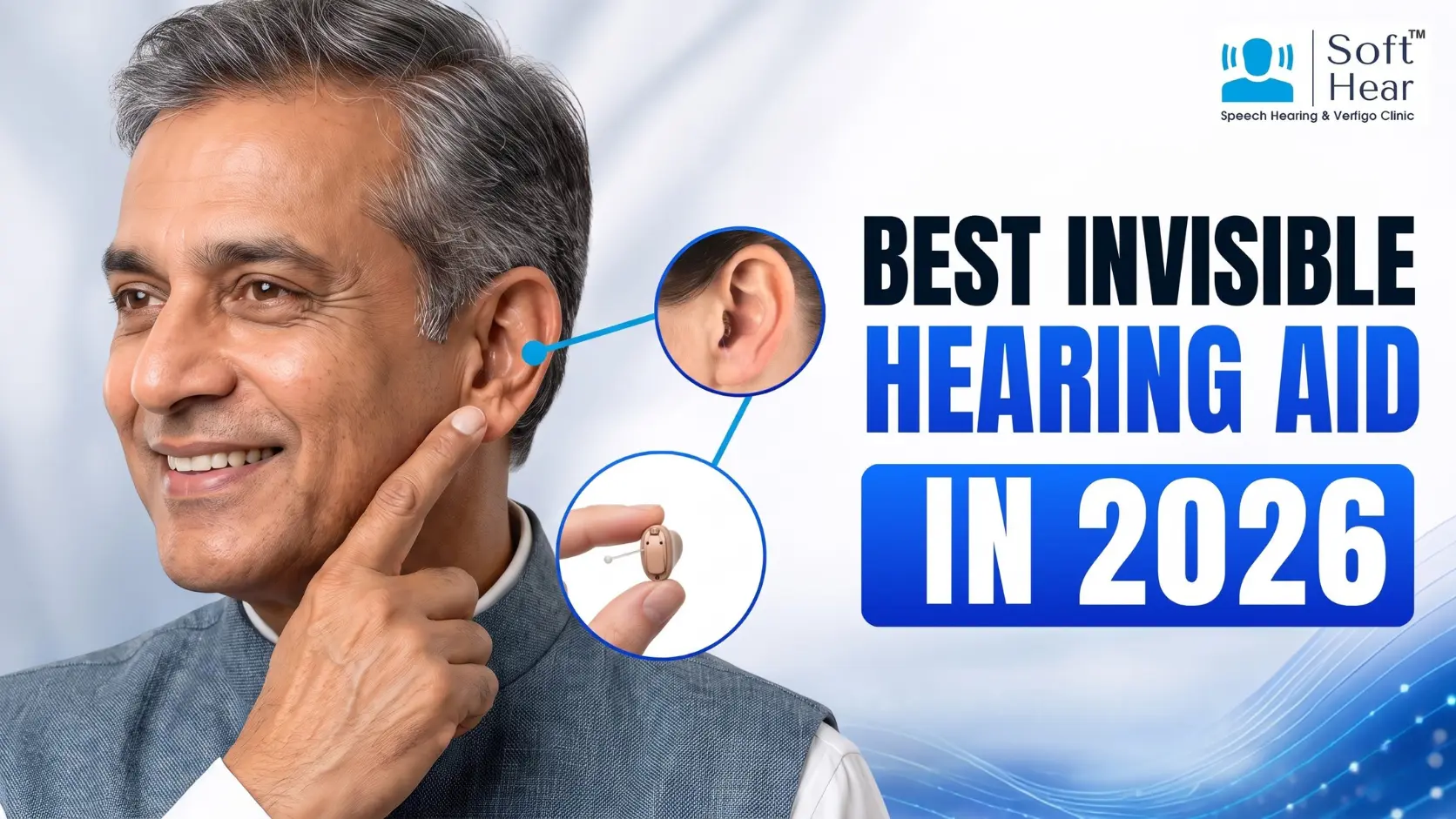
Invisible hearing aids are custom-made hearing devices which are extremely difficult to see during normal interactions with other people as they are fitted totally or almost totally inside the ear canal. Instead of the traditional behind-the-ear hearing aids, these devices are shaped to fit comfortably and snugly into the ear canal.
An invisible hearing aid is designed to give you good hearing help, but be nearly invisible. And since the device is further down the ear canal, it can also collect sound more naturally, using the natural shape of the ear. This often improves sound localisation, helping users to better identify the direction of sounds.
Invisible hearing aids have become particularly popular among working professionals, young adults, executives, teachers, healthcare professionals, and individuals who regularly interact with clients or the public. Many first time hearing aid users also tend to prefer invisible hearing aids as it helps to reduce the social stigma that some people still attach to wearing hearing devices.
The boom in digital hearing aid technology has allowed manufacturers to pack a lot of sophisticated features into a very small hearing aid. Depending on the model, invisible hearing aids may include AI-powered sound optimisation, automatic environmental adjustments, advanced speech enhancement, digital feedback suppression, tinnitus relief programmes, wireless connectivity through compatible accessories and personalised listening programmes that adapt to the user’s everyday lifestyle.
Invisible hearing aids are remarkably small, but they’re powerful enough to help many people who have mild to moderate hearing loss.
Types of Invisible Hearing Aids
The term “invisible hearing aid” describes many styles of hearing aids, not just one kind of device. Styles vary in size, where they sit in the ear canal, the technology they use, and how well they work for different amounts of hearing loss. Understanding these differences is important before choosing the best hearing solution.
Invisible In The Canal (IIC) Hearing Instrument
The smallest hearing aids on the market today are Invisible-in-the-Canal (IIC) hearing aids. These devices are custom-built to sit deep inside the second bend of the ear canal, making them virtually invisible when viewed from the outside. Their discreet appearance makes them one of the most preferred options for individuals who care for cosmetic appeal.
Modern IIC hearing aids are amazing in sound quality and despite their miniature size. They work especially well for adults with mild to moderate hearing loss. Users often report a more natural perception of sound and less wind interference when outdoors, because the microphones are placed deep in the ear canal. But their small size means there’s no room for larger batteries and some sophisticated wireless components. Therefore they may need to change the batteries more often and are generally recommended for users with good manual dexterity.
CIC Hearing Aids (Completely-in-the-Canal)
Completely-in-the-Canal (CIC) hearing aids are a little larger than IIC hearing aids, but still offer a good compromise between discretion and performance. While a small portion of the device may sit near the entrance of the ear canal, it remains difficult for others to notice during normal conversations.
The additional internal space allows manufacturers to include more advanced sound processing features and to provide longer battery life than many IIC models. Designed for mild to moderate hearing loss, CIC hearing aids are often selected by users who want a discreet hearing solution, but still need full day to day functionality. Many audiologists recommend CIC devices for people who seek both cosmetic appeal and greater ease of handling.
Invisible Receiver in Canal (RIC) Hearing Aids
Although Receiver-in-Canal (RIC) hearing aids are not technically considered invisible hearing aids, many of today’s premium RIC models are so small and light that they are barely noticeable during daily use. A tiny hearing aid comfortably sits behind the ear and an ultra- thin clear wire is connected to a tiny receiver, which sits in the ear canal.
The popularity of RIC hearing aids continues to grow because they combine discreet aesthetics with advanced technology. Unlike smaller invisible devices, RIC hearing aids are able to accommodate rechargeable batteries, Bluetooth streaming, multiple microphones, artificial intelligence, automatic programme adjustments and improved speech recognition in difficult listening environments. They also are suitable for a wider range of hearing loss, including moderate and severe.
If you are someone who values advanced features as much as looks, today’s RIC hearing aids tend to be the best overall compromise between discreetness, comfort and hearing performance.
Who Can Get Benefit from Invisible Hearing Aids?
Invisible hearing aids are a great solution for many people, but they are not the right solution for everyone with hearing loss. The first step in selecting a hearing aid should always be a complete hearing evaluation by a qualified audiologist who will be able to evaluate the degree of hearing loss and the physical characteristics of the ear canal.
People with mild to moderate hearing loss are often ideal candidates for invisible hearing aids, as these devices provide enough amplification while being very discreet. People who spend a significant part of their day talking to coworkers, clients, students, or customers often enjoy the confidence that invisible hearing aids provide in professional environments. These devices are also popular with young adults and first time hearing aid users who want to improve their hearing without calling attention to the fact that they are wearing hearing aids.
Invisible hearing aids are also appropriate for the socially-active person who attends family gatherings, business functions, religious activities, cultural programs or community events regularly. Their design is so invisible that users can concentrate on the conversations and not on how their hearing aids look.
Invisible hearing aids might not be the best option for those with very severe or profound hearing loss, chronic ear infections, extremely narrow ear canals or excessive earwax production. In these cases, an audiologist may suggest various styles of hearing aids that offer greater amplification, easier maintenance and improved long-term performance.
Advantages of Opting for Invisible Hearing Aids
Invisible hearing aids are becoming more popular, not only for their aesthetics but also because of the major improvements they provide to everyday communication. The subtle design helps users feel confident, not self-conscious, which leads to getting hearing treatment sooner and better hearing outcomes over time.
Invisible hearing aids go inside the ear canal where the natural anatomy of the ear can pick up sound. This placement usually creates a more natural listening experience and makes it easier for the user to identify the locations of the sound sources. Many users also report less wind noise than they do with larger styles of hearing aids, making it more comfortable to hold conversations outside.
Another huge plus is the custom fit. Ear impressions or digital ear scans are taken to custom make invisible hearing aids to fit the individual’s ear canal. This customized solution increases comfort for long term use but also helps in keeping the device safely in place during daily activities.
Today’s invisible hearing aids also feature intelligent sound processing systems that automatically adjust to changes in the listening environment. The devices automatically optimize speech clarity and minimize unwanted background noise, whether you’re talking to family or friends at home, in office meetings, or in a busy restaurant. You’ll end up with a more natural listening experience that’s less fatiguing throughout the day.
Are There Any Restrictions?
While invisible hearing aids have many benefits, it’s just as important to understand their limitations before making a purchase. Their small size also naturally limits how much internal space there is for hardware components. This means that some invisible styles utilize small, throw-away batteries that require replacement from time to time, and some of the more advanced wireless features that larger hearing aids provide may not be available.
Because these devices sit deeper in the ear canal, they are more susceptible to earwax, moisture and humidity than behind-the-ear hearing aids. Hence, regular cleaning, gentle handling and regular professional servicing are necessary to ensure optimal performance and prolong the device’s lifespan.
Invisible hearing aids are also highly dependent on the anatomy of the individual ear. Certain medical conditions of the ear may mean other hearing aid styles are more appropriate and not all ear canals are large enough to fit these devices comfortably. That’s why professional hearing tests and customized fittings are still a necessary part of the hearing rehabilitation process.
The Impact of Expert Guidance
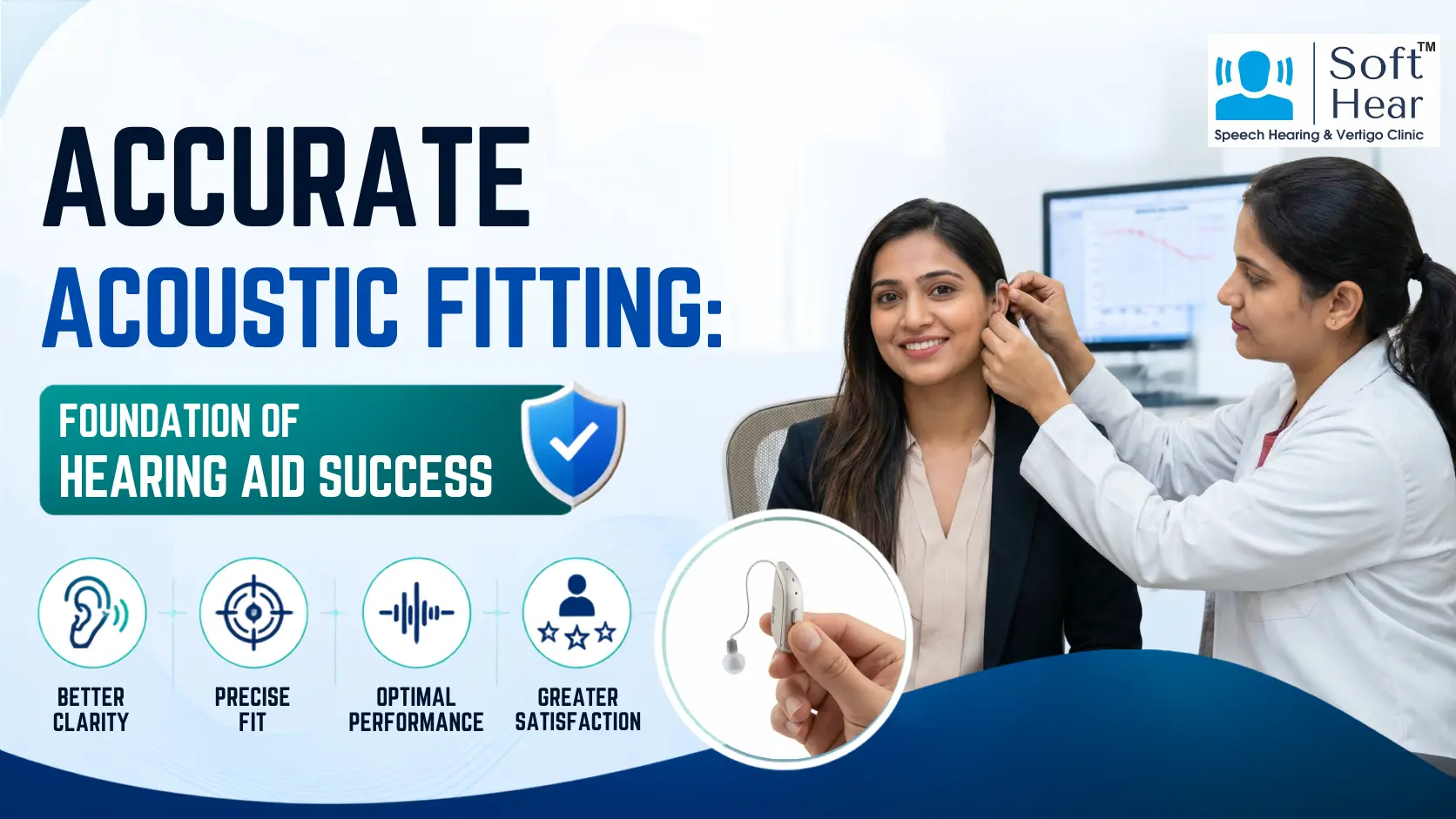
Choosing a hearing aid is not just a case of buying the latest technology, but about finding the solution that best fits your hearing needs, daily lifestyle and long-term communication goals. Even the most sophisticated invisible hearing aid may not work well if it isn't programmed correctly and fitted to the individual's hearing profile.
A qualified audiologist will carry out a thorough hearing test, test the ability to understand speech, check the ear canal and prescribe the most appropriate hearing aid based on clinical findings and not just looks. Follow-up visits are equally as important and are a time to fine- tune the hearing aid so that it is comfortable and performs well in real world listening situations.
At Soft Hear we use advanced diagnostic technology and personalised hearing care from our experienced audiologists to support each person to find the hearing solution that best suits their lifestyle and budget. From full hearing assessments, to custom fittings, to ongoing counselling and support – we are focused on helping you get back to the sounds that matter most.
Top Invisible Hearing Aid Brands in 2026
The hearing aid industry is ever-evolving, with manufacturers heavily investing in artificial intelligence, machine learning, wireless connectivity and personalised hearing experiences. Although the idea of a "invisible hearing aid" is constant, each manufacturer has a different take on sound processing, comfort, connectivity, and user experience. The best brand is not just about the device’s appearance, but also your hearing loss, listening environments, lifestyle, and long-term hearing goals.
At Soft Hear we do not recommend hearing aids based on brand popularity but based on clinical hearing assessments. All the leading manufacturers have their own strengths and knowing the differences will ensure you get a hearing solution that pays lasting dividends.
Invisible Hearing Aids Starkey
Starkey has positioned itself as one of the world’s leading hearing aid manufacturers by combining cutting-edge artificial intelligence with outstanding sound quality. In 2026 the company remains at the cutting edge of innovation with its Genesis AI platform, which is designed to replicate the human brain’s natural sound processing capabilities.
If you’re looking for a discreet hearing aid, Starkey has custom Invisible-in-the-Canal (IIC) and Completely-in-the-Canal (CIC) hearing aids that are virtually invisible when worn. These devices constantly analyse the listening environment and automatically adjust amplification, speech clarity and background noise reduction without any need for manual intervention. Among the greatest strengths of Starkey is the focus on speech understanding in difficult listening environments. Whether attending business meetings, family gatherings, or social events, users often experience clearer conversations with reduced listening effort. Many Starkey hearing aids also feature tinnitus management programmes and health-related features through compatible technology platforms, which makes them attractive for individuals looking beyond basic hearing amplification.
Starkey invisible hearing aids are ideal for professionals, active seniors and first-time hearing aid users who want the best of both cosmetic appeal and premium listening performance.
Signia Invisible Hearing Aid
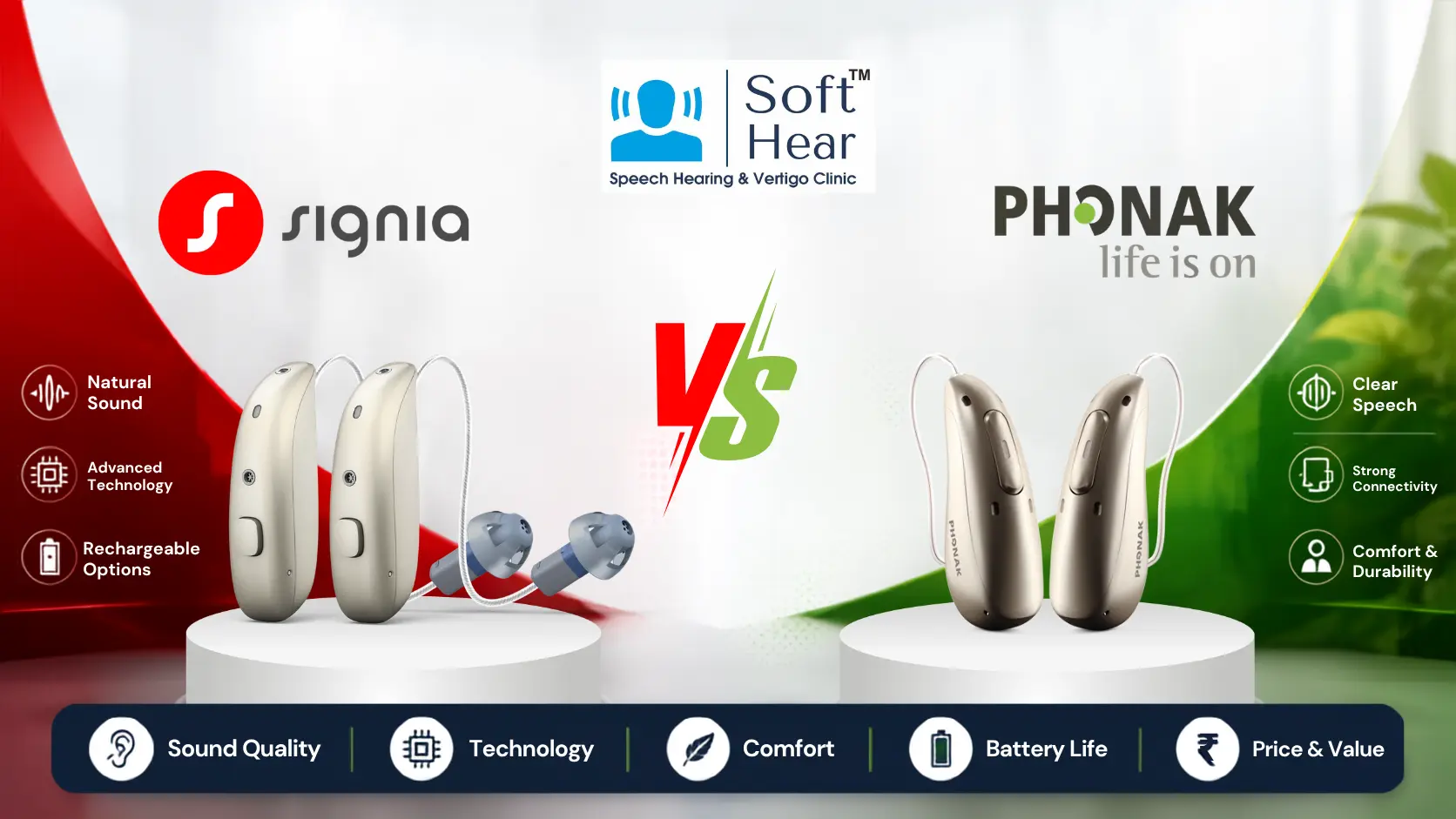
Focused on natural hearing and sophisticated conversation enhancement, Signia has become one of the most recognised hearing aid brands worldwide. Its custom invisible hearing aids are built to provide clear speech and preserve environmental sounds so users can hear conversations in a more natural way.
The ability to distinguish speech from background noise is another strength of Signia technology. Instead of just amplifying sound, Signia hearing aids intelligently focus on speech signals, enabling users to hear conversations even in noisy situations such as restaurants, shopping centres and airports.
Signia also points out that it reduces the wearer’s own voice, a common concern among first- time hearing aid users. Thanks to advanced processing algorithms many users will soon experience a more balanced and natural sound quality soon after fitting.
Meetings, presentations, social events. If you regularly attend any of these, Signia’s invisible hearing aids are a great combination of discretion, speech clarity and comfort.
Phonak Invisible Hearing Aid
Phonak has built a reputation for providing hearing solutions that work well for a broad spectrum of hearing losses. While most people know the company for its Receiver-in-Canal (RIC) technology, it is also known for manufacturing premium custom invisible hearing aids for those who want discreet hearing devices.
Phonak hearing aids are known for their excellent speech understanding, even in challenging listening situations. Their sophisticated digital processing continuously adapts to changing surroundings, helping users move comfortably between quiet rooms, busy streets and crowded public spaces without constant manual adjustments.
Connectivity is one area where Phonak is consistently excellent. While smaller invisible models are limited in their Bluetooth integration, users who opt for Phonak’s discreet custom solutions still enjoy the company’s highly refined sound processing and personalised fitting approach.
Phonak is still a great choice for those who want reliable, comfortable and reliable hearing performance all day long.
Widex Invisible Hearing Aids
Widex has built its reputation on providing one of the most natural listening experiences in today’s hearing care market. Widex wants to preserve the sound quality so that conversations, music and environmental sounds are just the right level and sound real, instead of just turning up the volume on everything.
It is this philosophy that makes Widex so popular with musicians, music lovers, teachers and those who do a lot of talking in quiet environments.
Its custom invisible hearing aids provide advanced sound processing to block out unwanted background noise while maintaining speech clarity. It’s often said that Widex hearing aids sound more natural than many other brands, which can make it easier to adjust to hearing aids early on.
If you are after high fidelity sound and subtle aesthetics, then Widex remains one of the best options in 2026.
ReSound Invisible Hearing Aid
ReSound continues to innovate by combining natural sound processing with smart connectivity. The company’s custom hearing aids are designed to complement the wearer’s natural hearing ability to help create a more immersive listening experience.
ReSound’s spatial awareness is a key feature. The technology, instead of completely isolating speech from surrounding sounds, tries to maintain a sense of environmental awareness while improving conversation clarity. It helps users to stay focused on the conversation and their surroundings.
ReSound Invisible Hearing Aid also provides advanced tinnitus management solutions and custom programming options that enable audiologists to customize hearing performance to each individual’s lifestyle.
ReSound’s balanced approach to listening and comfort for long wearing is often appreciated by people who regularly move between quiet and noisy environments.
Beltone Invisible Hearing Aid
Beltone has been providing hearing solutions for decades and remains a trusted brand for individuals seeking dependable hearing performance combined with personalised hearing care. The company’s custom invisible hearing aids are designed to be comfortable, provide clarity of speech and to be simple to use.
Beltone’s digital sound processing technology automatically adapts to the changing environment by reducing unwanted background noise. Its invisible hearing aids are designed for all day comfortable wear, natural conversational hearing, and are especially suited for older adults and first time hearing aid users.
Hearing care professionals often recommend Beltone Hearing Aids because it is easy to use and can be relied upon for a long time. Beltone is a common choice for people looking for hearing aids that are discreet, and that they can count on for everyday use.
Best Invisible Hearing Aid Comparison 2026
| Brand | Key Strength | Best For | Invisible Options Available |
|---|---|---|---|
| Starkey | AI powered speech enhancement & sound processing and | First time users, active adults, professionals. | IIC, CIC |
| Signia | Natural conversations and clearer speech | Businessmen and socialites | IIC, CIC |
| Phonak | Reliable sound quality in different listening environments | Mild-to-moderate hearing loss | IIC, CIC |
| Widex | Music appreciation and the quality of natural sound | For music lovers, educators, professionals | IIC, CIC |
| ReSound | Spatial awareness, and even hearing | Active users constantly changing environments | CIC and custom models |
| Beltone | Comfortable everyday hearing and reliable performance | Seniors and those trying a hearing aid for the first time | IIC, CIC |
What features to look for in an invisible hearing aid?
Although appearance is usually the first reason that people think of invisible hearing aids, the technology inside the device is what finally determines how well it works in real life. Today, invisible hearing aids do more than just improve your hearing. They constantly analyze the environment around you, filter out annoying background noise, enhance speech and adjust automatically to changing listening conditions.
Artificial Intelligence is one of the defining features of premium hearing aids in 2026. The AI-powered systems learn from a variety of listening environments and make thousands of automatic adjustments every hour to help users enjoy seamless transitions from quiet conversations to busy workplaces, restaurants and outdoor environments. This means less listening fatigue and better speech understanding during the day.
Speech enhancement technology is another important consideration. A high-quality invisible hearing aid should focus on speech, but still allow the user to be aware of the sounds around him, so that he can participate naturally in conversations without feeling cut off from his environment. Equally important is effective cancellation of feedback, not least because of the annoying whistling sounds that can occur when hearing aids are worn incorrectly or when objects come close to the ear.
Don’t forget comfort. Invisible hearing aids are custom fit to the unique shape of the ear canal. A precise fit helps ensure not only comfort, but sound quality and long term wearing satisfaction. If you have an active lifestyle, moisture resistance and durability are important qualities as well, especially if you spend a lot of time outside or live in a humid climate.
Finally, after-sales service is crucial to long-term hearing success. Even the most sophisticated hearing aid needs occasional adjustments, cleaning, software updates and some support from a professional. Picking a hearing care provider that provides full fitting, counselling, follow-up appointments and continuous maintenance is equally as important as choosing the hearing aid itself.
Our audiologists at Soft Hear take the time to understand the hearing profile, communication needs and lifestyle of each individual before recommending a hearing aid. We don’t push one brand, we give you access to the best hearing manufacturers in the world including Starkey, Signia, Phonak, Widex, ReSound and Beltone. Meaning each patient gets a personalized hearing solution that is based on clinical evidence and long term hearing outcomes, not just the brand.
Price of Invisible Hearing Aid in India (2026)
One of the most common questions people ask before buying a hearing aid is, “How much does an invisible hearing aid cost?” Although it is tempting to compare devices on price, it is important to remember that hearing aids are not one-size-fits-all products. The price of an invisible hearing aid will depend on the level of technology, sound processing, customisation, connectivity features, after care services and the expertise of the hearing care professional fitting the device.
Invisible hearing aids in India come in a variety of technology levels to cater to a wide range of budgets and hearing requirements. Entry-level devices range usually from ₹30,000 to ₹60,000 per ear and offer basic features such as digital sound amplification, simple noise reduction and feedback cancellation. These models are generally appropriate for mild hearing loss who are mostly in relatively quiet environments.
Mid-range invisible hearing aids usually cost between ₹60,000 to ₹1,20,000 per ear. They offer more advanced speech enhancement, better performance in noisy environments, automatic environmental adaptation and better listening comfort in everyday communication. These gadgets are ideal for working professionals, socially active people and those who frequently change their listening environments.
Premium invisible hearing aids are priced between ₹1,20,000 and more than ₹3,50,000 per ear, depending on the manufacturer and technology platform. These devices use artificial intelligence, sophisticated speech processing, adaptive directional microphones (where applicable), tinnitus management, personalised sound learning and advanced fitting algorithms that provide excellent hearing performance even in the most difficult environments.
It’s also worth understanding that the purchase price often includes much more than simply the hearing aid itself. A complete hearing solution typically consists of a professional hearing evaluation, ear examination, custom fitting, programming, counseling, follow-up visits, performance adjustments and after sales support. These services are necessary to guarantee that the hearing aid works at its best throughout its entire life.
Factors influencing the price of invisible hearing aids
The price of an invisible hearing aid is dictated by a lot more than size alone. The technology in the device is one of the major factors that influences the cost. Premium processors are able to analyze sound thousands of times each second, automatically separating speech from background noise and adjusting amplification according to changing listening environments. This sort of intelligent processing inevitably drives up the price of the device overall.
Pricing also depends on the degree of customisation. Invisible hearing aids are custom fitted to your ear using an ear impression or digital scan of your ear. Hence, every hearing aid is custom fitted to fit your ear canal. This bespoke manufacturing process helps to create comfort and sound quality but raises the cost of production.
Another important factor is the amount of follow-up care that the hearing care centre provides. Successful hearing rehabilitation includes professional fitting, regular cleaning, software upgrades, fine-tuning sessions, hearing counselling and warranty support. Opting for a reputable hearing care provider with a full after-sales service often delivers better long-term value than going for the lowest price device.
Brand reputation matters too. Top manufacturers like Starkey, Signia, Phonak, Widex, ReSound and Beltone are heavily invested in research, artificial intelligence, digital signal processing and constant technological innovation. These investments will pay off in the long term with higher reliability, sound quality and user satisfaction.
Choosing the Best Invisible Hearing Aid
Never choose an invisible hearing aid just because it’s inexpensive or it looks good. The best device for you is one that’s right for your hearing profile, communication needs, lifestyle and long-term expectations. What is the best hearing aid for one person, may not be the best for another.
In any case the first step is always a complete hearing assessment by a qualified audiologist. This assessment evaluates the degree of hearing loss and speech understanding, ear canal anatomy, listening challenges, and overall hearing health. These results are useful to decide when an invisible hearing aid is appropriate in the clinic and the level of technology that would be most beneficial.
Another important factor is lifestyle. For example, a person who spends most of the day in a quiet environment may require different hearing technology than a person who spends a lot of time engaged in business meetings, traveling, social situations or noisy work environments. Current hearing aids are designed to automatically adjust for different listening situations, but choosing the right level of technology is still important to get the best outcomes possible.
Comfort must also be considered. Invisible hearing aids are worn in the ear canal and for long periods of time so they need to have a secure fit without irritation or discomfort. Custom fitting by experienced professionals ensures long term wearing comfort and optimal hearing performance.
Equally important is support for the future. Your hearing needs can change over time. Regular follow-up appointments give your audiologist the opportunity to make adjustments to your hearing aid to accommodate your changing listening needs. You’ll be far more satisfied in the long run and far more successful with your hearing if you choose a provider that will continue to care for you.
Why Professional Hearing Assessments Are Crucial?
Many people think that hearing loss is just about making sounds louder. In fact, hearing loss is much more complicated. Different people lose their hearing ability at different frequencies, speech sounds and levels of clarity of sound. Increasing volume for the sake of increasing volume, without understanding the nature of the hearing loss, often makes it harder, not easier, to listen.
A complete audiometric examination will provide you with exact information about the type, degree and configuration of your hearing loss. Audiologists perform specialized tests that measure a person’s hearing sensitivity, speech perception, middle ear function and overall auditory health. These findings allow them to recommend the most appropriate hearing aid style and level of technology based on clinical evidence, not assumptions.
Successful hearing rehabilitation also depends on professional programming. Each hearing aid must be tailored to the wearer’s hearing profile, listening preferences and daily communication needs. Fine-tuning sessions after the first fitting help to optimise comfort, speech clarity and overall hearing performance.
Patient education is also important. New hearing aid users often need help with inserting, removing, cleaning, battery management, maintenance, and getting used to amplified sound. Ongoing counselling helps people build confidence and get the most out of their hearing devices.
Invisible Hearing Aids Care Tips
Invisible hearing aids are advanced medical devices that need regular care to keep them working well and to extend their lifespan. Of course, being deep in the ear canal they are exposed to earwax, moisture, humidity and body oils. It improves sound quality, decreases the likelihood of repairs and increases the life of the device.
Daily cleaning should be a routine for the user. Use a soft, dry cloth and the cleaning tools recommended by your audiologist to help remove earwax and debris from the hearing aid. It is important too to properly control moisture. Many hearing aids today are made to be moisture-resistant, but you should still remove them if you are going for a swim, taking a shower or participating in water sports.
During scheduled maintenance appointments, audiologists can check the hearing aid, clean the internal components, replace worn accessories if necessary, and confirm that the device continues to deliver accurate amplification. A regular check-up can often prevent small problems from becoming costly repairs.
Also, users should not expose their hearing aids to excessive heat, direct sunlight, perfumes, hair sprays and cleaning chemicals as these can damage the sensitive electronic parts. Keeping the device in its protective case when not in use will also help to keep the device in good condition. In addition, users should avoid exposing their hearing aids to excessive heat, direct sunlight, perfumes, hair sprays and cleaning chemicals as these can damage the sensitive electronic parts. Storing the device in its protective case when not in use will also help to keep the device in good condition.
FAQs (Frequently Asked Questions)
1. Are invisible hearing aids good for all types of hearing loss?
No. Invisible hearing aids are traditionally recommended for mild to moderate hearing loss, but there are a few high-end custom options for moderately-severe hearing loss too. People with severe or profound hearing loss, very narrow ear canals or certain ear conditions may benefit more from Receiver-in-Canal (RIC) or Behind-the-Ear (BTE) hearing aids. A thorough hearing evaluation by a certified audiologist is important to identify the best hearing solution.
2. Can people see invisible hearing aids?
Most modern Invisible-in-the-Canal (IIC) hearing aids sit deep inside the ear canal and are virtually invisible during everyday conversations. Completely-in-the-Canal (CIC) hearing aids are also very discreet, with only a small part showing from time to time. The visibility of a hearing aid is mainly determined by the person’s ear anatomy and the hearing aid style you select.
3. Do invisible hearing aids really work?
Yes. With the development of digital hearing technology, invisible hearing aids have become much better. Premium models feature artificial intelligence, adaptive noise reduction, speech enhancement and automatic environmental adjustments to provide clear, natural sound for a variety of listening situations. Their size limits some hardware features relative to larger devices, but they still provide excellent hearing performance for appropriate candidates.
4. Are hearing aids invisible and rechargeable?
Due to their very small size, most traditional Invisible-In-The-Canal (IIC) and Completely- In-The-Canal (CIC) hearing aids still use disposable batteries. But hearing aid technology is moving quickly and there are some custom in-the-ear models from some manufacturers that now have rechargeable options. Your audiologist will be able to suggest the most suitable device for your hearing needs and lifestyle preferences.
5. Can invisible hearing aids be connected to smartphones?
The smallest invisible hearing aids are not capable of direct Bluetooth connectivity due to their size. However, a number of manufacturers offer compatible wireless accessories that allow phone calls, TV streaming and remote adjustments. If you need to use your smartphone a lot, a more suitable option might be a discreet Receiver-in-Canal (RIC) hearing aid.
6. Are invisible hearing aids comfortable?
Yes. Invisible hearing aids are custom-made using ear impressions or digital ear scans to create a device that fits the unique shape of each individual’s ear canal. Once they have got used to them, most users find them comfortable enough to wear all day.
7. How often do invisible hearing aids need servicing?
Audiologists recommend that you get your hearing aids professionally serviced every six months, or as often as the manufacturer recommends. Regular cleaning, software updates and performance checks and fine-tuning help ensure the hearing aid continues to provide the best possible sound quality and remains in excellent working condition.
Summary
Invisible hearing aids have made lives of hearing-impaired people better, with just the right blend of cutting edge technology, added comfort and a discreet appearance. By 2026, these devices are smarter than ever, featuring artificial intelligence, intelligent sound processing, adaptive noise management, and personalised hearing experiences that allow users to communicate confidently in a variety of everyday situations.
Cosmetic appearance is one of the main reasons why people opt for invisible hearing aids, but their real value is in their ability to improve communication, enhance relationships, boost productivity at work and rebuild confidence. Today's hearing aids are no longer simple sound amplifiers but smart medical devices that help people reconnect with the sounds that make their daily lives better.
But there are many more things to consider when choosing the right hearing aid than just brands and prices. Professional advice is important in the decision-making process as everyone’s hearing loss, ear anatomy, lifestyle and communication needs are different. Comprehensive hearing evaluations, accurate fittings, personalized programming, and ongoing follow-up care are all important for long-term hearing success.
At Soft Hear we are dedicated to providing personalised hearing care beyond fitting a device. Our highly trained audiologists work closely with each person to identify their hearing requirements, recommend the most suitable technology from globally trusted manufacturers including Starkey, Signia, Phonak, Widex, ReSound and Beltone and provide ongoing support on their hearing journey.
If you are thinking about an invisible hearing aid in 2026, book a full hearing assessment with Soft Hear. The right hearing solution can help you hear conversations more clearly, participate confidently in social and professional settings, and enjoy a better quality of life each day.